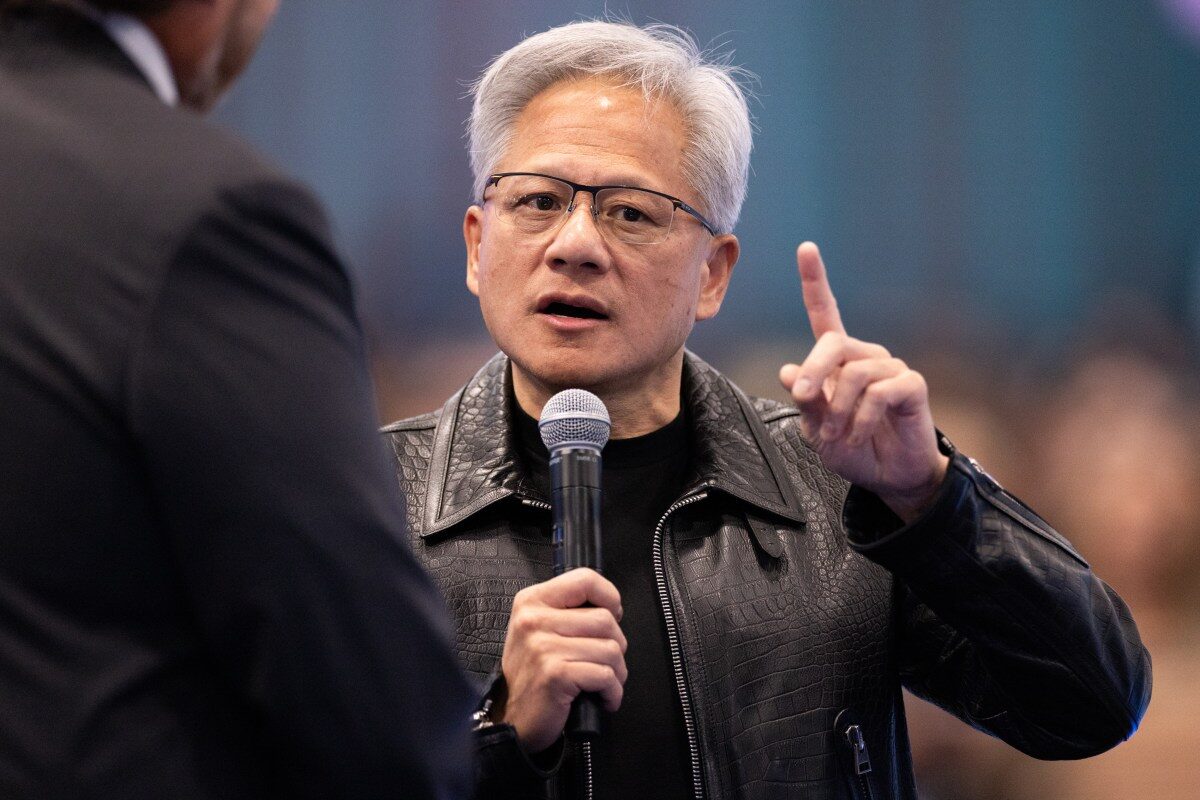
We're seeing a big debate over AI safety and a potential slowdown, as Anthropic CEO Dario Amodei recently published a plan to 'pace the frontier,' while Nvidia CEO Jensen Huang has publicly echoed President Donald Trump's claims that the AI backlash is a hoax and regulation is unnecessary. And when Kristen asked whether a combination of existing regulation and the workings of the free market could provide enough safeguards on their own, Sean replied, 'We have a federal government at the moment that certainly does not seem eager to enforce regulations broadly speaking, let alone specifically speaking here.' Plus, he argued, 'There does not seem like there is a ton of consumer choice driving this market, in the sense of, okay, if one of these companies does something really bad, then they will see an impact in how many cancellations there are or whatever.' So this was a pretty immediate flip of what I said a week ago, to hear this from Dario at Anthropic and Sam at OpenAI and even Elon Musk to a certain degree ' and we can get into whether we believe that or not. I will say, I don't think I was completely wrong, because even with these loose plans that Dario laid out in a blog post and and some of the other leaders have talked about, I feel like we're still missing a lot of specifics here, not only on some of the claims about why these people think there are dangers and risks, but also specifics on what they mean by slowing down....

I see a boy standing outside the rubble that was his home 15 minutes ago. I can't see his face. I see position of his body. Shock of the blast has most likely made him temporarily deaf. He barely stands on his feet. His arms are hanging alongside his body like two abandoned rows. His body is covered with dust. The video I am watching in order to understand use of AI in wars and conflicts around the world continues rolling in front of me like a livestreamed horror movie. Seconds later, another hit and I cannot see the boy anymore. Only a cloud of dust rising over the place that, seconds before, was where that boy was standing. Somewhere in an air-conditioned room far away, a human issued an order to a machine. The machine executed meticulously. The positioning, distance, satellite imagery, intended damage and efficiency of the strike were processed by the machine in real time. AI systems are also carrying out instructions based on rules of engagement determined by humans, rules that could be built on tolerances that do not prioritize civilian harm reduction. If a military decides that it's acceptable to have five civilians die for every suspect who is targeted, that is what it is telling the machine is acceptable. AI systems used for this purpose are largely developed and produced by the private sector....
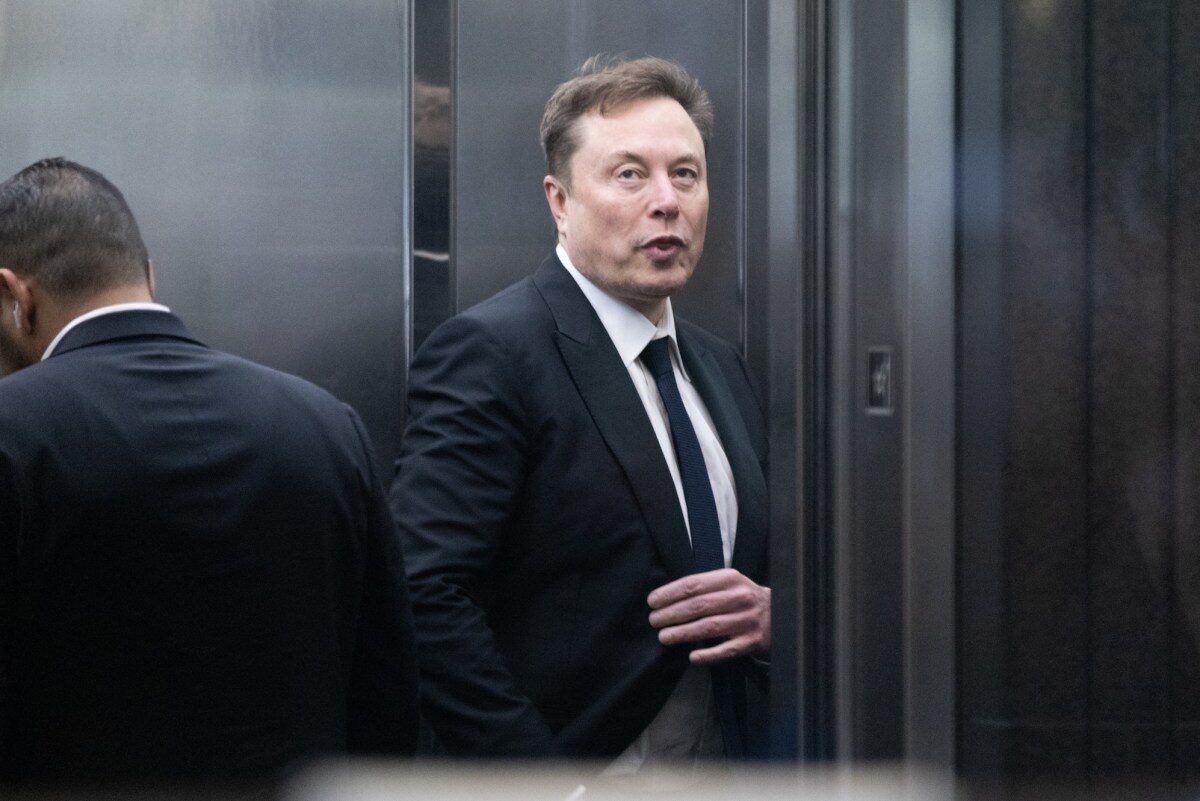
Elon Musk recently claimed that his tunneling startup The Boring Company is working on 'a simple precursor Hyperloop' between Austin and San Antonio that will reduce the journey between the two cities to less than 30 minutes. Many of The Boring Company's announced projects ' including tunnel systems in Chicago, Los Angeles, and between New York City and Washington, D.C. ' have not materialized. However, it does operate a transportation system combining tunnels and surface routes in Las Vegas, and it recently raised a $3 billion round led by the United Arab Emirates. Musk's comments about a potential Austin-San Antonio Hyperloop were actually in reply to an AI-generated video depicting a generic science fiction future with human colonies on other worlds. Musk re-posted the video and declared, 'This is the future we shall bring into being'. Musk's critics have argued that his vision of the future is apparently inspired by pulp science fiction and comic books; historian Jill Lepore recently told me that he seems to favor sci-fi that 'completely defeats and defies all of his political beliefs.'...

Building useful AI is starting to resemble building an automobile. The engine matters enormously, but so do the steering, transmission, chassis, and fuel supply. This week offered a remarkably complete tour of that machine: Google upgraded conversational control, OpenAI specialized intelligence for law, Figure tested physical generalization, and Crusoe put a $30.9 billion valuation on the infrastructure underneath it all. Google's Gemini 3.8 Live and Live Extended Thinking tackle a deceptively hard problem: keeping a conversation alive while useful work happens. The models combine visual context with background tool calls; Extended Thinking can reason and speak concurrently. Imagine discussing travel plans while an assistant checks availability and handles your interruptions. The engineering challenge is coordinating dialogue, computation, and actions without making the user wait through awkward silence. Voice becomes a practical control surface for agents, with latency joining accuracy as a central design constraint. Google's announcement...


