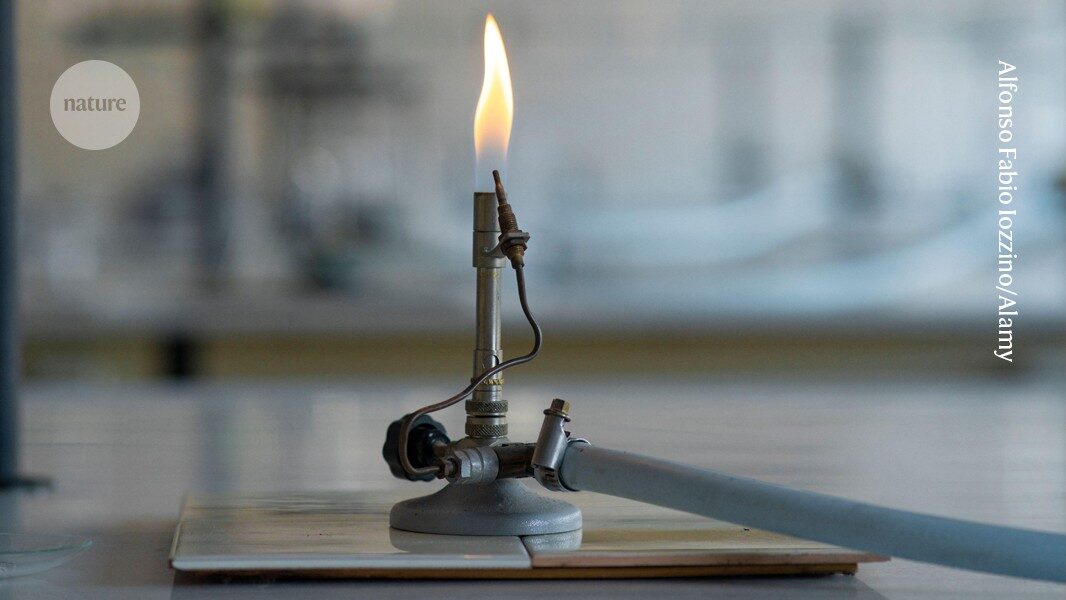
Many scientists have long relied on Bunsen burners to decontaminate airspace and surfaces in labs. The burners' flames were thought to create convection currents that carry microbe-containing particles away from the lab bench. Now, a study has found not only that the devices are ineffective at cleansing workspaces of bacteria-laden particles, but that they can even make contamination worse. Even before the study came out, biologists had divided opinions about Bunsen burners, says Hannah Gavin, a microbiologist at Providence College in Rhode Island and a co-author of the paper. Some researchers swore by the burners' ability to sterilize research spaces, but others had doubts. The study could fuel debate about whether this low-tech device still has a place in the modern laboratory. It could even be the 'nail in the coffin' for the burners' use in biology labs, says Amir Mitchell, a systems biologist at the University of Massachusetts Chan Medical School in Worcester. Researchers began using Bunsen burners almost two centuries ago. Despite the apparatus's long history, Gavin could find no experimental evidence in the scientific literature that Bunsen burners decontaminate their surroundings. That information void 'allowed for the propagation of all these hypotheses, theories, lore, mythology around the Bunsen burner', she says....

In announcing the change, the company said it will be winding down its existing Revenue Sharing program and replacing it with something called Original Content Rewards. X will stop accepting new Revenue Sharing participants, while existing participants will continue earning money through September 7. Then, starting on September 8, they'll be able to apply for the new program. Participants will still need to subscribe to one of X's Premium tiers, and there will be qualifying thresholds for follower count (500 verified followers) and impressions (500,000 Home Timeline impressions from verified users in 90 days), but it sounds like the big change is the emphasis on originality. What counts as original content' X said it can include original reporting and analysis, photos and videos created by the poster, or memes and graphics they've designed themselves. Commentary also counts, but 'if your content regularly incorporates material created by others, you'll need to contribute meaningful original value for it to qualify under our original content guidelines.'...
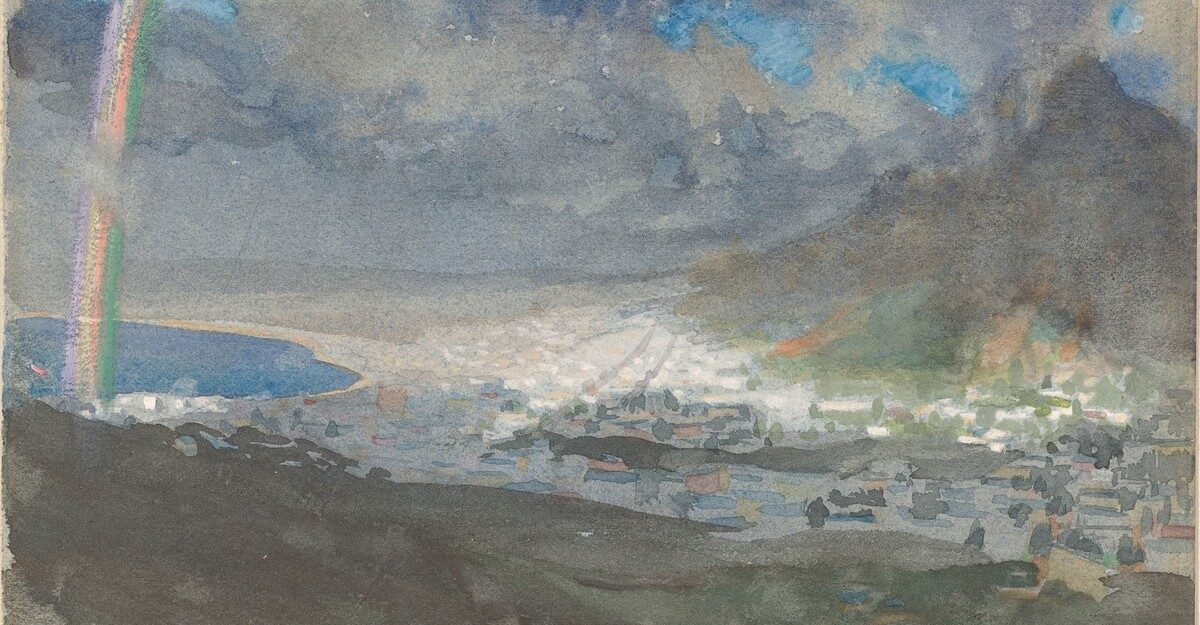
At a recent event, the novelist Marlon James was asked to name a book by another author that he wished he'd written. He picked Dogeaters, Jessica Hagedorn's 1990 novel about the Philippines. Although it is set in Manila during the rule of Ferdinand Marcos, James couldn't help thinking of Jamaica, the country he grew up in, as he read it. 'I thought: She knows Kingston,' he said. What he meant was that her book helped him better see the beauty, thrum, and chaos of the Jamaican capital, which would become the setting for his Booker Prize'winning novel, A Brief History of Seven Killings. Gary Shteyngart made a similar discovery about the slipperiness of literary inspiration when he traveled to Cape Town, South Africa, for The Atlantic, seeking traces of the Nobel Prize'winning author J. M. Coetzee. He was hunting for clues to decipher the author's parable-like novels in the homes Coetzee had lived in and the streets he had walked'but Shteyngart learned more from discovering what the author chose to leave out....
And by the way, did you know that among the many types of inlets'firth, ria, bayou, bight'stands the mighty seapoose' A seapoose is, very specifically, a shallow inlet along the shore of Long Island'you know, as in that old Southampton idiom 'Any seapoose in a storm.'...