
Twenty-five leading mathematicians signed an open letter arguing that AI labs are threatening their intellectual work as they seek to one-up each other with solutions to famous math problems. Each signatory has been awarded the Fields Medal, considered the most prestigious prize in mathematics. This week, NYU professor Tristan Buckmaster accused OpenAI of pressuring him not to credit a collaborator who works for Anthropic for solving an important math problem, and wondered if the company had used their work with Codex to produce its own groundbreaking proof over a marathon weekend of inference. While the ability of AI models to solve the world's outstanding mathematical challenges could be a boon to humanity, the signatories of the new letter argue that will only be the case if those solutions can be understood and communicated by the math community and, ultimately, the rest of the world. 'Often these solutions are announced in a rush, leaving no time for a proper writeup, the isolation of new methods and ideas, and citing relevant previous work of others,' they wrote ' and OpenAI's proof remains unverified. 'As in all creative professions, this raises severe attribution and plagiarism questions. Moreover, without the willing mathematicians who must take care of their development and integration into the mathematical canon, AI-conceived ideas would never become fully alive and the crucial human transmission chain between mathematicians would be lost.'...
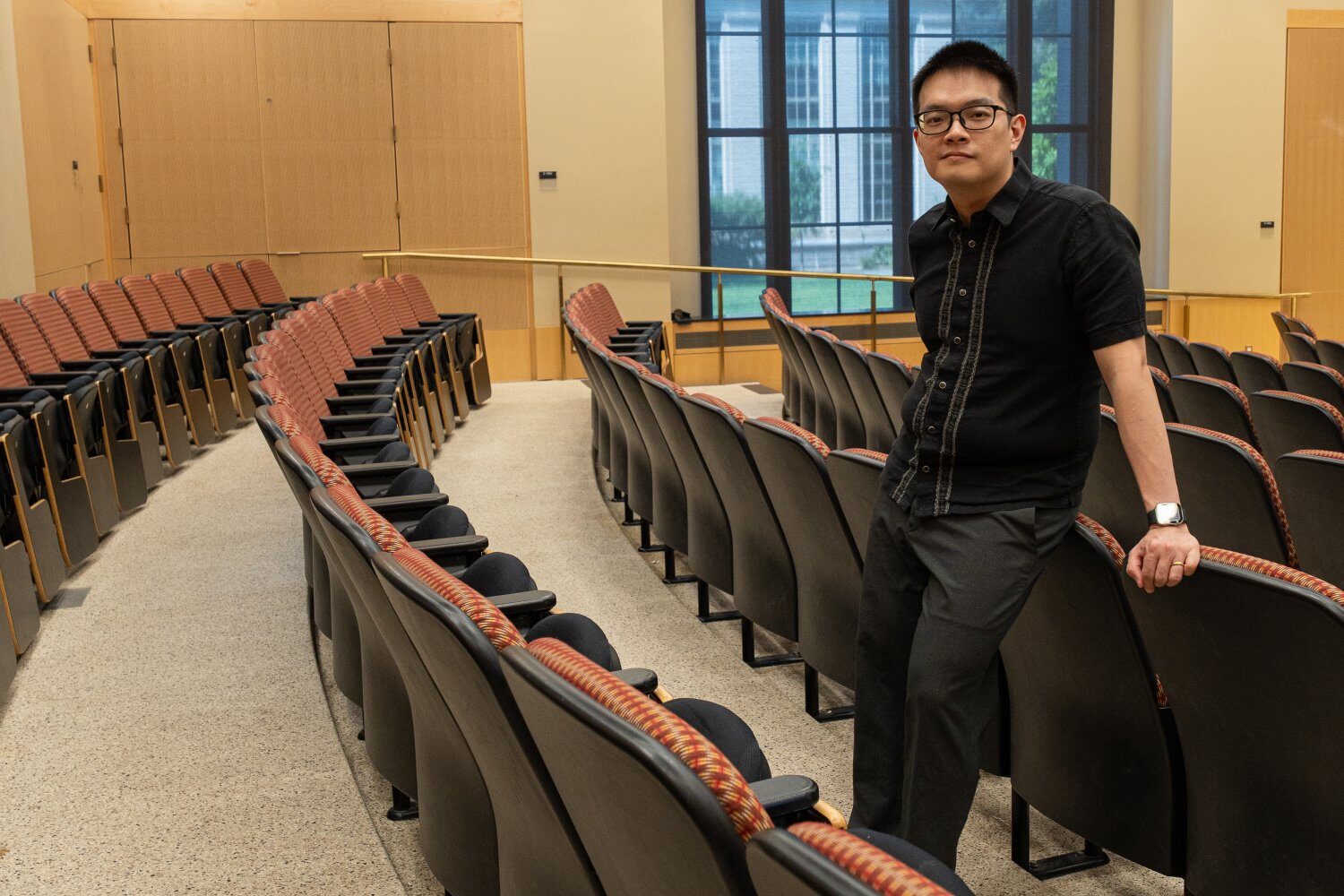
Solving complex social problems with multiple interrelated causes can involve juggling a variety of factors. Securing funding, designing the right programs, and sustaining the political will necessary to implement them demands a targeted approach. Lyonel Tanganco, a graduate student in MIT's Master in Data, Economics, and Design of Policy (DEDP) program, seeks to connect data, policy, and practice-based community interventions to improve living conditions and service delivery in middle-income countries. His studies have allowed him to work with innovative practitioners making real improvements in the world, he says. 'There's innovation at work in middle-income countries,' says Tanganco, a native of the Philippines. 'Seeing the attitudes to adopt and scale new policies and procedures to improve lives has been very interesting to me.' Taking those innovative practices and investigating their adaptability and potential to scale is at the heart of Tanganco's research and work. 'How do we make growth broad-based and inclusive'' he asks....

Monashees, one of Latin America's oldest and most influential VC firms, believes the next phase of the region's startup ecosystem requires a permanent Silicon Valley presence. The firm, which was founded more than two decades ago in Sao Paulo, last year opened a San Francisco office to connect LatAm's startup entrepreneurs with the money and AI research coursing through the Bay Area. When the firm was founded in 2005, Brazil didn't yet have a startup ecosystem ' there was no network of founders, no LPs backing VC firms based there, and no follow-on investors. That has changed drastically in the couple of decades since, with the country emerging as LatAm's startup powerhouse and a place where U.S. investors and tech giants are increasingly courting business. Brazil is an exceptionally digitally savvy market. It is the highest-volume market for Uber and the third-largest by visitor share for ChatGPT. Its real-time payment rail Pix, created by the Central Bank of Brazil, was rolled out in 2020 and is used by more than 90% of adults in the country....

For the third quarter in the past year, Mexico-based companies raised more venture capital in Q2 than their Brazilian counterparts, Crunchbase data on startup funding in Latin America shows, as Silicon Valley investors including Founders Fund and Andreessen Horowitz (a16z) led some of the largest deals in the region. Mexico's startups led the LatAm pack in Q2 ' by a wide margin. The country's startups raised $944 million in the second quarter, up 131% compared to $409 million in last year's Q2, and up 136% from the $401 million raised in this year's first quarter, per Crunchbase data. For comparison's sake, that's almost as much as Latin American startups as a whole raised in the second quarter of 2025. In general, a continued boom in late-stage and growth funding helped buoy the region for the period, Crunchbase data shows. Startups in Latin America raised a combined $1.36 billion across seed- and growth-stage deals in the second quarter, up 47% year over year and 22% from the first quarter....


