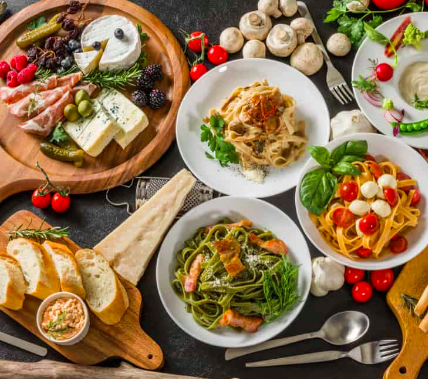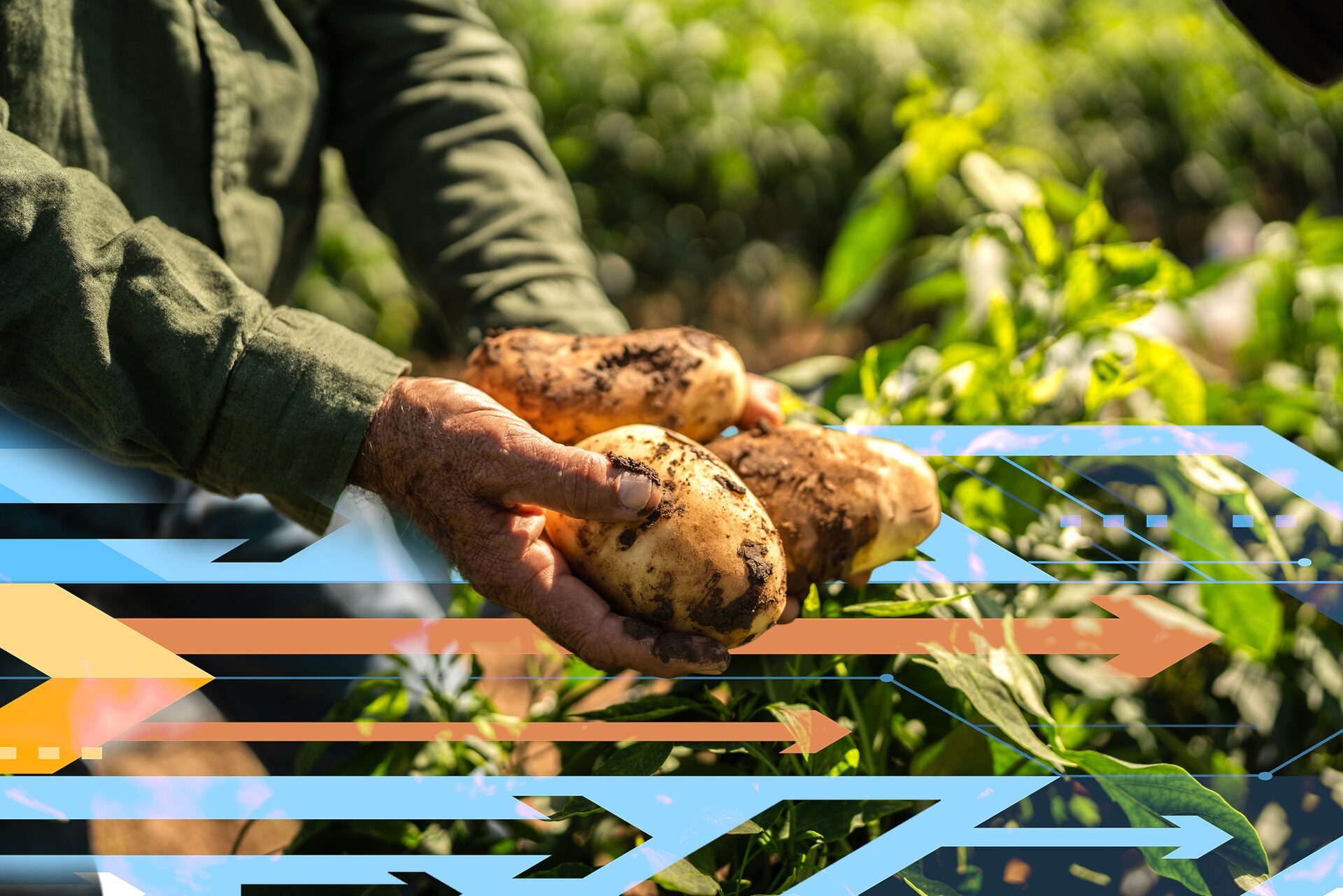
How will global access to food, water, and energy evolve in coming decades' A new study co-authored by MIT researchers suggests the answers could be very different depending on region, resource, and income. Based on extensive modeling of many different resource scenarios, the study finds that in some regions, lower-income people could be spending roughly 50 percent of their income on food by the year 2050, in contrast to higher-income groups that could spent about 5 percent of income on food in the same areas. 'For a lot of these outcomes, the lower-income groups see much worse potential insecurity,' says Jennifer Morris, a principal research scientist at the MIT Center for Sustainability Science and Strategy and the MIT Energy Initiative, and co-author of a new paper detailing the findings. The results, she notes, can be evaluated by policymakers in different global regions to understand what the long-term, large-scale resource security risks may become for different parts of their populations....

The small trial1 of 15 people is the first evidence that faecal transplants ' the transfer of gut bacteria harvested from the stool samples of healthy donors ' can treat a food allergy. 'Up until now, it's been in mouse models. Now we have people. And that's exciting,' says Cathryn Nagler, an immunology researcher at the University of Chicago in Illinois. Before taking part in the study, participants could not eat more than 100 milligrams of peanut protein, which is found in less than half a peanut, without developing an immune reaction. Four months after the transplant, one person could consume 300 milligrams of peanut protein and five people could eat 600 milligrams or more, the equivalent of about two and a half peanuts. 'Seeing any kind of efficacy in people' is remarkable, adds Nagler. Treatments for food allergies are limited and the standard advice is for people to avoid the allergen and to carry an adrenaline injection to administer if they are exposed to it and develop an immune reaction....

As far as I can tell, patient zero was a Swedish 24-year-old named Elsa Thora. 'Why did no one tell me ranch sauce is like crack'' she posted to X earlier this month, apparently hours after landing in Indianapolis for a monthlong World Cup trip. 'EUROPE WE NEED RANCH ASAP.' The post received 49,000 likes and propelled Thora to a very specific kind of fame. ('I guess I'm that Ranch girl now,' says her bio on Instagram, where she is also doing sponsored content for a Curacao-based online casino that takes only cryptocurrency. She was also, as my colleague Will Oremus recently pointed out, a star of both OnlyFans and the British tabloids before any of this.) Soon enough, ever more World Cup visitors were being charmed by ranch, and more Americans were being charmed by them being charmed. By late last week, the TSA had issued a statement: 'If you're visiting for a very large sporting event & you happen to discover RANCH while you're here' pls pack it in your CHECKED BAG on the way home' (92,000 likes). Shortly thereafter, Kraft posted a partially AI-generated image of supposedly-TSA-compliant mini-ranch packets, plus a promise that more details on how to buy them would be coming soon. No matter that the product did not actually exist yet, and that the desire for it had been ginned up in the internet's post-truth hall of mirrors; news stories about Kraft's stunt sprouted up like weeds after a summer rain. The cycle continued: more videos, more coverage, more social-media posts. There's no real reason that a police department in suburban Northern California needed to post on Facebook about 'a coordinated international enthusiasm for ranch dressing,' except for the obvious: They wanted to get in on the fun....
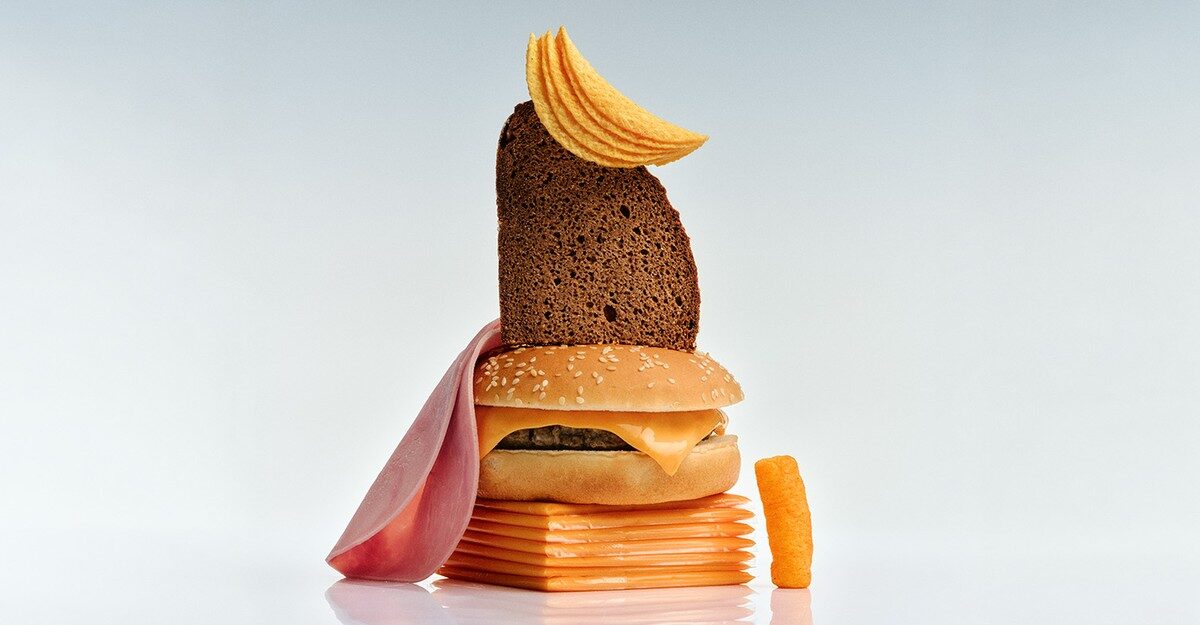
Once again, Americans are in a panic over what we eat. More than two-thirds of those surveyed now regard the industrially produced, ultra-processed foods, or UPFs, that dominate the U.S. food supply as addictive, according to a study published earlier this month in the American Journal of Public Health. That's just the start of it. Most respondents said that UPFs are a major source of type 2 diabetes, cardiovascular disease, and obesity. At least one-third blame these foods for causing cancer, ADHD, depression, and anxiety. And nearly half'corresponding to some 130 million American adults, if the survey's findings can be extrapolated'believe that UPFs are simply 'not what God intended for people to eat.' For the past couple of years, concerns about the potential health effects of UPFs have been highlighted in the media, and at nearly every level of the public-health establishment. New restrictions on the sale of UPFs have been introduced or passed in blue- and red-state legislatures alike. Health and Human Services Secretary Robert F. Kennedy Jr. has said repeatedly that UPFs are 'poisoning' Americans. And the World Health Organization is planning to put out global guidance on the problem....