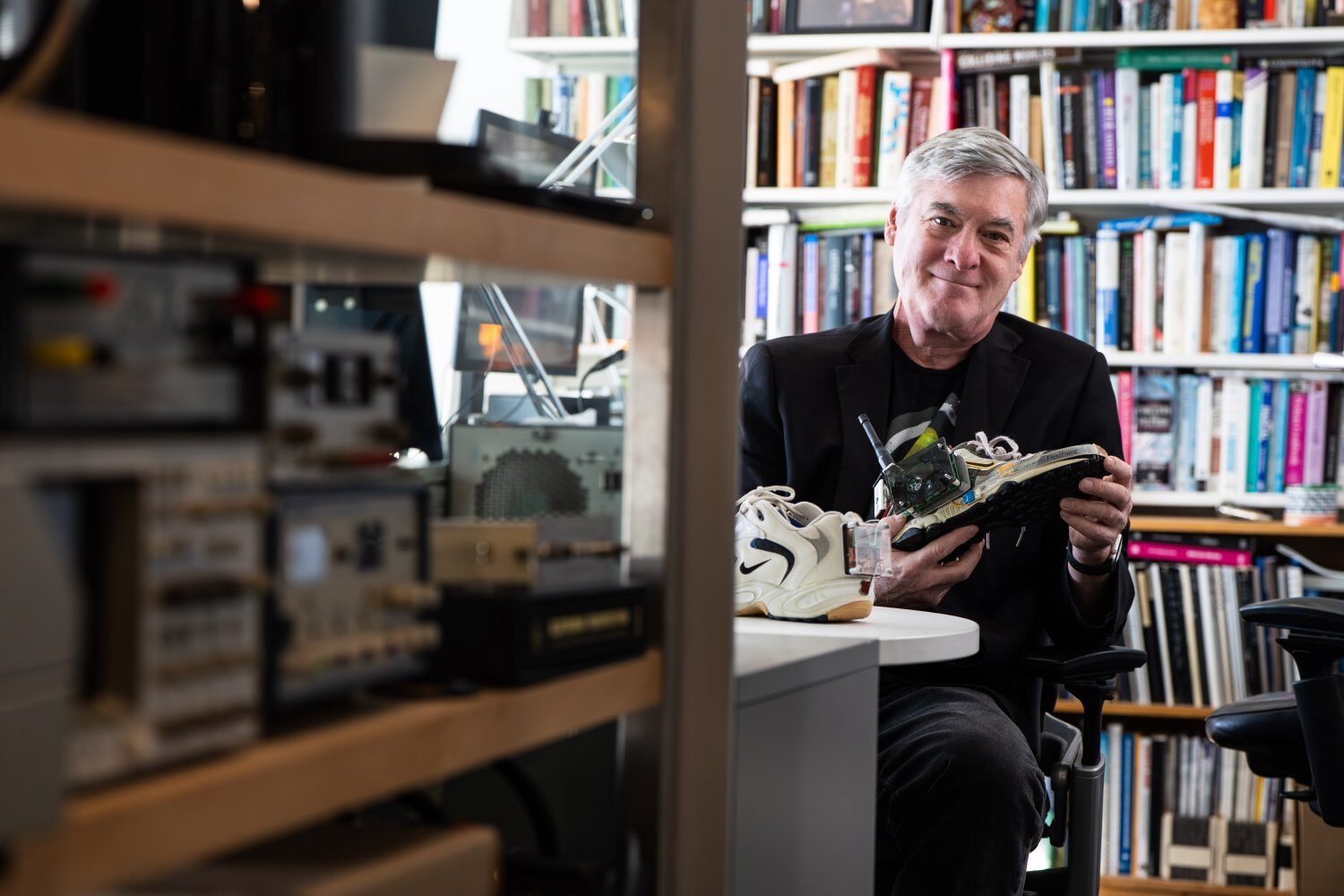
Paradiso was trained as a physicist and completed his PhD in experimental high-energy physics at MIT in 1981. His father was a photographer and filmmaker working at MIT, MIT Lincoln Laboratory, and the MITRE Corporation, so he grew up in a house where artists, scientists, and engineers regularly gathered and interesting music was always playing. That mix of influences led him to the MIT Media Lab, where he is the Alexander W. Dreyfoos Professor, academic head of the Program in Media Arts and Sciences, and director of the Responsive Environments research group. At the Media Lab, Paradiso conducts research that engages sensing of different kinds and applies it across diverse and often extreme applications. He works on developing technologies that can efficiently capture and process multiple sensing modalities, and leverages this capability in application domains like the internet of things, medicine, environmental sensing, space exploration, and artistic expression. These efforts use that information to help people better understand the world, express themselves, and connect with one another....
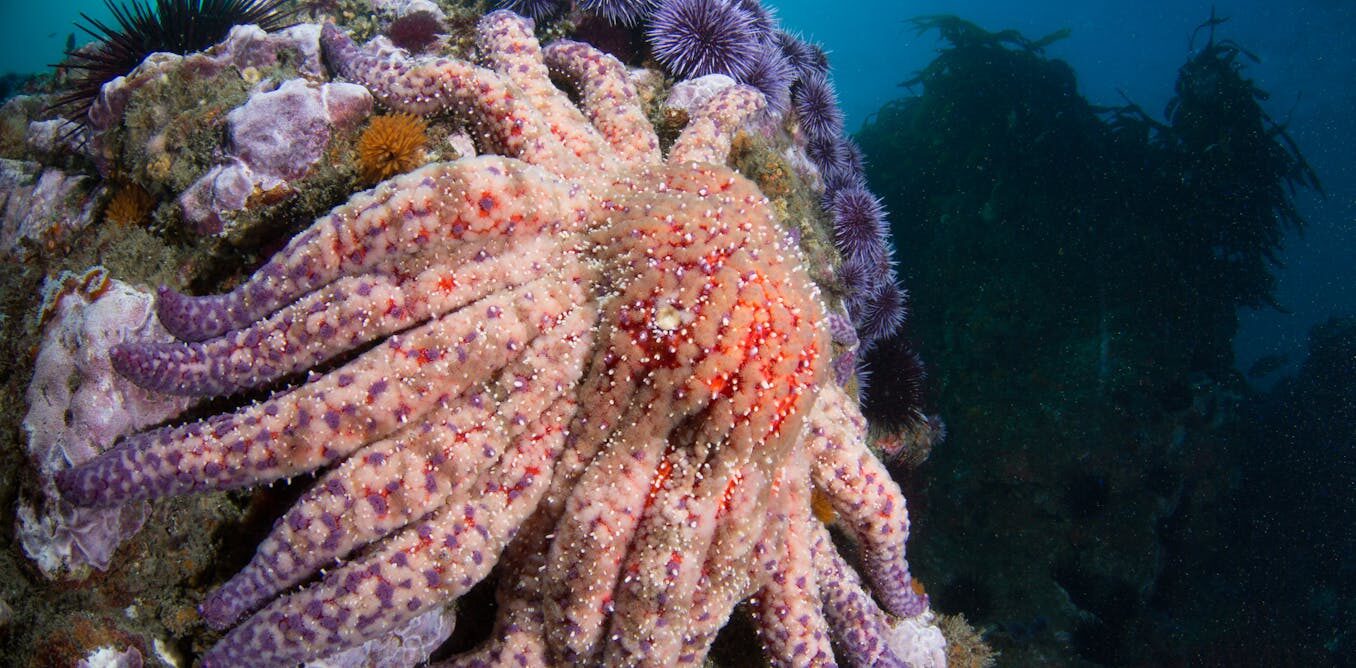
Before 2013, divers on North America's west coast rarely saw purple sea urchins. The spiky animals, which are voracious kelp eaters,- were a favorite food of the coast's iconic sunflower sea stars. The giant sea stars, recognizable for their many arms, kept the urchin population in check, with the help of sea otters, lobsters and some large fishes. Then, in 2013, recreational divers began noticing gruesomely dissolving sea star corpses and living sea stars that were writhing and twisting, their arms dropping and literally walking away. It was the beginning of a sea star wasting disease outbreak that would nearly wipe out all the sunflower sea stars along the coast. Their disappearance, combined with a massive marine heat wave called 'the blob,' set off a cascade of catastrophic ecological changes that turned these kelp biodiverse hot spots into vast sea urchin barrens, devoid of almost any other species. This disaster also encouraged human innovation, however. The result has brought an unexpected boost for the local fisheries and restaurants through the development of a new culinary delight, and questions about how best to help kelp forests, and the US$500 billion in economic value they provide, recover for the future....
To understand what drives disease progression in tissues, scientists need more than just a snapshot of cells in isolation ' they need to see where the cells are, how they interact, and how that spatial organization shifts across disease states. A new computational method called MESA (Multiomics and Ecological Spatial Analysis), detailed in a study published in Nature Genetics, is helping researchers study diseased tissues in more meaningful ways. The work details the results of a collaboration between researchers from MIT, Stanford University, Weill Cornell Medicine, the Ragon Institute of MGH, MIT, and Harvard, and the Broad Institute of MIT and Harvard, and was led by the Stanford team. MESA brings an ecology-inspired lens to tissue analysis. It offers a pipeline to interpret spatial omics data ' the product of cutting-edge technology that captures molecular information along with the location of cells in tissue samples. These data provide a high-resolution map of tissue 'neighborhoods,' and MESA helps make sense of the structure of that map....

In some cultures, people are frugal while in others they tend to be generous. Some cultures favour meticulous planning while others favour living in the moment. Theories abound about how and why differences like these between cultures emerge and, increasingly, researchers are looking to the environments people live in for answers. Scientists have long speculated about where cultural differences come from. Some have highlighted the role of institutions such as the Catholic Church. Others have pointed to the kind of crops traditionally grown in different regions, such as rice in the south of China and wheat in the north. But a growing body of evidence suggests that human culture can be shaped by key features of the environment. Michael Varnum, an associate professor of psychology at Arizona State University in the US, wanted to track how much of an impact it made. Using data from over 200 countries, Varnum and his team studied the connections between nine ecological variables ' including rainfall and temperature, but also inequality, population density and disease threat ' and 66 cultural variables including personality traits, social values and motivation....


