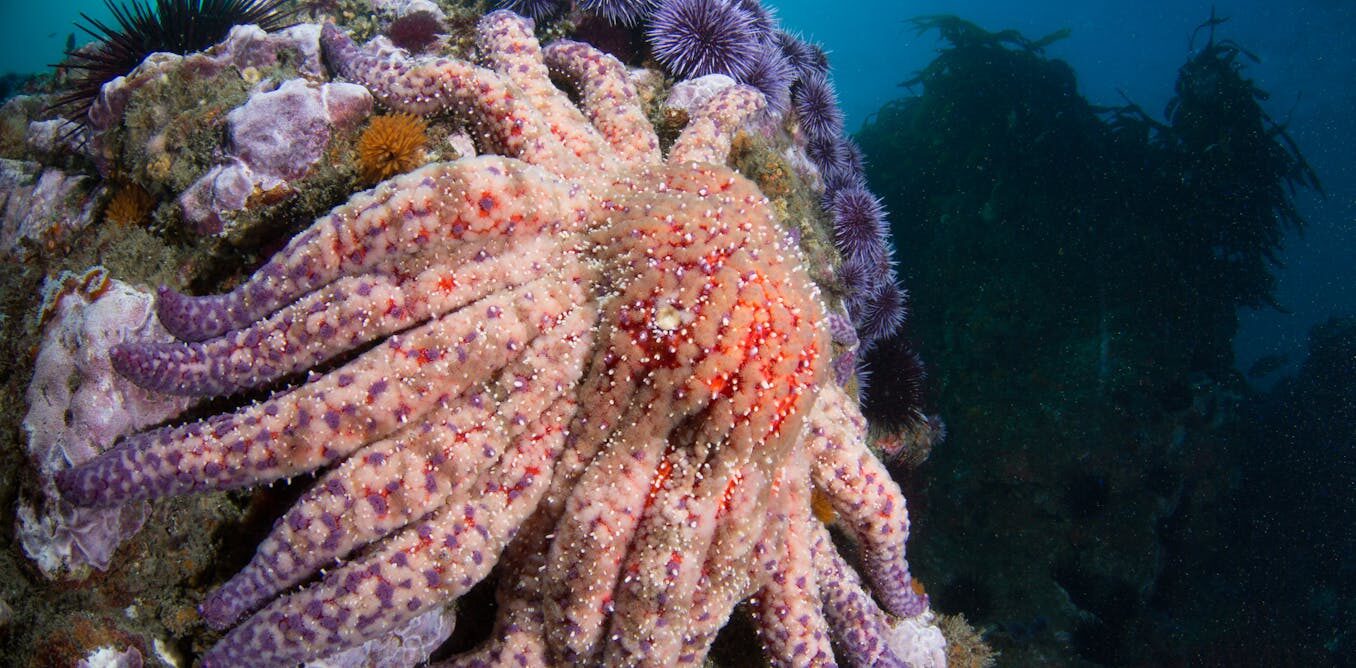
Before 2013, divers on North America's west coast rarely saw purple sea urchins. The spiky animals, which are voracious kelp eaters,- were a favorite food of the coast's iconic sunflower sea stars. The giant sea stars, recognizable for their many arms, kept the urchin population in check, with the help of sea otters, lobsters and some large fishes. Then, in 2013, recreational divers began noticing gruesomely dissolving sea star corpses and living sea stars that were writhing and twisting, their arms dropping and literally walking away. It was the beginning of a sea star wasting disease outbreak that would nearly wipe out all the sunflower sea stars along the coast. Their disappearance, combined with a massive marine heat wave called 'the blob,' set off a cascade of catastrophic ecological changes that turned these kelp biodiverse hot spots into vast sea urchin barrens, devoid of almost any other species. This disaster also encouraged human innovation, however. The result has brought...
learn more