In recent years, scientists have been exploring how this type of diet might affect other aspects of health and disease, including cancer. While some research has shown that the diet may protect against the development of colon cancer, a new study by MIT researchers suggests that in the small intestine, a ketogenic diet may increase the risk of cancer. 'Ketogenic diets have distinct effects on different tissues even within the gastrointestinal tract. I think the message here is that we need to be very careful in generalizing the effects that these diets can have, because what might be beneficial for one tissue may be detrimental for another tissue,' says Omer Yilmaz, director of the MIT Stem Cell Initiative, an associate professor of biology at MIT, and a member of MIT's Koch Institute for Integrative Cancer Research. Yilmaz is the senior author of the study, which appears today in Nature. MIT postdocs Jessica Shay and Fangtao Chi are the lead authors of the paper. Researchers from the labs of Alex K. Shalek, director of MIT's Institute for Medical Engineering and Science, and Matthew Vander Heiden, director of the Koch Institute, also contributed to the study....
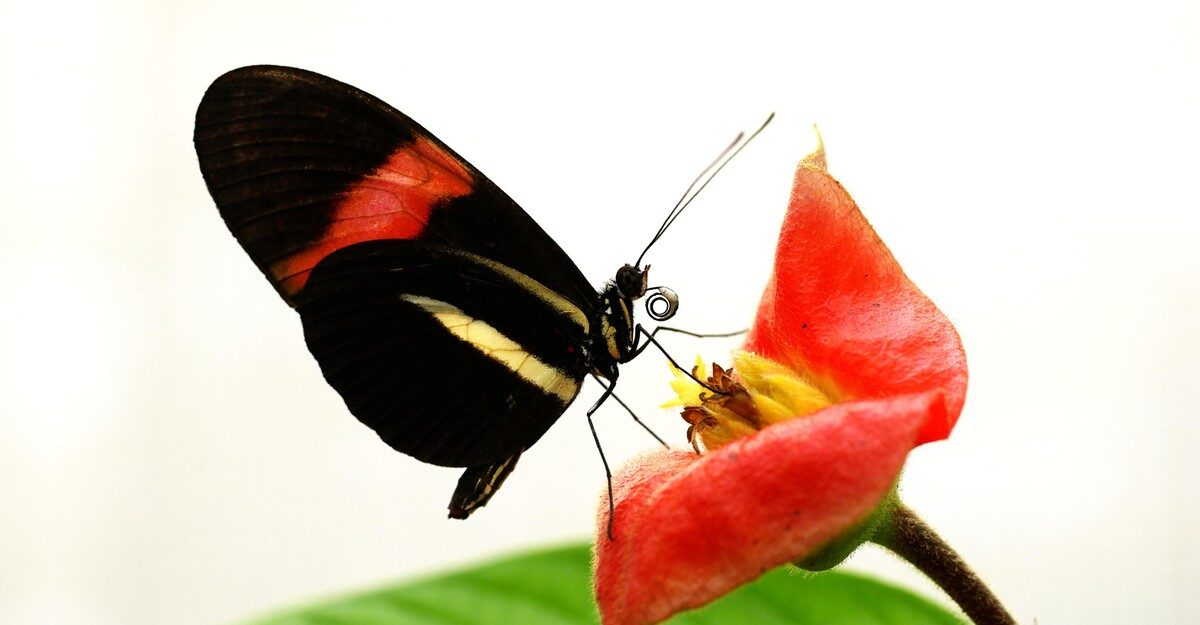
For most butterfly species, an adult's life is brief and'with all due respect to butterflies'unextraordinary. After emerging from its chrysalis, a butterfly will stretch its new wings and set off in search of nectar and sex, spending the rest of its days flitting among flowers, mates, and spots to lay eggs. Within a few weeks, it'll be dead. Not so for Heliconius butterflies. Adults in this genus can survive for many months after metamorphosizing, which ranks them among the longest-lived butterflies ever documented. In one case, scientists observed a Heliconius species in a butterfly house living close to a year'25 times longer than relatives in a similar genus. From the human perspective, that's the rough equivalent of another great-ape species surviving for more than a millennium. Through their final moments, too, these butterflies maintain an unusual vivacity. In experiments, aged Heliconius feed, flap, and lay eggs just as vigorously as their younger peers; even their muscle strength doesn't measurably deteriorate, according to a new paper, published today in Nature Communications, from Jessica Foley, a researcher at Tufts University studying aging, and her colleagues. Foley has seen Heliconius butterflies zooming around their cage all day, only to find them dead come nightfall. 'I not sure how they're declining,' or really if they are at all, she told me. The butterflies seem to defy the typical process of aging....

For true fans of Diet Coke, soda is sacrament, and reverence comes with strict parameters. The fountain version served at McDonald's is thought to represent the peak of the form, but given the choice between plastic, glass, and metal vessels, conventional wisdom dictates that Diet Coke tastes best in aluminum cans. In recent weeks, those cans have reportedly been disappearing from shelves across India. Because the country's Diet Coke comes only in aluminum-can form, Reuters notes, it's at the mercy of ongoing supply issues stemming from the war in Iran. The Middle East has the capacity to produce 7 million metric tons of aluminum each year (75 percent of which is exported). That's 9 percent of the world's production capacity. And since the fighting began in late February, prices have continued to climb worldwide. The base price of a ton of aluminum surpassed $3,600 in April, a four-year high. The metal shows up everywhere in daily life: solar panels, MacBooks, airplane fuselage, deodorant, over-the-counter heartburn pills, cans of grocery-store cold brew. We're nowhere close to mass shortages in the United States, but around the world, the price shocks are already here....

Back in the early 1970s, psychologists at Northwestern University performed an experiment that, on the surface, looked like a child's fantasy. The researchers gathered 45 college women and asked some of them to drink a milkshake'or two. Then they placed three pints of ice cream in front of each woman and asked her to taste each one. Afterward, they told each participant to 'help herself to any of the remaining ice cream, as she wished,' the researchers wrote in the Journal of Personality. Finally'and this was key'each woman completed a survey meant to measure how much she dieted or 'restrained' her eating, outside of the treats she had just consumed. The findings were dramatic. On average, the women who said they didn't diet or have weight concerns ate less ice cream if they drank at least one milkshake. The first sweet treat satiated their hunger. But for the women who dieted and felt worried about their weight, the milkshake appeared to unleash a hidden hunger. On average, they ate 66 percent more ice cream after the milkshake than they did without it....