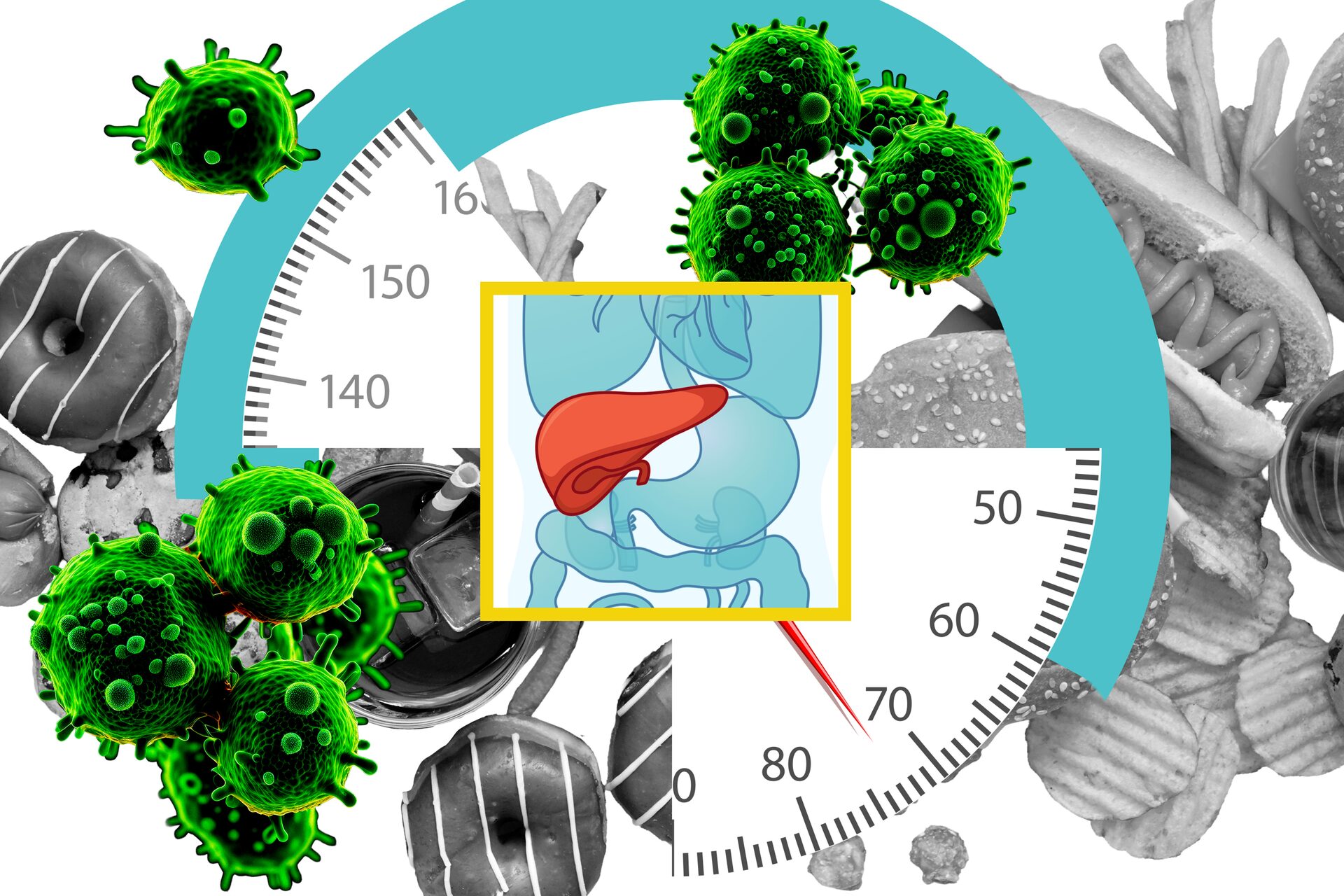
The researchers found that in response to a high-fat diet, mature hepatocytes in the liver revert to an immature, stem-cell-like state. This helps them to survive the stressful conditions created by the high-fat diet, but in the long term, it makes them more likely to become cancerous. 'If cells are forced to deal with a stressor, such as a high-fat diet, over and over again, they will do things that will help them survive, but at the risk of increased susceptibility to tumorigenesis,' says Alex K. Shalek, director of the Institute for Medical Engineering and Sciences (IMES), the J. W. Kieckhefer Professor in IMES and the Department of Chemistry, and a member of the Koch Institute for Integrative Cancer Research at MIT, the Ragon Institute of MGH, MIT, and Harvard, and the Broad Institute of MIT and Harvard. The researchers also identified several transcription factors that appear to control this reversion, which they believe could make good targets for drugs to help prevent tumor...
learn more