
Neutrinos are the pervasive yet intangible particles that permeate the universe, streaming through whole planets, stars, and our bodies by the trillions each second. The elementary particles are often described as 'ghostly' for their near-zero mass and their elusive nature, as they have very little interaction with normal matter. Since their discovery in 1956, neutrinos have continued to surprise physicists with their unexpected properties and behaviors. For instance, the particles come in multiple 'flavors' and can morph from one to the other like subatomic shape-shifters. Neutrinos may also be their own anti-particle, in a Jekyll-and-Hyde-like quantum duality. And their extremely weak interactions make them nearly impossible to detect. Last year, scientists seemed to add to the particle's mystique, with a concept for a neutrino laser. They proposed that a concentrated beam of neutrinos could be produced by cooling a cloud of radioactive atoms to nanokelvin temperatures, one-billionth the temperature of interstellar space. Slowed to a near-frozen crawl, the atoms would form a Bose-Einstein condensate and should act as one quantum, coherent whole, in a way that speeds up and amplifies their radioactive decay. The physicists assumed that neutrinos, being a natural byproduct of radioactive decay, should also be amplified, and that such a process should emit a laser-like beam of the ghostly particles....

Today, anyone with a large enough artificial intelligence model can generate millions of new material designs in minutes. Unfortunately, that hasn't led to a huge leap in the number of new materials being used to improve the performance of products like computer chips and rockets. One reason for the translation gap is that current models don't reliably factor in the chemical stability of the materials they generate, and unstable materials aren't very useful in the real world. That forces industries to allocate huge computational budgets to screening out all the unstable materials they generate, in some cases leaving behind a tiny fraction of usable options. Now, MIT researchers have developed a framework that can be applied at the beginning of the materials generation process to vastly improve the stability rate while achieving targeted material properties. It works by ensuring every design satisfies certain key rules of chemistry relating to the electrons around the materials' atoms before the expensive generation step begins. The researchers call their approach 'crystal generator with valence-constrained design, or CrysVCD....
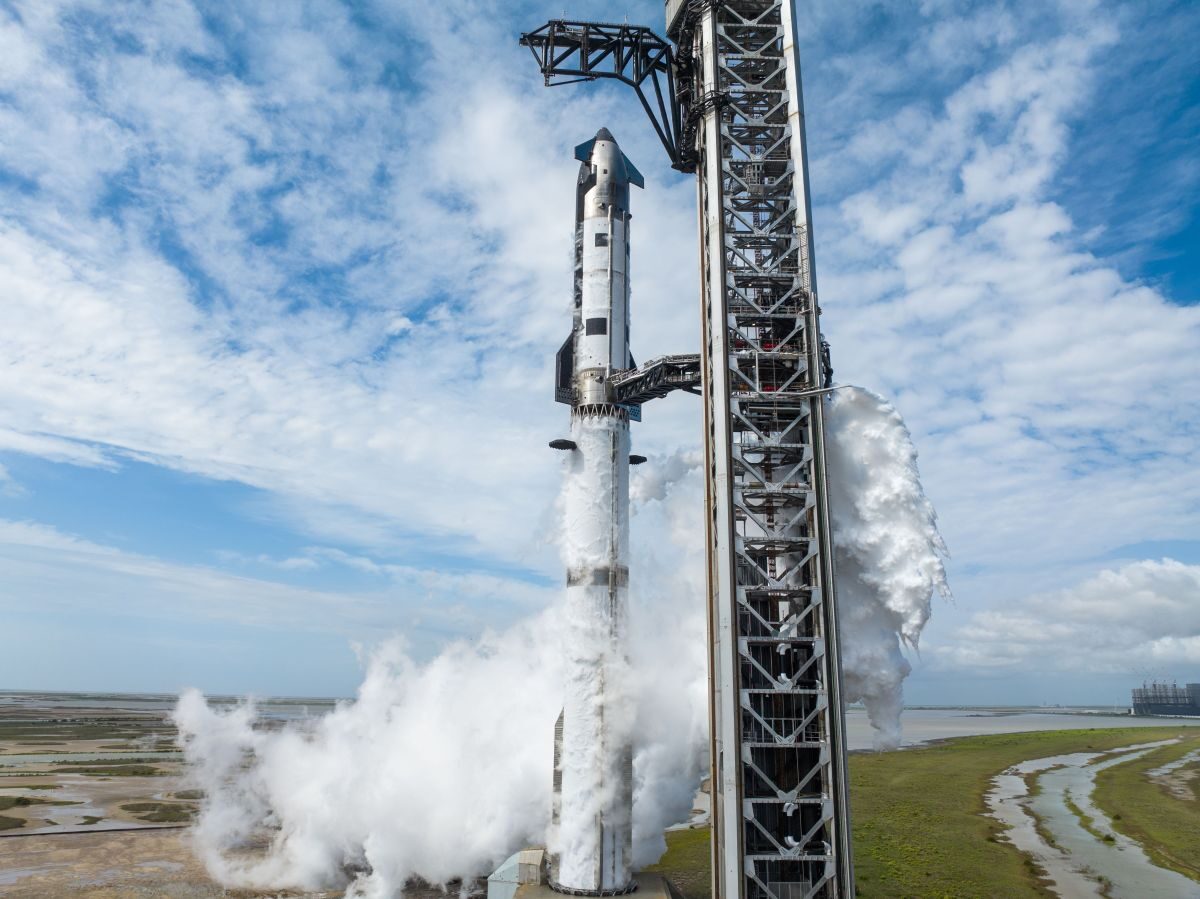
SpaceX has announced it will build a second spaceport for future launches of its Starship mega-rocket at a former Exxon property in Louisiana, ending what the company says was a seven-year search for a suitable location. The new launch site will sit along the Gulf Coast in Vermilion Parish, west of New Orleans and roughly 10 hours from the company's existing Starbase complex in South Texas. SpaceX says it is investing $100 billion, with construction starting in 2027. SpaceX claims the first Starship launch will take place in 2029. Louisiana Economic Development (LED), the state agency that oversees business development, offers a slightly more conservative timeline. It says construction will start by the end of 2027 with 'initial operations expected to come online in 2030.' Before any of that happens, SpaceX is still trying to prove that it can fly Starship into low-Earth orbit and make the rocket reusable, like its existing Falcon 9 and Falcon Heavy rockets. SpaceX has performed 13 test flights of Starship since 2023, and while the company has ticked off a lot of development boxes, it still has a lot of work to do....
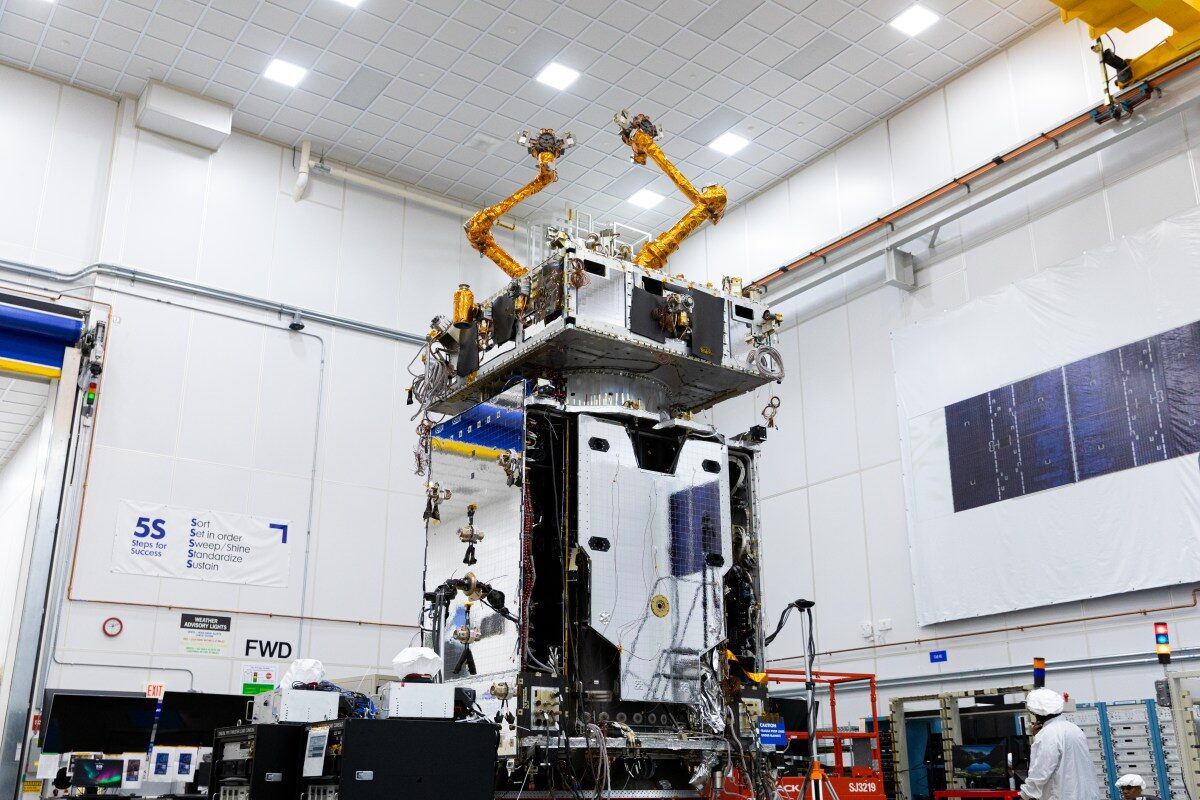
This week, a spacecraft built and operated by Northrop Grumman called a Mission Extension Vehicle (MEV) unplugged from a communications satellite operated by the Australian firm Optus. For more than a year, the MEV spacecraft has been stuck to the back of the Optus satellite, keeping it in the right place in space so it can continue its mission. Now, the satellite life-extension spacecraft is leaving to make room for its replacement. In July, four new Northrop spacecraft launched into orbit on a SpaceX Falcon 9 rocket. One is called the Mission Robotic Vehicle (MRV), a powerful satellite equipped with two advanced robotic arms that was developed by DARPA, the U.S. military research organization. The other three are called Mission Extension Pods, or MEPs, smaller, simpler satellites that are essentially modular propulsion systems. Those four spacecraft are currently headed for targets around 27,000 miles above the Earth. In 2027, the MRV will use its robotic arms to attach one of the MEP pods to the Optus satellite, which should keep it in orbit for years to come....


