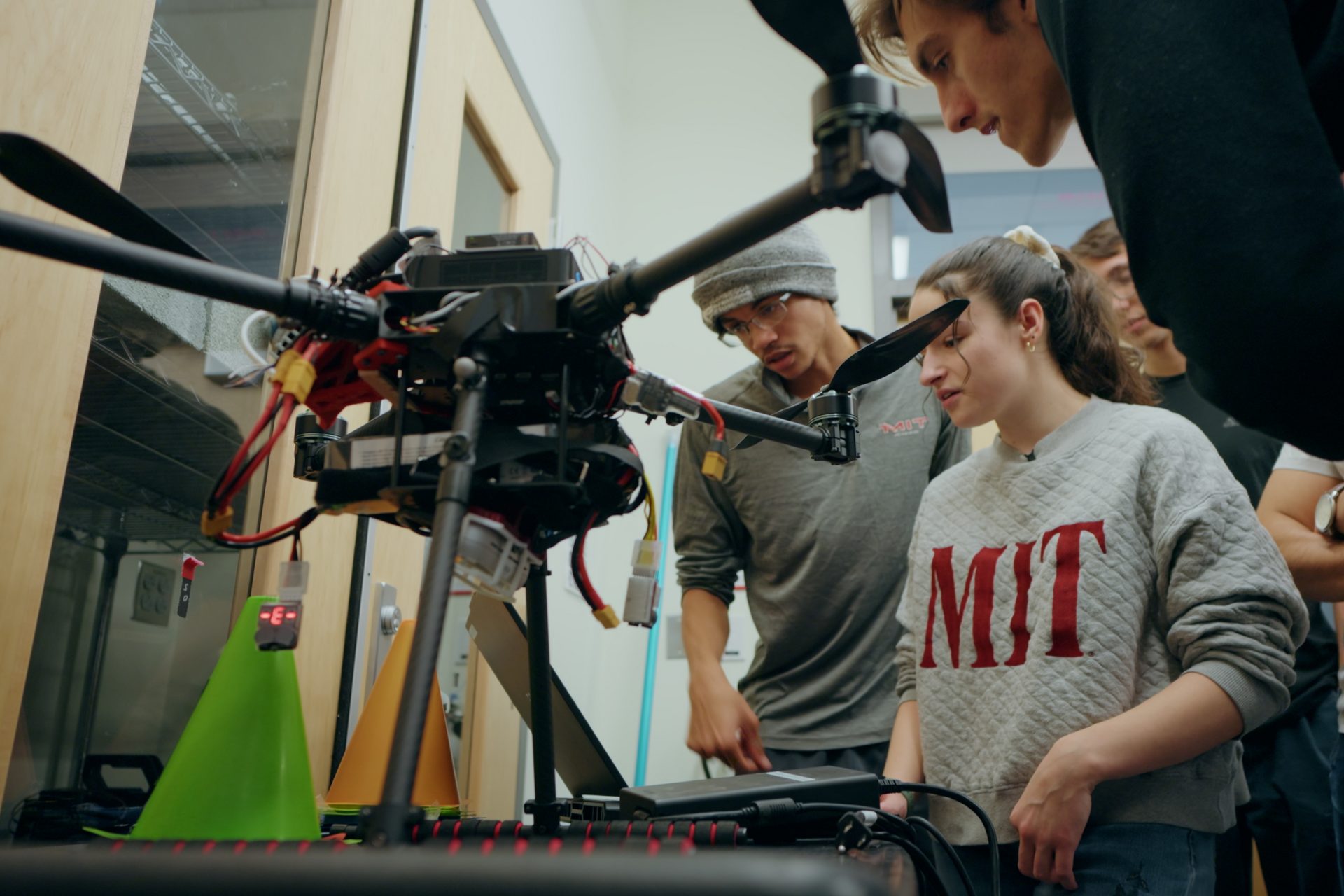
Flying on Mars ' or any other world ' is an extraordinary challenge. An autonomous spacecraft, operating millions of miles from pilots or engineers who could intervene on Earth, must be able to navigate unfamiliar and changing environments, avoid obstacles, land on uncertain terrain, and make decisions entirely on its own. Every maneuver depends on careful perception, planning, and control systems that are fault-tolerant, allowing the craft to recover if something goes wrong. A single miscalculation can leave a multi-million dollar spacecraft face-down on the surface, ending the mission before it even begins. 'This problem is in no way solved, in industry or even in research settings,' says Nicholas Roy, the Jerome C. Hunsaker Professor in the MIT Department of Aeronautics and Astronautics (AeroAstro). 'You've got to bring together a lot of pieces of code, software, and integrate multiple pieces of hardware. Putting those together is not trivial.' Not trivial, but for students...
learn more