Christopher Pelkey was shot and killed in a road range incident in 2021. On May 8, 2025, at the sentencing hearing for his killer, an AI video reconstruction of Pelkey delivered a victim impact statement. The trial judge reported being deeply moved by this performance and issued the maximum sentence for manslaughter. As part of the ceremonies to mark Israel's 77th year of independence on April 30, 2025, officials had planned to host a concert featuring four iconic Israeli singers. All four had died years earlier. The plan was to conjure them using AI-generated sound and video. The dead performers were supposed to sing alongside Yardena Arazi, a famous and still very much alive artist. In the end Arazi pulled out, citing the political atmosphere, and the event didn't happen. In April, the BBC created a deep-fake version of the famous mystery writer Agatha Christie to teach a 'maestro course on writing.' Fake Agatha would instruct aspiring murder mystery authors and 'inspire' their 'writing journey.'...
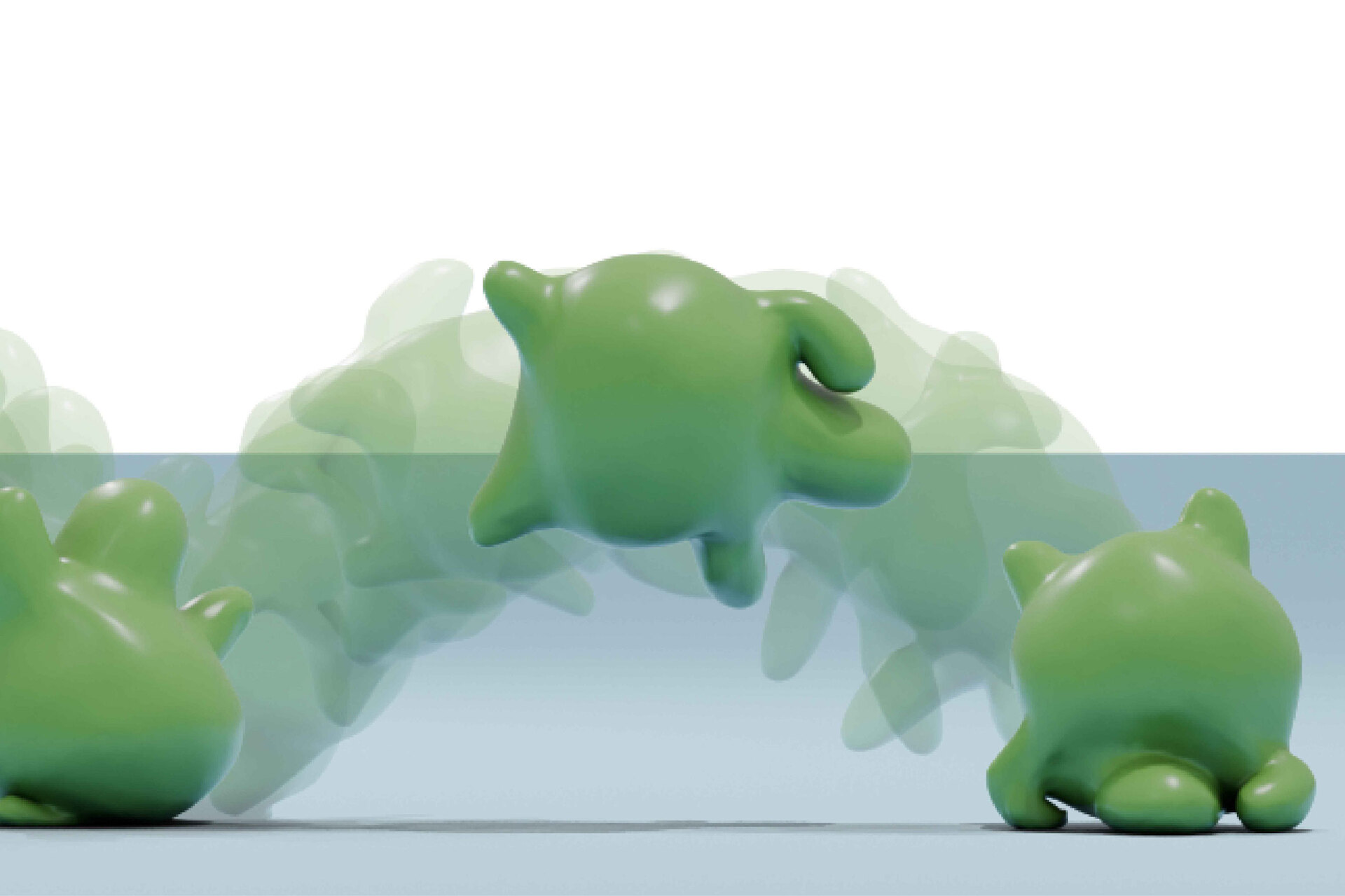
The technique simulates elastic objects for animation and other applications, with improved reliability compared to other methods. In comparison, many existing simulation techniques can produce elastic animations that become erratic or sluggish or can even break down entirely. To achieve this improvement, the MIT researchers uncovered a hidden mathematical structure in equations that capture how elastic materials deform on a computer. By leveraging this property, known as convexity, they designed a method that consistently produces accurate, physically faithful simulations. 'The way animations look often depends on how accurately we simulate the physics of the problem,' says Leticia Mattos Da Silva, an MIT graduate student and lead author of a paper on this research. 'Our method aims to stay true to physical laws while giving more control and stability to animation artists.' Beyond 3D animation, the researchers also see potential future uses in the design of real elastic objects, such as flexible shoes, garments, or toys. The method could be extended to help engineers explore how stretchy objects will perform before they are built....
TuSimple shut down its U.S. self-driving truck operations and delisted from the stock market in January 2024, three years after raising $1.35 billion in its IPO. The company had originally planned to restart operations in China, but earlier this year, TuSimple parted ways with most of its autonomous driving staff. Shortly after, it started hiring for roles related to AI animation and gaming. Chen owns or has ties to several other animation and gaming companies. And it appears Chen's other businesses are involved in TuSimple/CreateAI's new venture. In a recent filing, TuSimple said that the board approved a $25 million deal in November with two game development companies that are affiliated with Chen to develop and distribute 'Heroes of Jin Yong,' a role-playing video game. To reduce potential conflicts of interest, in May 2024, Chen transferred his ownership interest in those companies to a trust that he does not control, though the beneficiaries of the trust are members of his family, per the filing....
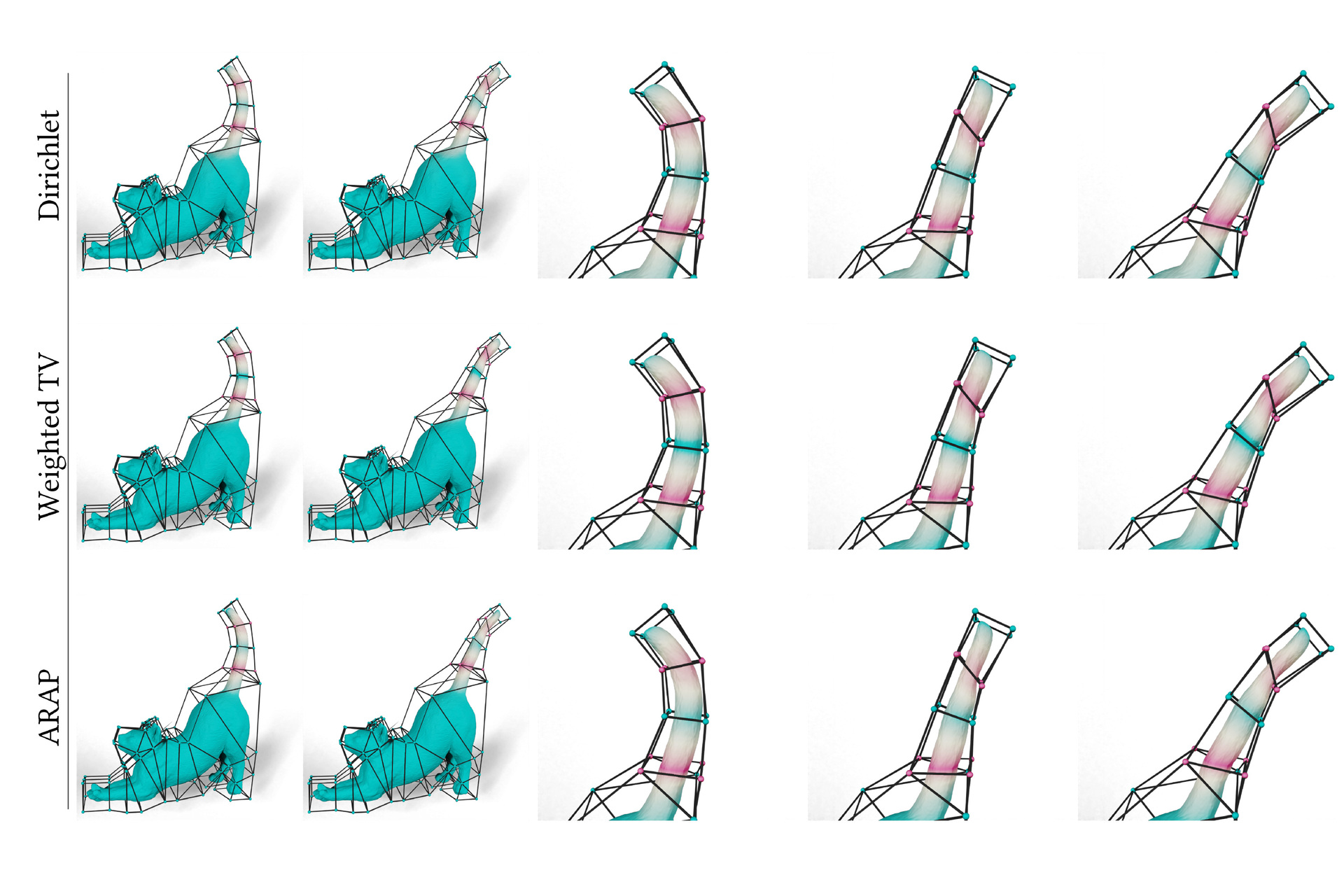
Their method generates mathematical functions known as barycentric coordinates, which define how 2D and 3D shapes can bend, stretch, and move through space. For example, an artist using their tool could choose functions that make the motions of a 3D cat's tail fit their vision for the 'look' of the animated feline. Many other techniques for this problem are inflexible, providing only a single option for the barycentric coordinate functions for a certain animated character. Each function may or may not be the best one for a particular animation. The artist would have to start from scratch with a new approach each time they want to try for a slightly different look. 'As researchers, we can sometimes get stuck in a loop of solving artistic problems without consulting with artists. What artists care about is flexibility and the 'look' of their final product. They don't care about the partial differential equations your algorithm solves behind the scenes,' says Ana Dodik, lead author of a paper on this technique....