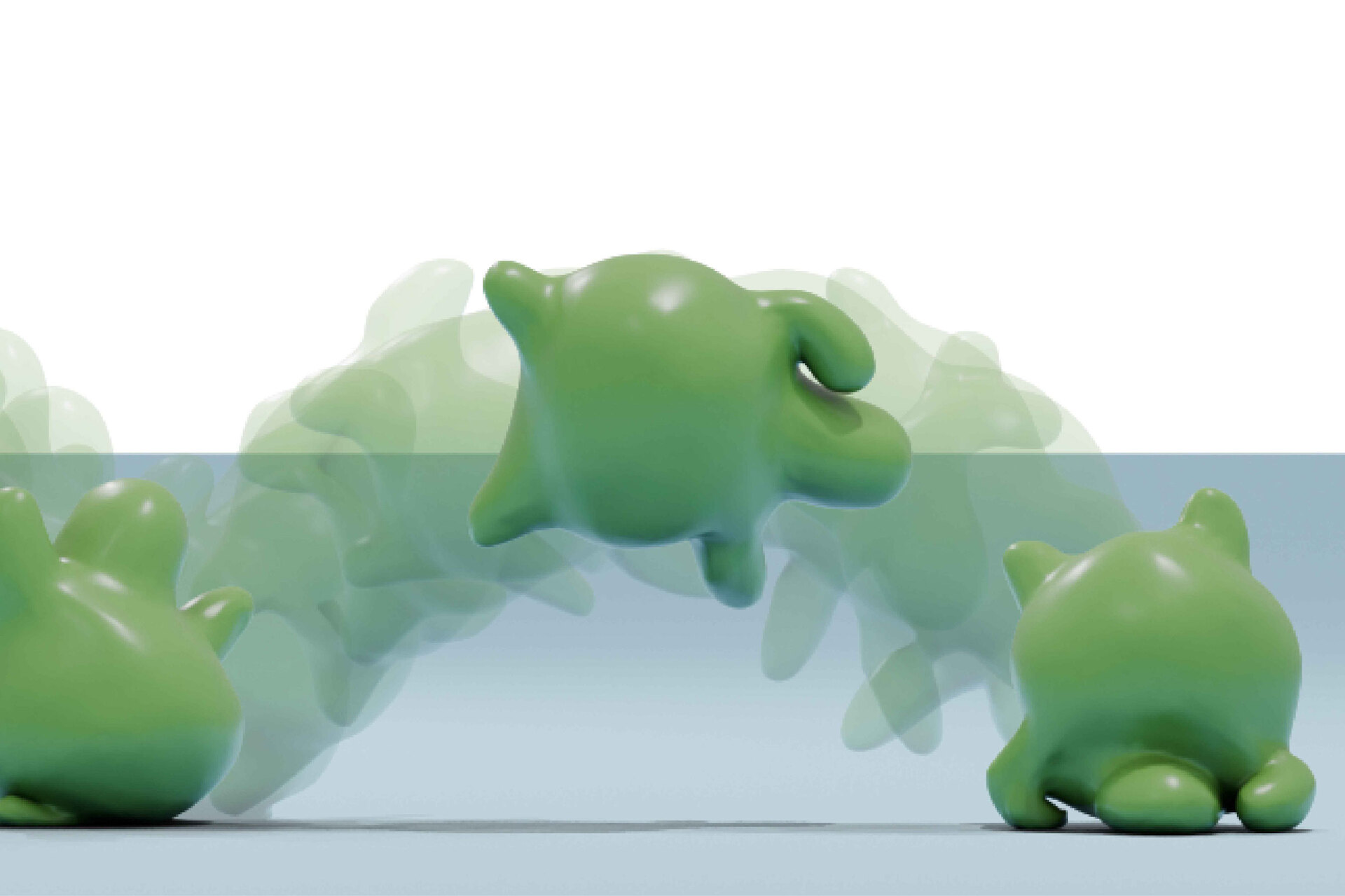
The technique simulates elastic objects for animation and other applications, with improved reliability compared to other methods. In comparison, many existing simulation techniques can produce elastic animations that become erratic or sluggish or can even break down entirely. To achieve this improvement, the MIT researchers uncovered a hidden mathematical structure in equations that capture how elastic materials deform on a computer. By leveraging this property, known as convexity, they designed a method that consistently produces accurate, physically faithful simulations. 'The way animations look often depends on how accurately we simulate the physics of the problem,' says Leticia Mattos Da Silva, an MIT graduate student and lead author of a paper on this research. 'Our method aims to stay true to physical laws while giving more control and stability to animation artists.' Beyond 3D animation, the researchers also see potential future uses in the design of real elastic objects,...
learn more