
Generative artificial intelligence models are rooted in ideas of mid-20th century engineers who thought some amount of irrationality was essential for a machine that could think like a human, contends Benjamin Lindquist, an assistant professor in the MIT History Section, who holds an MIT Schwarzman College of Computing shared position with the Department of Electrical Engineering and Computer Science (EECS) and is a principal investigator in the Laboratory for Information and Decision Systems. To mimic creative thinking, these AI pioneers intentionally injected randomness into algorithms designed to deterministically solve problems, Lindquist writes in a new paper that appears in the journal Past and Present. In the paper, he traces the origins of AI hallucinations back to this early research and suggests there will be inevitable tradeoffs between creativity and predictability when trying to build machines that mimic human behavior. MIT News spoke with Lindquist about these ideas. A: There is a long history of many figures in the world of science and art theorizing that chance plays an important part in discovery and creativity ' in the ability to originate ideas. They equated creativity with unexpected leaps of logic, or even a dream-like state that allows you to think about things from a new perspective....

TLDR: Most AI systems get better at tasks without getting any better at learning. DeepMind's DiscoRL goes after that machinery itself: a neural network represents the update rule, and a population of agents supplies the experience used to discover rules that produce better learners. Its Disco57 rule, discovered on Atari57, trained fresh agents on ProcGen and DMLab-30 without further meta-training, a concrete case of intelligence being applied to the procedure that creates intelligence. We trace the lineage from MAML, learned optimizers, and Learned Policy Gradient, then unpack the two-level credit-assignment problem inside DiscoRL's loop, what zero-shot transfer of a learning rule really tests, why the economics come down to amortizing discovery cost across many training runs, and why interpretability matters before anyone adopts a learned rule. We close with what a genuinely recursive next step would have to show: discovered improvements that keep producing measurable gains after accounting for compute and evaluation effort....
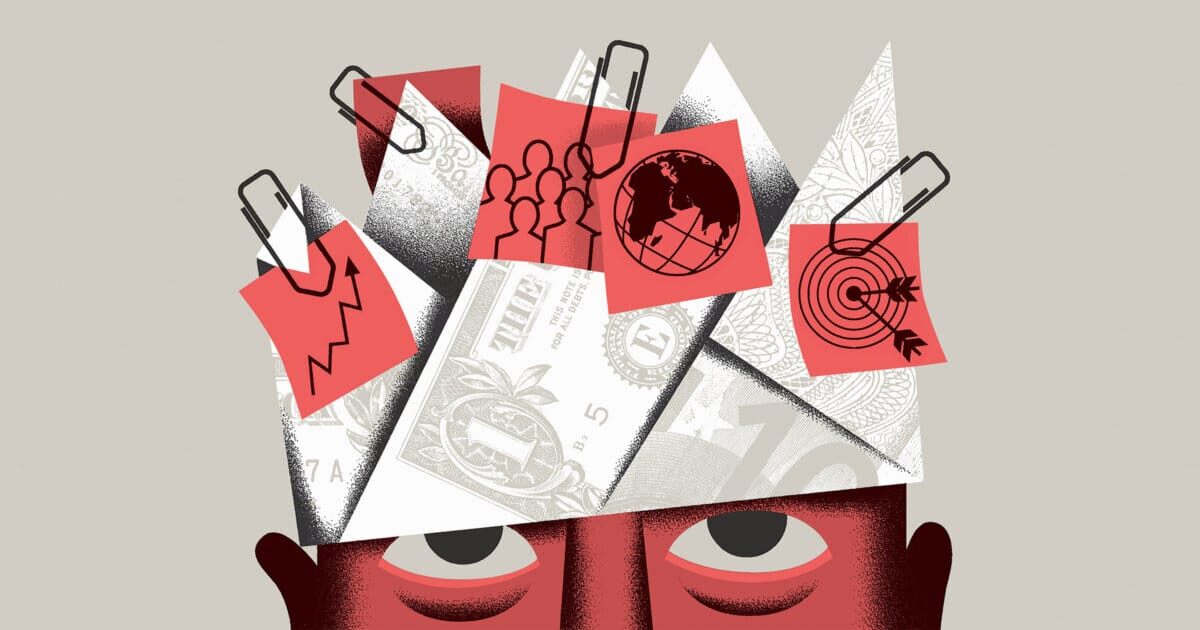
Why do so many data science efforts still fail organizations' In many cases, there is a gap between the models that data scientists produce and the information that business managers need. Data science work must do more than model data: It must connect to the specific decisions managers face. Here's how leaders can sharpen their focus on decision science. Imagine that, as an operations manager at a global retailer, you have invested heavily in data science. Your data science team has built sophisticated models that produce demand predictions for the company's products with impressive accuracy. Yet, when the CEO, seeking to increase profit, asks you how much inventory should be held and where, the answers are not clear. The models predict demand but do not tell management what to do with those predictions. After investing millions of dollars in data science solutions, the company realizes it has many insights about demand but few decisions to act upon. This is not a unique scenario. Studies suggest that 60% to 85% of data science projects end in failure.1 The reason is not usually bad algorithms or incompetent data scientists. More often, there is a disconnect between the models that the data scientists produce and the information that business managers actually need. Often, the data scientist does not speak the language of business, and management does not speak the language of the data scientist.2 Data scientists are trained to focus on prediction and accuracy metrics, whereas managers' focus is on making choices that improve business metrics such as cost, market share, or profit. As a result of this communication gap, models often look elegant on paper but sit unused in practice. As one pair of analytics experts put it, 'The number one reason data science projects fail is because businesspeople and data scientists, individually and collectively, don't understand the real business problem at hand.'3 The focus on the actual business decision is missing....

Carter Leffen couldn't believe his eyes when the artificial-intelligence model GPT-6 Astra decoded a secret German army message that had been encrypted for 85 years. Leffen, who has no cryptography experience, asked the model to decipher the message, nudged it a few times to keep thinking and encouraged it to keep working when he went to bed. Sure enough, when he woke up in the morning, it had a solution. Leffen is one of many non-experts who are now using large language models (LLMs) to break historical codes. Their efforts harness the LLMs' ability to rapidly deploy decryption algorithms while also searching the Internet for extra historical documents or information that might help. Cryptography specialists are thrilled at the surge in interest in codebreaking ' but they are also being overwhelmed by a deluge of requests to validate AI solutions, which can often be incorrect. 'There are so many false positives that are coming in from people who don't really understand cryptanalysis,' says Elonka Dunin, a retired game developer in the Washington DC area who has written books on cryptography....


