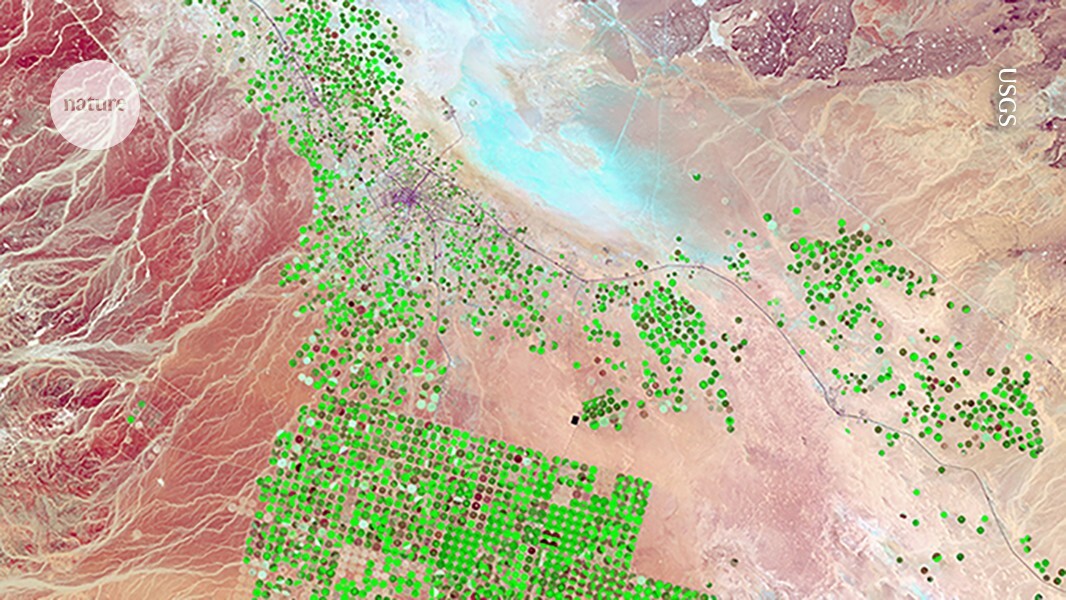
The technology giant Google has released an artificial intelligence (AI) model that acts as a 'virtual satellite' to weave together trillions of disparate observations ' satellite images, radar and more ' to track changes in land and shallow waters across Earth. Researchers are lauding the sheer scale of the effort while also calling on Google for more information about its tests, and warning that it will be up to individual scientists to verify any maps they obtain from the tool. The model, called AlphaEarth Foundations, maps the world 'at any place and time', Christopher Brown, a research engineer at Google DeepMind in New York City, said at a press briefing on 28 July. Scientists might use it to identify the best places for clean-energy projects, study the ecological impacts of climate change, track deforestation and more. Alongside the model, which was released yesterday, Google and its DeepMind AI unit have posted a paper, ahead of peer review, to the arXiv preprint server1. The manuscript describes the creation of the model, its initial testing and baseline data sets covering Earth during the years 2017'24. It says that AlphaEarth beats similar AI models in terms of both accuracy and data density, and that the model saves users computing time and reduces energy use....


