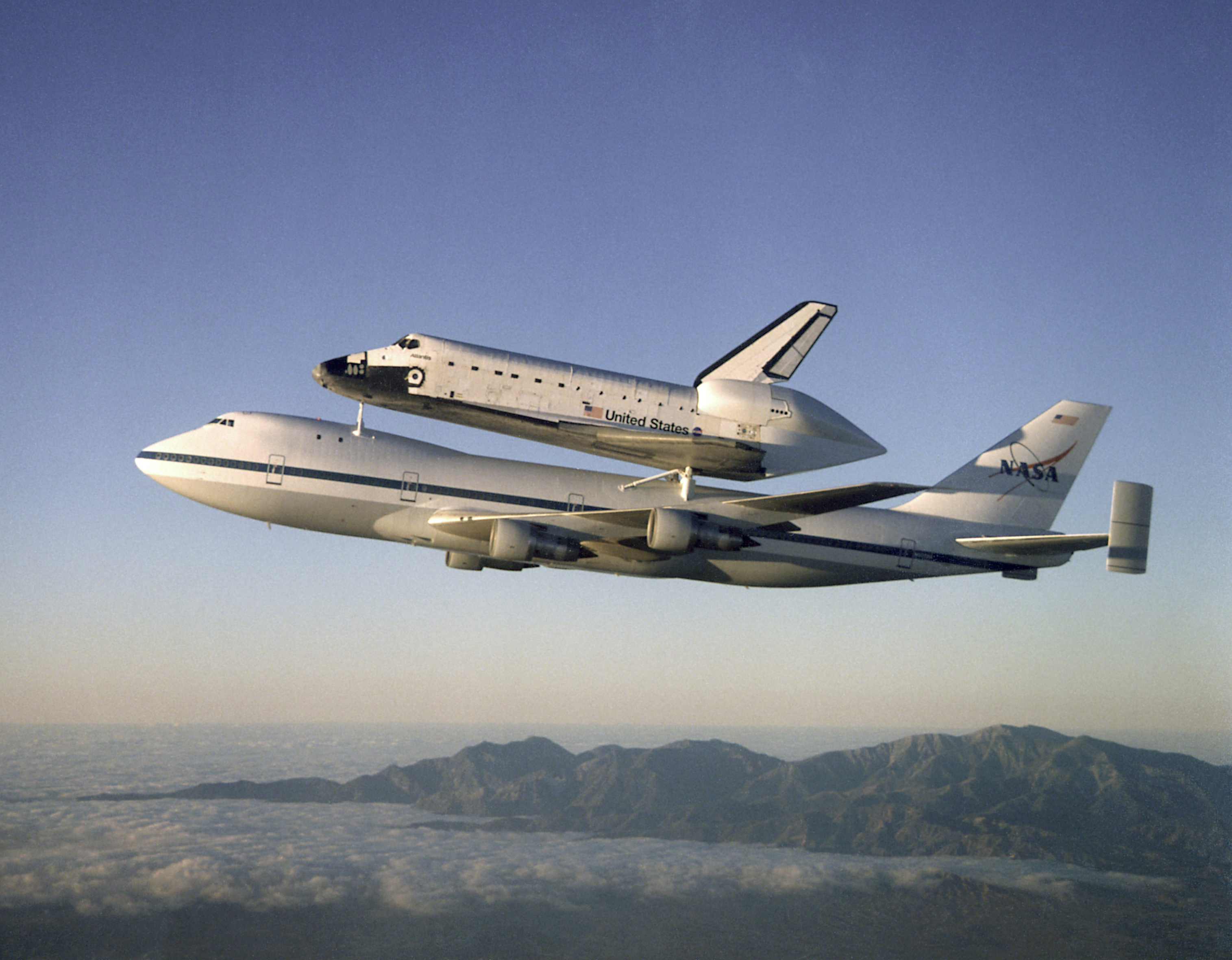
Founder, CEO, and tireless Nvidia hype man Jensen Huang told attendees at the Goldman Sachs Communacopia + Technology conference on Thursday why his company's AI domination ' and revenues ' will continue its record-breaking growth streak through the end of next year. There's been endless hand-wringing over whether Nvidia's party will end as it faces increasing competition for GPUs and AI chips from all directions: the hyperscalers (Amazon, Microsoft, and Google, each building their own) and the AI labs (Anthropic and OpenAI, which are building their own), as well as from newly public competitor Cerebras and startups such as Etched. 'Most people think Nvidia builds a chip. I mean, you need airplanes to ship what we build,' Huang said, adding that the company continues to battle a perception from its early days. Nvidia invented the GPU, which back then were largely sold to consumers to improve PC gaming. 'One GPU now is not $399. It's $8.5 million dollars. That's one GPU, all connected with NVLink, 2 million parts, right' 250,000 kilowatts. That's a GPU, and we ship thousands of them.'...
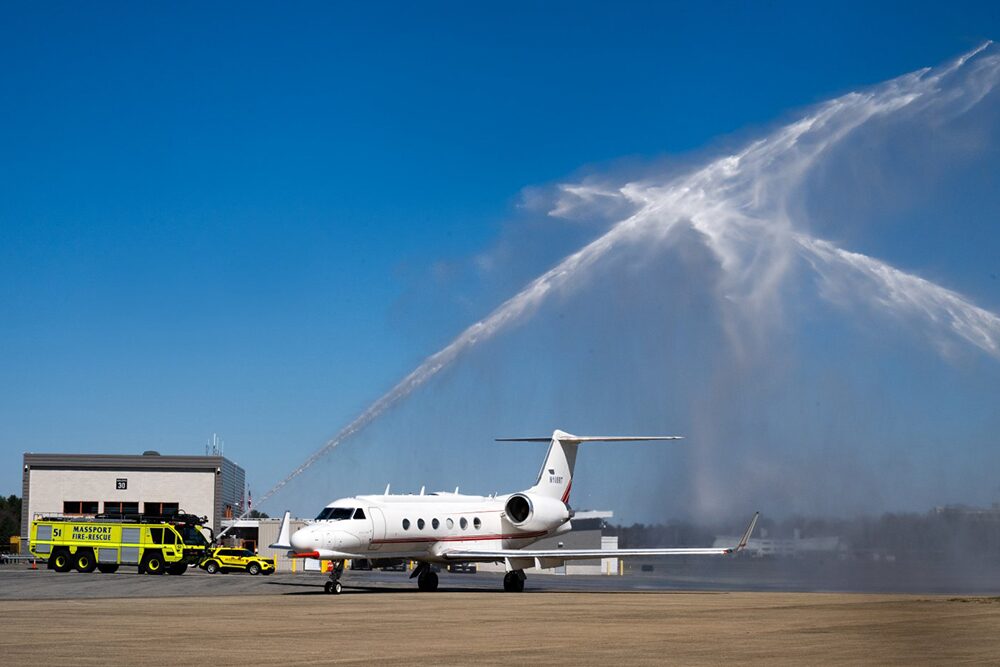
After extensive modifications over the past seven years, the Gulfstream IV (G-IV) aircraft operated and maintained by MIT Lincoln Laboratory's Tactical Defense Systems Group and Flight Test Facility (FTF) recently flew home from Canada. Transforming the standard business jet into a highly specialized research platform ' which will support the U.S. Air Force's Air Vehicle Survivability Evaluation (AVSE) program for decades to come ' represented the largest and most complex airborne test bed modernization in Lincoln Laboratory history. The Tactical Defense Systems Group, assisted by the FTF, coordinated the effort with the Toronto-based aerospace company Field Aviation. "Our team made hundreds of trips to Canada and dedicated countless weekends to keep the project moving along," says David Culbertson, FTF manager. "Seeing the aircraft finally return to the laboratory invoked a sense of pride and satisfaction." For more than 40 years, the Tactical Defense Systems Group has supported the AVSE program, leveraging airborne test beds to assess how U.S. aircraft and space assets fare against current and emerging threats. The group had been conducting airborne testing for the AVSE program with a modified Gulfstream II (G-II) since the early 1990s. In 2013, they began a series of studies to replace the G-II because parts availability issues were looming. These studies concluded that the G-IV was the best option, given its performance and capabilities, including its respectively higher altitude and longer range; long-term sustainability; and cost. The laboratory purchased the G-IV in 2015....

CEO John Pearson has had a role in the success of global logistics and courier company DHL Express for the past 40 years. In this Q&A, he explains how the company embeds purpose into its operations rather than treating it as a value statement; the formula that puts people ahead of profit; a leadership self-assessment that forces executives to rank their own commitment to purpose; and a program that repurposes DHL's aircraft and logistics network for disaster relief. John Pearson has been CEO of DHL Express and on the DHL Group board of management since 2019. He joined the global logistics and courier company in 1986 and has held senior management positions in its divisions in the Middle East, the Asia-Pacific region, the U.S., and Europe. MIT Sloan Management Review spoke with Pearson about DHL's commitment to a corporate culture rooted in its purpose: 'Connecting people, improving lives.' This interview has been edited for clarity and length. John Pearson: It starts with our traditional four pillars: hiring motivated people, driving service quality, creating customer loyalty, and delivering a profitable network. I simplified that to three letters: P plus Q equals G ' people plus quality equals growth. In both cases, we start with people ' getting people engaged and being a great place to work....
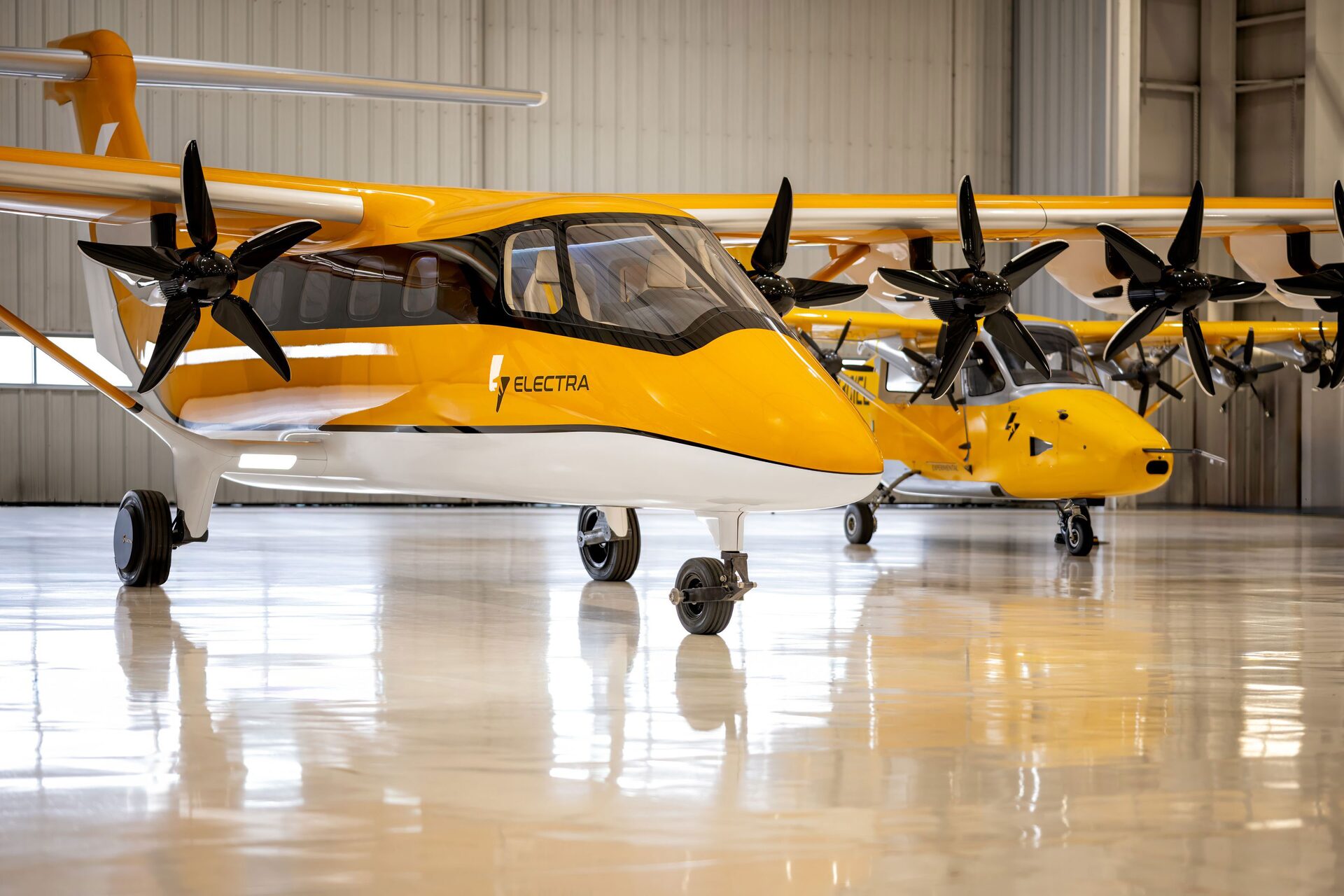
Electra began as an idea for a hybrid plane that could take off from shorter runways than traditional airplanes but have more range and speed than all-electric aircraft. Now, like other great MIT projects, it's making an impact far beyond campus. The company's fixed-wing aircraft is designed to make travel easier, especially for people who don't live in the immediate vicinity of a major airport. The plane features a smaller, more efficient engine than traditional planes, along with batteries to give it added power during takeoffs and landings. With a range of around 1,200 miles and a cruising speed of around 200 miles per hour, the plane could improve the travel experience for many kinds of trips while cutting down on fuel use. And, given the much shorter runway needs and quieter operation than traditional planes, the plane can leverage unique access points such as barges, parking lots, and soccer fields to take off and land instead of traditional airports. 'Helping people travel between 50 and 250 miles is the sweet spot for this technology,' says Electra Director of Technology Development Chris Courtin SM '19, PhD '24. 'This can be a better option than driving or commercial airlines for many kinds of trips. There's a lot of people traveling in that range and a huge amount of friction in existing ground and air transport systems. This could be a big benefit to those people.'...