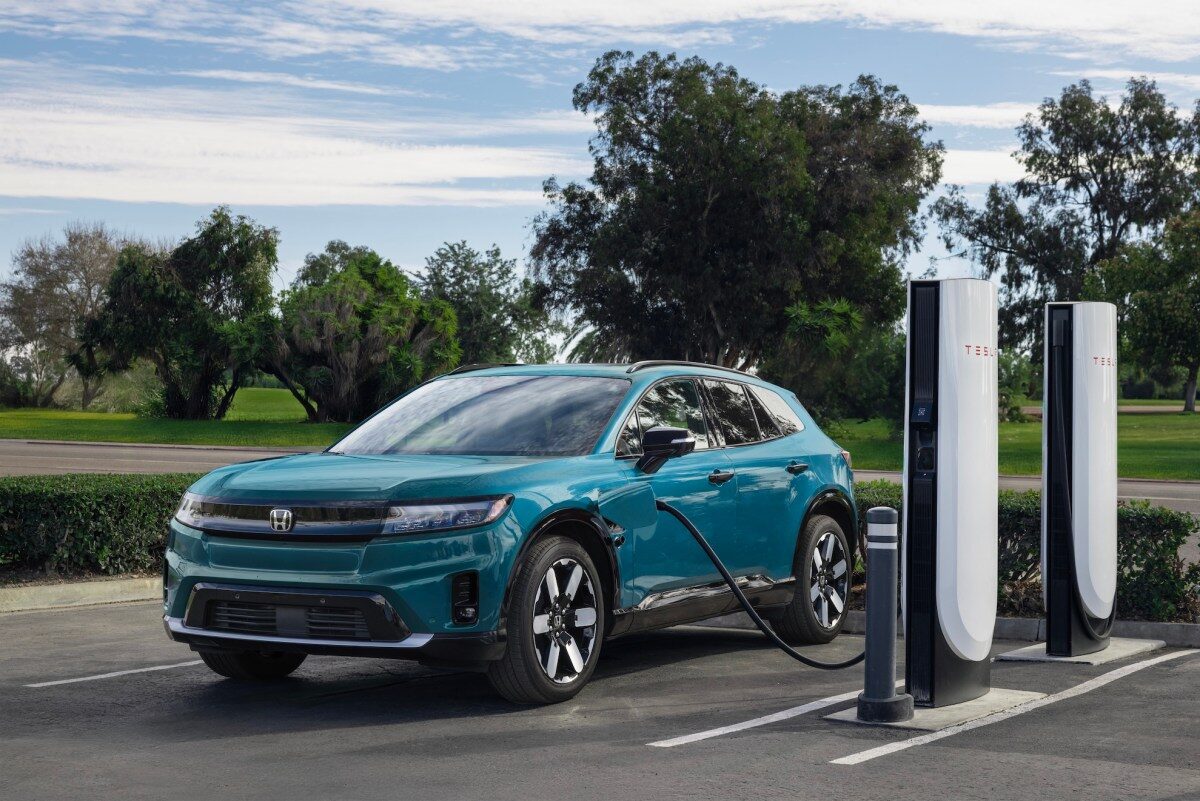
The Honda Prologue, you may have heard, is officially dead ' a decision the company confirmed to TechCrunch, removing the last all-electric vehicle from the automaker's U.S. portfolio. The Prologue's departure signals more than Honda's EV backpedaling. It also illustrates a broader EV industry retreat from the U.S. market (in stark contrast to the rest of the world). The end of the $7,500 federal tax credit had an outsized effect on EV sales in the United States. But there are other reasons behind the winnowing choices, including tariffs, changing consumer tastes, costs, company priorities, and regulatory action. According to data published in July by Kelley Blue Book and Cox Automotive, 247,226 EVs were sold in the second quarter or about 5.8% of the total market. While EV sales grew between the first and second quarters of 2026, they are still down from the same period last year (and before that tax credit ended in fall 2025). Still Americans are still buying EVs, and there are new EVs entering the U.S. market ' the Rivian R2 is one example. And there are signs of a slow recovery. Fourth quarter 2025 sales were 36% lower than the same period in 2024. This year that gap has narrowed, albeit still below sales figures from the previous year. For example, EV sales in Q2 were 20.5% lower than the same period in 2025....
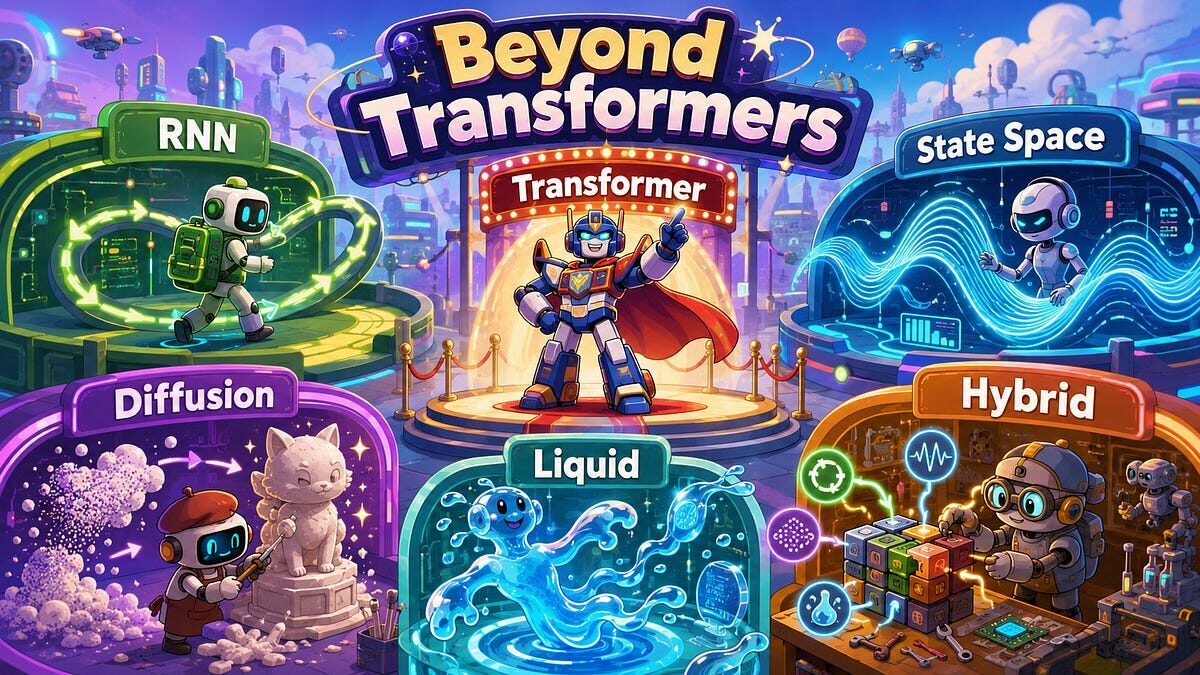
For the better part of a decade, the entire field has been a giant, spectacularly funded wrapper around a single operation: self-attention. The Transformer didn't win because it was the most elegant or the most brain-like design. It won because it had the best scaling story and it won the hardware lottery. Every token looks at every other token, the whole thing maps cleanly onto a GPU grid, and you train it all at once. Add data, parameters, compute, context ' and the loss curve cooperates. That smoothness is rare. Most clever ideas in deep learning never become industrial. This one did. But the tax was always there in plain sight. Self-attention buys you something genuinely valuable ' perfect, lossless recall over the entire context, with every token able to address every other token directly, and a training pass that parallelizes across the whole sequence at once. That's the benefit, and it's a real one. The cost is that attention scales quadratically with sequence length, and autoregressive decoding drags around a KV-cache that grows linearly with every token you've already seen. When you're pushing past a million tokens, or watching a 70B model's cache eat 40GB of VRAM, O(n') compute and O(n) memory stop being footnotes and become the actual bill. So the interesting question was never 'are Transformers good'' They're spectacular. The question is whether they're the final architecture or just the first truly scalable one ' soon to be absorbed into something richer....
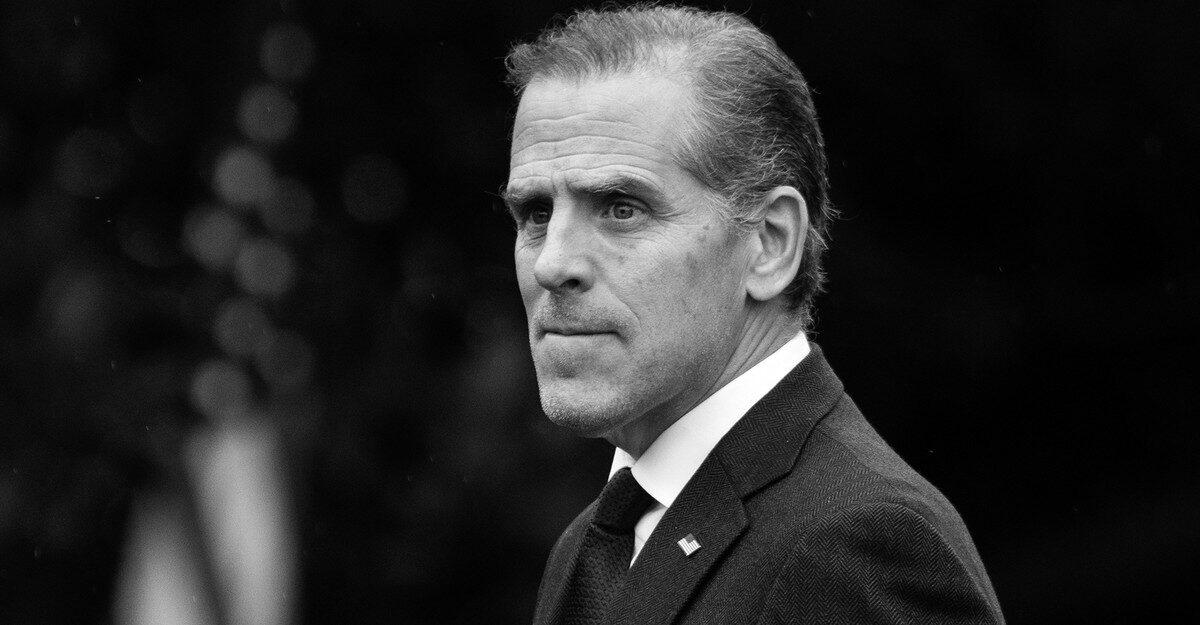
How much grace should we extend to people who screw up'like, really screw up' After many years as an addict and a general failson, Hunter Biden's history includes felony gun convictions, tax evasion, smoking crack, and smoking Parmesan cheese that he thought was crack. But in the past few weeks, the son of the former president has launched a new career as'a sober counselor' A life coach' Since reviving his dormant X account on May 19, the younger Biden has fully embraced a persona he soft-launched last year, when the Gen Z influencer Andrew Callaghan interviewed him about his past drug addiction. His strategy is not to deny his past transgressions, but to flagellate himself so thoroughly for them that no one else can land a hit. 'I was definitely a degenerate crackhead, 100 percent,' the 56-year-old recently told Soft White Underbelly, a YouTube channel that encourages sex workers, homeless people, and drug users to tell their stories in their own words. His addiction had been a form of 'suicide,' but he was saved by his current wife, Melissa, who 'erased every other phone number from my phone. Literally, if it didn't have the last name Biden in it, she took it out.' His Substack bio reads, 'Artist. Author. Recovery Advocate.'...

The role of advanced analytics in sports is a contentious subject. To its defenders, data-driven pragmatism is a natural evolutionary step in the way we play and watch games. For detractors, the approach prioritizes results above all else and drains the soul from a pursuit that should be spontaneous and joyful. As someone who is neither pragmatic nor spontaneous, I don't qualify for either camp, though I find the very notion of applying this kind of research to soccer fascinating and even admirable. The game is resistant to orderly examination by design. Like preparing a tax return for a housecat, it takes a stupendous amount of ingenuity just to figure out which questions to ask, to say nothing of finding the answers. While baseball can be a spreadsheet task, soccer matches amount to meandering free-verse written in 90-minute chunks. Luke Bornn is a data scientist who specializes in movement studies. Thanks to his background analyzing complex bodies in motion, he realized he was uniquely suited to explore the nature of such an evasive game. While at Los Alamos National Laboratory, Bornn worked on ways to detect how much damage helicopter blades can sustain before it compromises the chopper's ability to stay airborne. He has mapped climate data to predict crop yield and studied how herds of massive land mammals move about the fruited plain. The ebb and flow of a soccer match, while mysterious, were not altogether unfamiliar, and he has pioneered ways to quantify some of the game's amorphous spirit....