Twenty-five leading mathematicians signed an open letter arguing that AI labs are threatening their intellectual work as they seek to one-up each other with solutions to famous math problems. Each signatory has been awarded the Fields Medal, considered the most prestigious prize in mathematics. This week, NYU professor Tristan Buckmaster accused OpenAI of pressuring him not to credit a collaborator who works for Anthropic for solving an important math problem, and wondered if the company had used their work with Codex to produce its own groundbreaking proof over a marathon weekend of inference. While the ability of AI models to solve the world's outstanding mathematical challenges could be a boon to humanity, the signatories of the new letter argue that will only be the case if those solutions can be understood and communicated by the math community and, ultimately, the rest of the world. 'Often these solutions are announced in a rush, leaving no time for a proper writeup, the isolation of new methods and ideas, and citing relevant previous work of others,' they wrote ' and OpenAI's proof remains unverified. 'As in all creative professions, this raises severe attribution and plagiarism questions. Moreover, without the willing mathematicians who must take care of their development and integration into the mathematical canon, AI-conceived ideas would never become fully alive and the crucial human transmission chain between mathematicians would be lost.'...
We've been seeing increasingly dire warnings from AI researchers about the dangers of artificial intelligence, and even comments from OpenAI CEO Sam Altman that it may be time to 'pace' AI development. But what would that actually look like' In a new blog post, Anthropic CEO Dario Amodei not only echoed the call to 'pace the frontier,' but also outlined three broad strategies for doing so. And he said Anthropic is 'unilaterally committing' to one of them, with Altman chiming in to say OpenAI will follow suit. The debate over AI safety and alignment intensified this week after researcher Jacob Coxon wrote that he's resigning from Anthropic over concerns that the leading AI companies are 'gambling with our lives' while the people building the technology 'earnestly believe it could kill us all by the end of the decade,' a claim repeated by others at Anthropic. Amodei's post doesn't didn't explicitly mention Coxon's resignation or his concerns, but the CEO wrote that two things convinced him it's time to take a more cautious approach to AI development: the OpenAI-HuggingFace hack, and the fact that 'AI has been advancing drastically faster' in recent months, particularly with its 'growing ability to build the next generation of AI.'...
In a post on X on Saturday, the electric vehicle company simply wrote, 'Go for launch,' with a graphic showing a '10.01' date ' so expect the new Roadster to be unveiled on October 1. The graphic also seems to hint at the promised cold gas thrusters, developed by Tesla CEO Elon Musk's other big company, SpaceX; those optional thrusters are supposed to allow the Roadster to fly in some way. Tesla's second generation sports car was first announced in November 2017 and has been pushed back multiple times. It was even the subject of a social media spat between Musk and OpenAI CEO Sam Altman last year, when Altman said that '7.5 years has felt like a long time to wait' after paying a $50,000 reservation fee, while Musk insisted that Altman had gotten a refund....
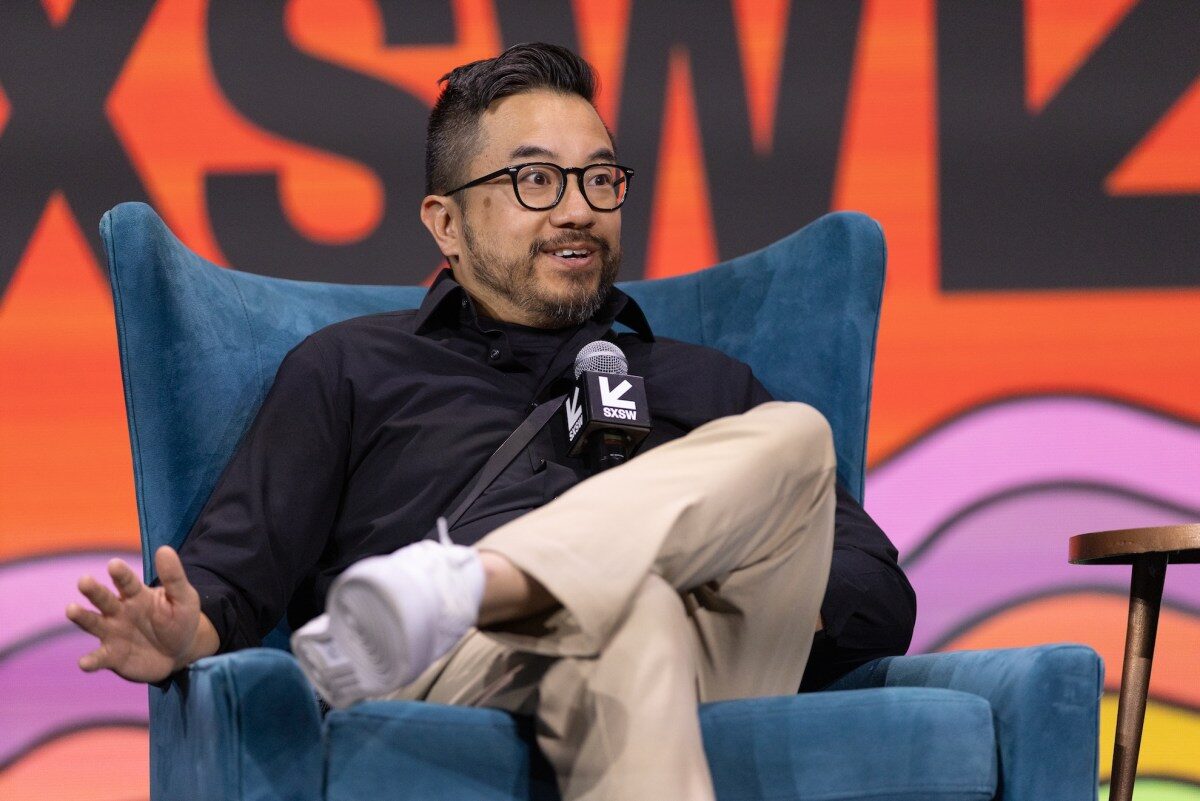
When it comes to Chinese AI labs using distillation techniques to extract knowledge from frontier model makers, Y Combinator CEO Garry Tan is hoping regulators stay out of it. In fact, he thinks U.S. AI labs should perhaps play the same game. He elaborated to TechCrunch that this means he wants smaller, American open-weight AI labs to use the same kind of training techniques on American frontier AI labs, giving the U.S. a more robust set of open-weight options that aren't Chinese. Anthropic this week released its second report alleging that Chinese labs are engaged in 'illicit distillation attacks,' hiding their identities to distill without permission and relying on fraud and stolen credentials to do so. Anthropic CEO Dario Amodei had previously publicly called on U.S. regulators to crack down on distillation. To be clear, Tan isn't advocating for American AI labs to use stolen credentials to distill. He wants them to be free to come in the front door. In fact, his argument is twofold. He feels it's an overreach for AI labs to dictate what their customers can do with the information their models share with them....