



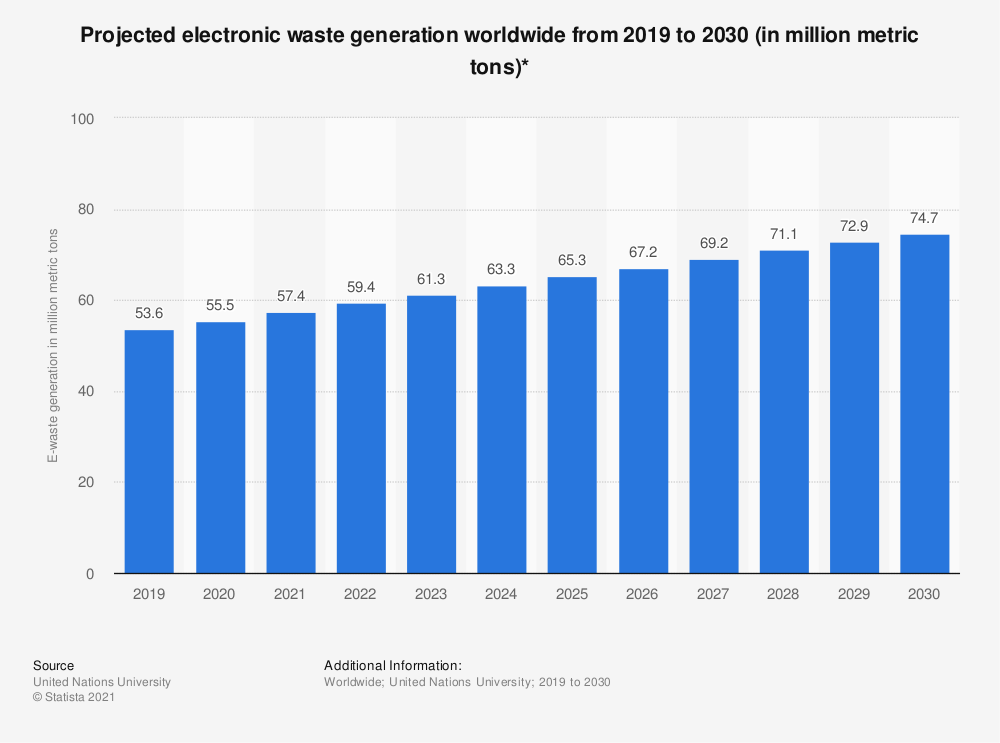
Global electrical waste (e-waste) is set to grow to 75 million metric tonnes by 2030 according to the United Nations Global E-waste Monitor report. That's concerning, not least because many of the products we've discarded could be reused, reducing the need to produce more, but also because e-waste tends to contain harmful chemicals that can leach into the environment. Cutting back on what we get rid of is beneficial for the environment. A TV used for 13 years instead of six saves around 660kg of greenhouse gases, according to a study by Oeko-Institut in Germany. Using smartphones for seven years instead of two and a half saves around 100kg of greenhouse gases. Changing the way we consume is at the heart of the solution, according to the World Economic Forum and the World Business Council for Sustainable Development. A circular vision for the e-waste sector will promote the elimination of waste and could yield up to $4.5 trillion in economic benefits by 2030. One barrier to repair...
learn more

Ratings & Reviews

Entrepreneur & Investor
YOU MIGHT ALSO LIKE