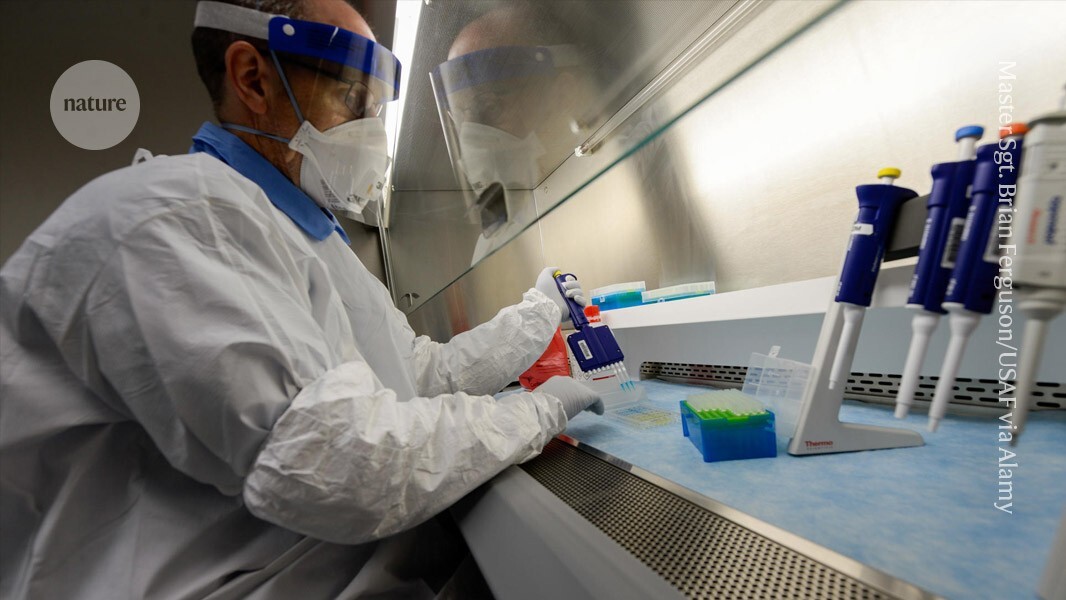
US President Donald Trump has issued an executive order suspending all federal funding for a type of virology research that his administration considers dangerous. But some scientists say the order is so broad that low-risk research will also be affected. The funding suspension will be in place for the next four months, in which time the government says it will revise an incoming policy on how federal funding agencies and institutions oversee 'gain of function' experiments on pathogens that have the potential to spark a pandemic. That policy, which was years in the making and set to broaden oversight of such experiments, was due to come into effect this week. The executive order, signed on 5 May, defines dangerous gain-of-function research as studies on infectious pathogens or toxins that have the potential to make them more deadly or transmissible. That includes work that gives pathogens the ability to evade vaccines, therapeutic agents and detection attempts, among other things. 'This is what I was expecting ' an executive order banning gain-of-function research but defined in such a way that it bans all virology research,' says Gigi Gronvall, a biosecurity specialist at Johns Hopkins University in Baltimore, Maryland....
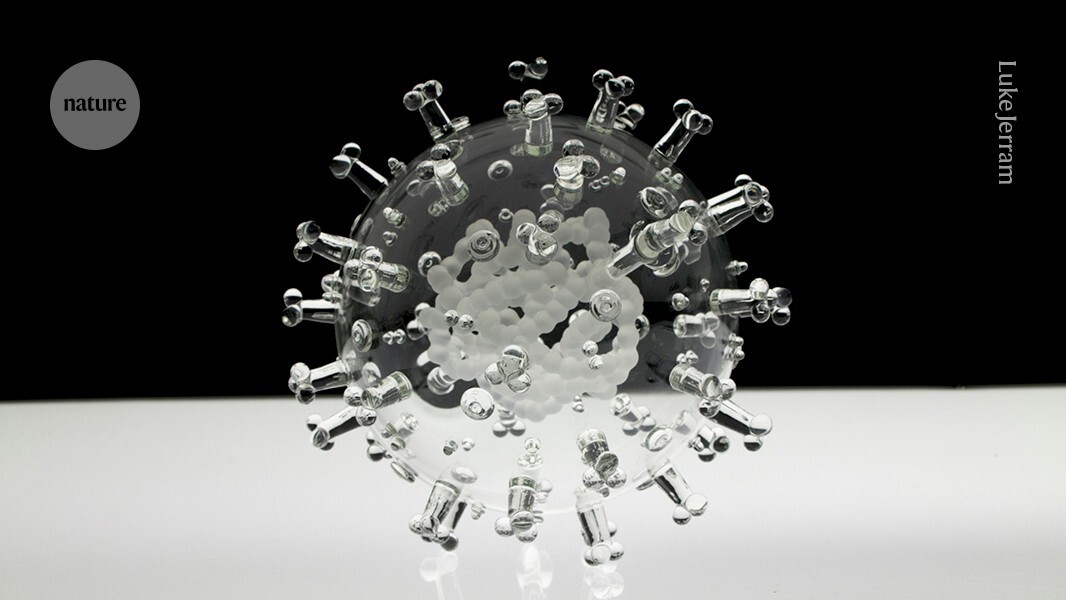
Kei Sato was looking for his next big challenge five years ago when it smacked him ' and the world ' in the face. The virologist had recently started an independent group at the University of Tokyo and was trying to carve out a niche in the crowded field of HIV research. 'I thought, 'What can I do for the next 20 or 30 years''' He found an answer in SARS-CoV-2, the virus responsible for the COVID-19 pandemic, that was rapidly spreading around the world. In March 2020, as rumours swirled that Tokyo might face a lockdown that would stop research activities, Sato and five students decamped to a former adviser's laboratory in Kyoto. There, they began studying a viral protein that SARS-CoV-2 uses to quell the body's earliest immune responses. Sato soon established a consortium of researchers that would go on to publish at least 50 studies on the virus. In just five years, SARS-CoV-2 became one of the most closely examined viruses on the planet. Researchers have published about 150,000 research articles about it, according to the citation database Scopus. That's roughly three times the number of papers published on HIV in the same period. Scientists have also generated more than 17 million SARS-CoV-2 genome sequences so far, more than for any other organism. This has given an unparalleled view into the ways in which the virus changed as infections spread. 'There was an opportunity to see a pandemic in real time in much higher resolution than has ever been achievable before,' says Tom Peacock, a virologist at the Pirbright Institute, near Woking, UK....
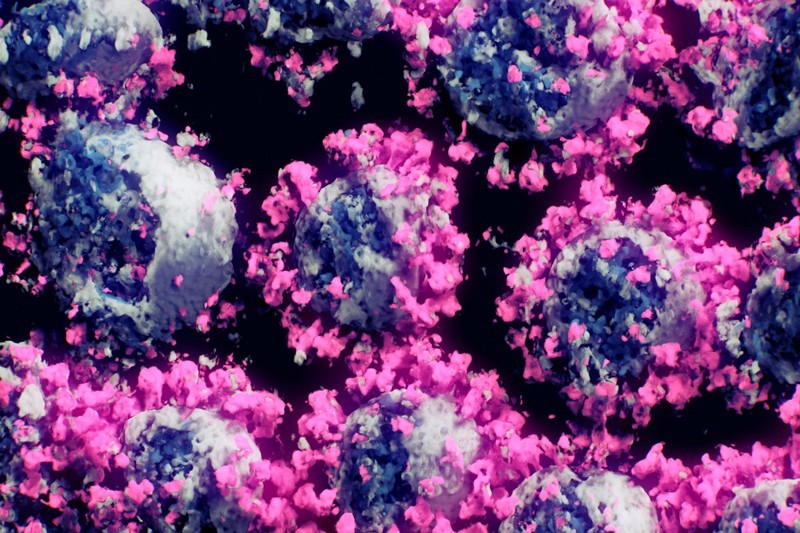
Visual representations of the coronavirus SARS-CoV-2 have become a common sight over the past year. But this particular image shows real coronavirus particles in unprecedented detail. It is the first 3D image of SARS-CoV-2 made from a single scan of frozen virus particles, using a technique called cryo-electron tomography (cryo-ET). Most previous images were either composites from several scans, or computer visualizations.
The image was unveiled in January by researchers at Tsinghua University in Beijing, King Abdullah University of Science and Technology in Thuwal, Saudi Arabia, and the Vienna-based company Nanographics. The researchers added colours to distinguish different parts of the virus.
âWe used machine learning and advanced visualization algorithms to show you the most detailed view of a real SARS-CoV-2 virion, in 3D, directly from Cryo-ET data,â says Nanographics. âWe chose bright pink for the spikes, to signify that they are the part of the virus responsible for attaching to the host cells and infecting them. The rest of the virus is shown in muted, cold colors, to suggest that a virus is not a living thing.â...
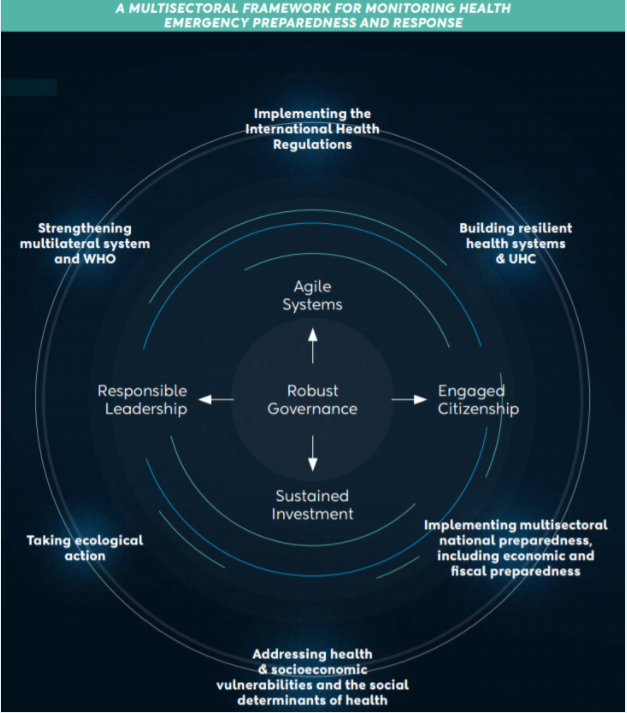
A new report from the Global Preparedness Monitoring Board looks at the biggest lessons from the worldâÂÂs response to COVID-19 â and the urgent actions we need to take now....