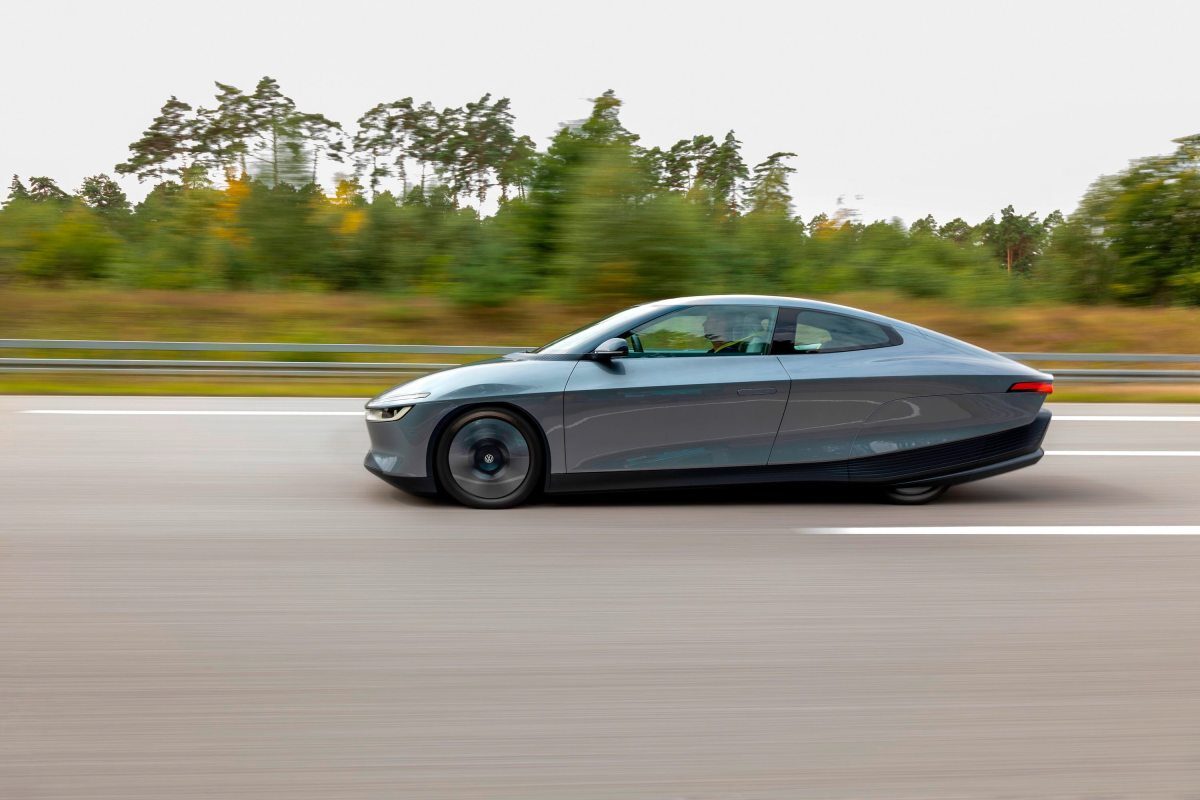
Volkswagen took the covers off a new prototype electric vehicle Monday, one that's capable of hitting the equivalent of 323 miles per gallon under ideal conditions, making it one of the most efficient cars in the world. It's not unusual for automakers to float pie-in-the-sky concepts with outlandish stats, but Volkswagen took it a step or two further by building the EV and driving it from its home base in Wolfsburg, Germany, on a 794-mile (1,278-kilometer) trip to Vienna. The team charged the Mission Efficiency prototype once during the journey and arrived with 104 miles (168 kilometers) of range left, resulting in consumption of 7.51 kilowatt-hours per 100 miles, or about 279 MPGe. The teardrop-shaped Mission Efficiency prototype was built using the electric motor and battery from the ID. Polo, two features that bring the car to 'near production' status, Volkswagen said in a press release. By some back-of-the-envelope math, Volkswagen's science experiment can get more than 400 miles of range out of a 54.9-kilowatt-hour battery, though that's not an official EPA rating. Lucid gets 420 miles from an 84-kilowatt-hour battery per EPA ratings, but it's a much larger and more practical vehicle....
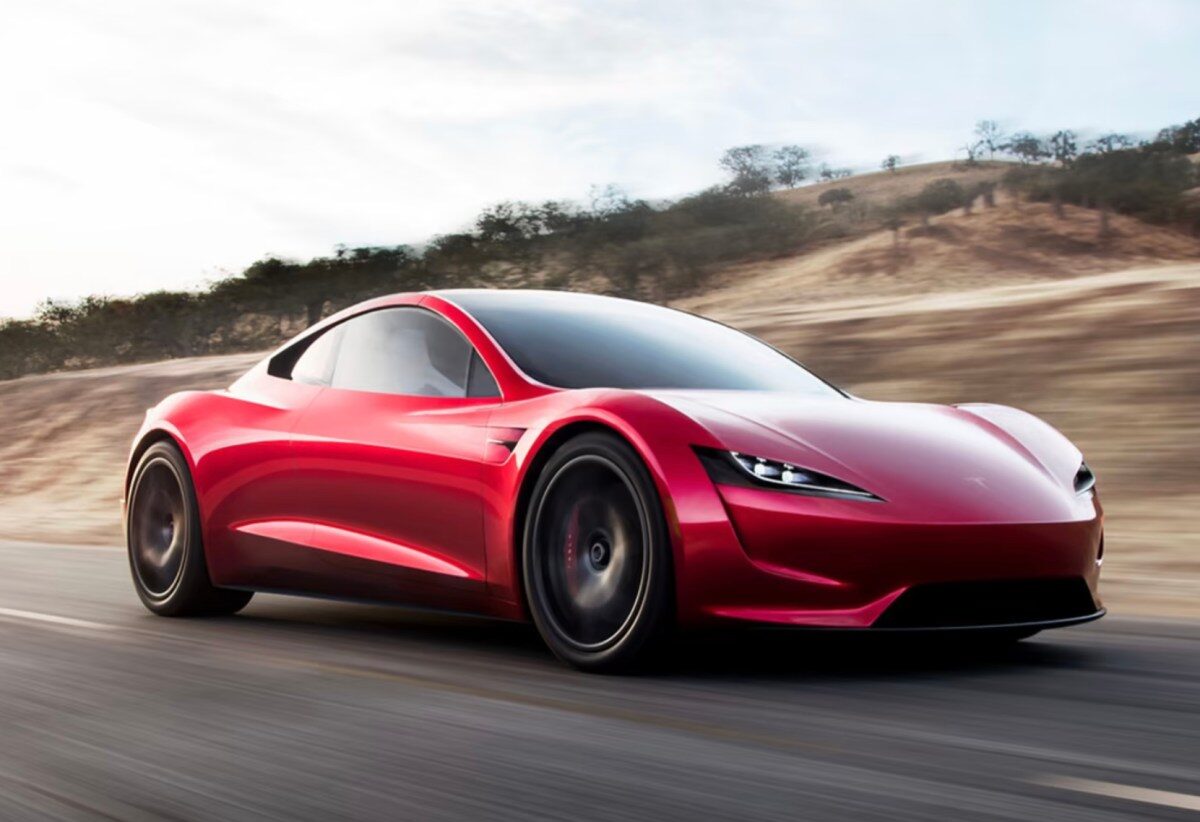
In a post on X on Saturday, the electric vehicle company simply wrote, 'Go for launch,' with a graphic showing a '10.01' date ' so expect the new Roadster to be unveiled on October 1. The graphic also seems to hint at the promised cold gas thrusters, developed by Tesla CEO Elon Musk's other big company, SpaceX; those optional thrusters are supposed to allow the Roadster to fly in some way. Tesla's second generation sports car was first announced in November 2017 and has been pushed back multiple times. It was even the subject of a social media spat between Musk and OpenAI CEO Sam Altman last year, when Altman said that '7.5 years has felt like a long time to wait' after paying a $50,000 reservation fee, while Musk insisted that Altman had gotten a refund....

It was a monster week for U.S. startup funding, with four companies each raising $1 billion or more. Elon Musk's tunnel-drilling company The Boring Co. led with a $3 billion Series D, followed by AI coding startup Cognition at $2 billion. Joining them near the top was fleet management software provider Motive, which landed $1.3 billion, while reusable rocket developer Stoke Space raised another $1 billion. 1. The Boring Co., $3B, transportation and infrastructure: Musk's Bastrop, Texas-based tunneling company raised a $3 billion Series D led by the United Arab Emirates, with participation from investors including Andreessen Horowitz, Sequoia Capital and Valor Equity Partners. The company is developing underground tunnel networks designed to move passengers and vehicles while reducing surface traffic, and already operates its Vegas Loop system beneath Las Vegas. The latest deal values it at $23 billion and brings its total funding to nearly $3.9 billion, per Crunchbase. 2. Cognition, $2B, artificial intelligence: San Francisco-based Cognition raised a $2 billion Series E led by Accel, Andreessen Horowitz, Avenir, Founders Fund and General Catalyst. The company is best known for Devin, its autonomous software-engineering agent, and is part of a highly funded crop of startups betting AI agents will take over increasingly complex coding and development work. Cognition has raised nearly $3.9 billion to date and was valued at $48 billion in the latest round, our data shows....
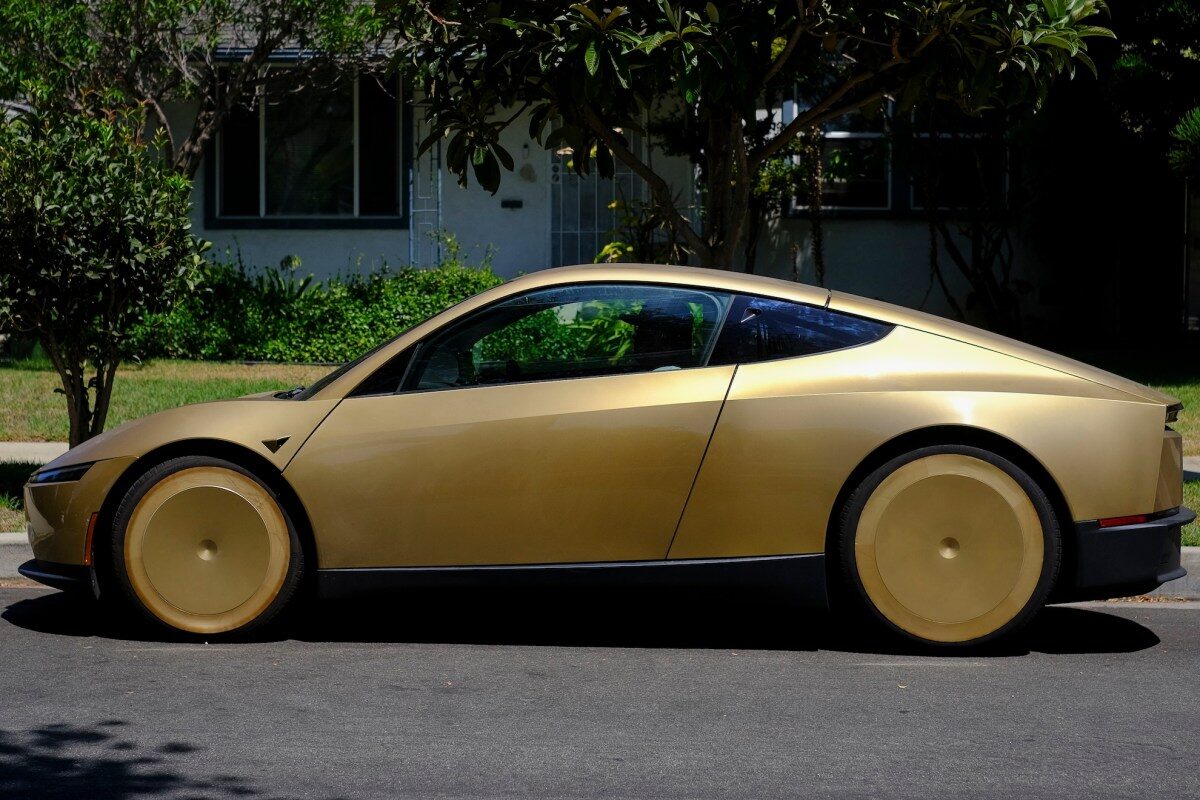
Welcome back to TechCrunch Mobility, your hub for the future of transportation and now, more than ever, the role AI is playing in it. To get this in your inbox, sign up here for free ' just click TechCrunch Mobility! Depending on which corner of social media you frequent, the Tesla Cybercab event was either proof that the company is a robotaxi leader delivering the future or an overhyped affair with little substance. Whatever your view, Wall Street wasn't impressed by the Cybercab event in Austin, which was unusually quiet and lacked the festival-like atmosphere of past Tesla events. CEO Elon Musk didn't even attend ' a notable and puzzling absence, especially considering he has spent years arguing that Tesla's future ' and its value ' hinges on robotics and AI. As senior reporter Sean O'Kane wrote before the event, 'The Cybercab is Tesla's fork in the road. This is either the moment the company begins to transform urban transportation as we know it, or the moment that reveals that, despite its many efforts, Tesla really is just an automaker after all.'...