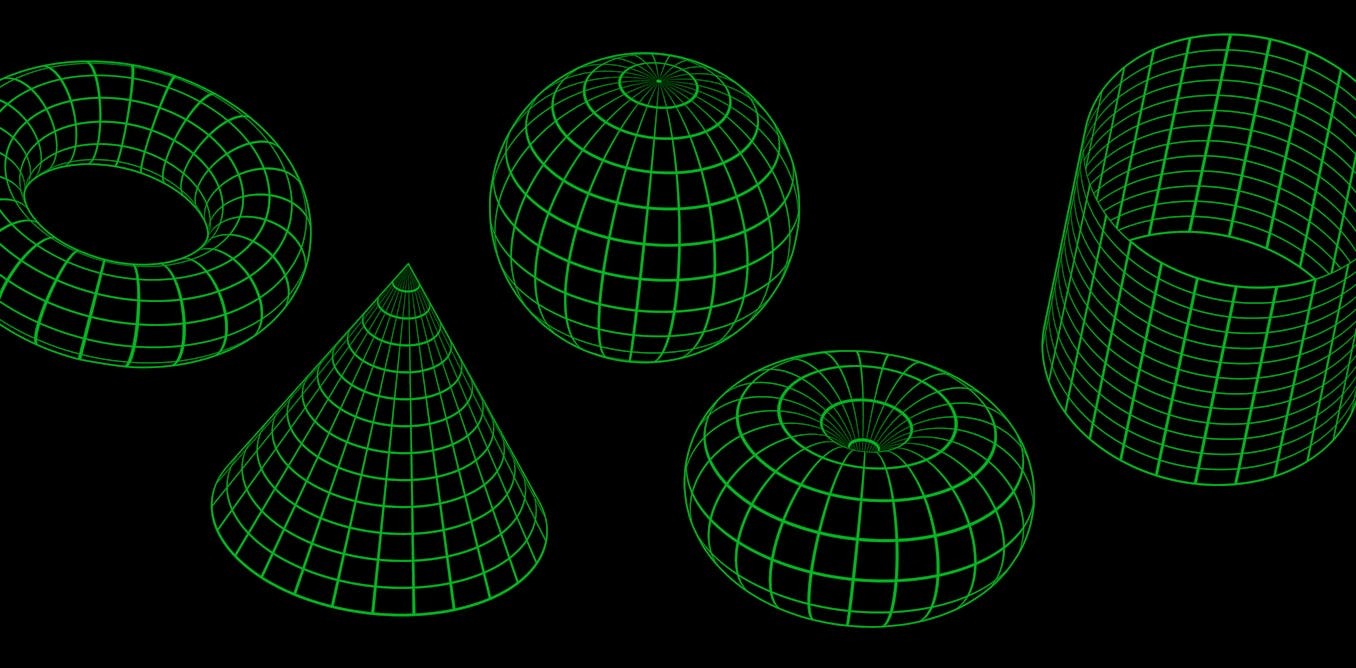
When you look at your surrounding environment, it might seem like you're living on a flat plane. After all, this is why you can navigate a new city using a map: a flat piece of paper that represents all the places around you. This is likely why some people in the past believed the earth to be flat. But most people now know that is far from the truth. You live on the surface of a giant sphere, like a beach ball the size of the Earth with a few bumps added. The surface of the sphere and the plane are two possible 2D spaces, meaning you can walk in two directions: north and south or east and west. Through a field called geometric topology, mathematicians like me study all possible spaces in all dimensions. Whether trying to design secure sensor networks, mine data or use origami to deploy satellites, the underlying language and ideas are likely to be that of topology. When you look around the universe you live in, it looks like a 3D space, just like the surface of the Earth looks like a 2D space. However, just like the Earth, if you were to look at the universe as a whole, it could be a more complicated space, like a giant 3D version of the 2D beach ball surface or something even more exotic than that....
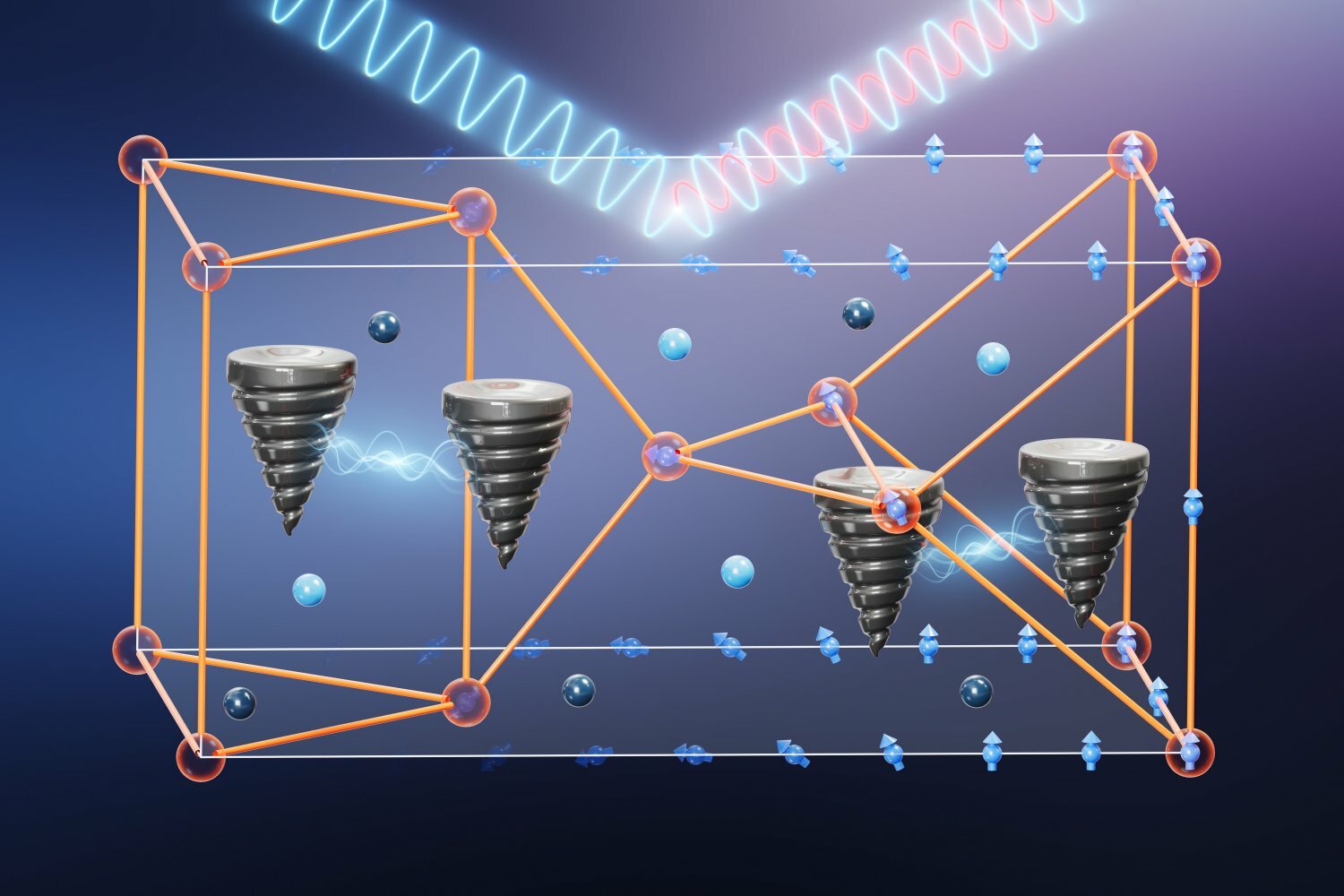
Researchers who have been working for years to understand electron arrangement, or topology, and magnetism in certain semimetals have been frustrated by the fact that the materials only display magnetic properties if they are cooled to just a few degrees above absolute zero. A new MIT study led by Mingda Li, associate professor of nuclear science and engineering, and co-authored by Nathan Drucker, a graduate research assistant in MIT's Quantum Measurement Group and PhD student in applied physics at Harvard University, along with Thanh Nguyen and Phum Siriviboon, MIT graduate students working in the Quantum Measurement Group, is challenging that conventional wisdom. The open-access research, published in Nature Communications, for the first time shows evidence that topology can stabilize magnetic ordering, even well above the magnetic transition temperature ' the point at which magnetism normally breaks down. 'The analogy I like to use to describe why this works is to imagine a river filled with logs, which represent the magnetic moments in the material,' says Drucker, who served as the first author of the paper. 'For magnetism to work, you need all those logs pointing in the same direction, or to have a certain pattern to them. But at high temperatures, the magnetic moments are all oriented in different directions, like the logs would be in a river, and magnetism breaks down....
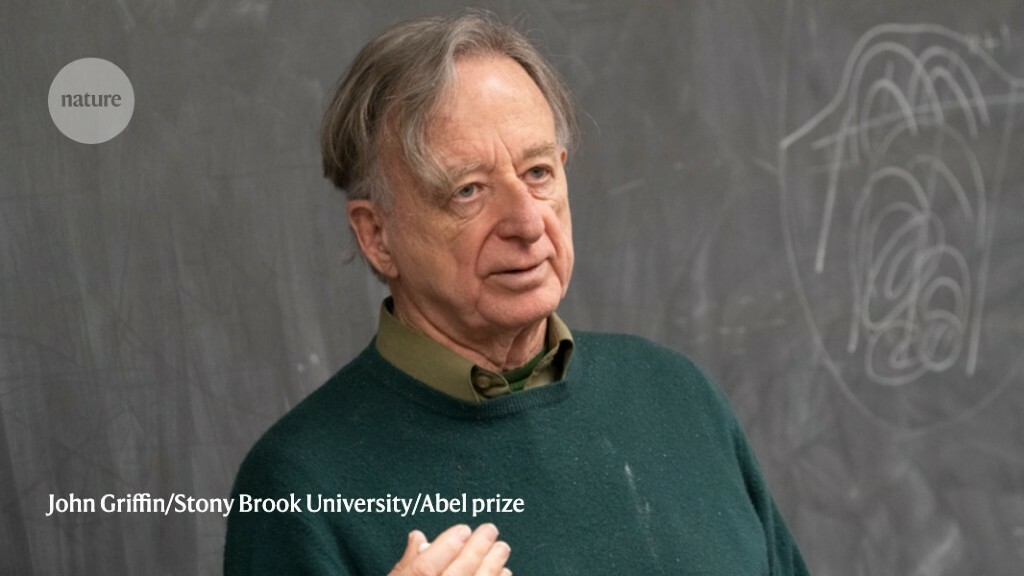
'Sullivan has repeatedly changed the landscape of topology by introducing new concepts, proving landmark theorems, answering old conjectures and formulating new problems that have driven the field forwards,' says the citation for the 2022 Abel Prize, which was announced by the Norwegian Academy of Science and Letters, based in Oslo, on 23 March. Throughout his career, Sullivan has moved from one area of mathematics to another and solved problems using a wide variety of tools, 'like a true virtuoso', the citation added. The prize is worth 7.5 million Norwegian Kroner (US$854,000). Since it was first awarded in 2003, the Abel Prize has come to represent a lifetime achievement award, says Hans Munthe-Kaas, the prize committee chair and a mathematician at the University of Bergen, Norway. The past 24 Abel laureates are all famous mathematicians; many did their most renowned work in the mid-to-late twentieth century. 'It's nice to be included in such an illustrious list,' says Sullivan, who has appointments at both Stony Brook University in Long Island, New York, and at the City University of New York. So far, all but one, 2019 laureate Karen Uhlenbeck, a mathematician at the University of Texas at Austin, have been men....
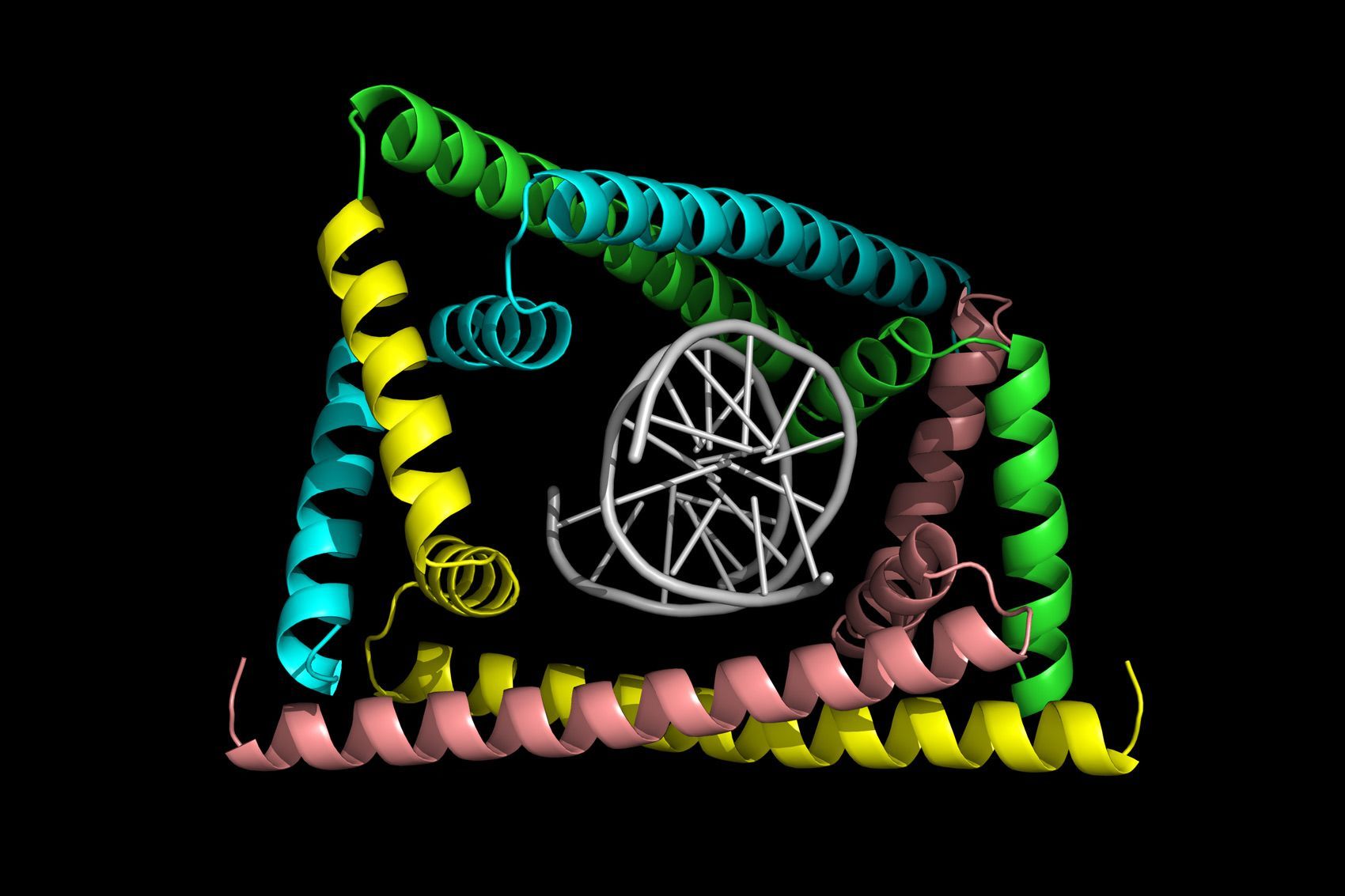
DNA is a lengthy molecule â approximately 1,000-fold longer than the cell in which it resides â so it canâÂÂt be jammed in haphazardly. Rather, it must be neatly organized so proteins involved in critical processes can access the information contained in its nucleotide bases. Think of the double helix like a pair of shoe laces twisted together, coiled upon themselves again and again to make the molecule even more compact.
However, when it comes time for cell division, this supercoiled nature makes it difficult for proteins involved in DNA replication to access the strands, separate them, and copy them so one DNA molecule can become two.
Replication begins at specific regions of the chromosome where specialized proteins separate the two strands, pulling apart the double helix as you would the two shoe laces. However, this local separation actually tangles the rest of the molecule further, and without intervention creates a buildup of tension, stalling replication. Enter the enzymes known as topoisomerases, which travel ahead of the strands as they are being peeled apart, snipping them, untwisting them, and then rejoining them to relieve the tension that arises from supercoiling....


