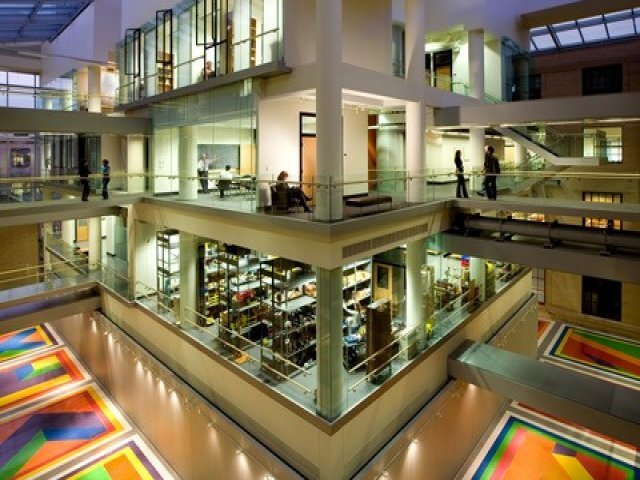
Leinweber Foundation gifts to five institutions, totaling $90 million, will establish the newly renamed MIT Center for Theoretical Physics ' A Leinweber Institute within the Department of Physics, affiliated with the Laboratory for Nuclear Science at the School of Science, as well as Leinweber Institutes for Theoretical Physics at three other top research universities: the University of Michigan, the University of California at Berkeley, and the University of Chicago, as well as a Leinweber Forum for Theoretical and Quantum Physics at the Institute for Advanced Study. 'MIT has one of the strongest and broadest theory groups in the world,' says Professor Washington Taylor, the director of the newly funded center and a leading researcher in string theory and its connection to observable particle physics and cosmology. 'This landmark endowment from the Leinweber Foundation will enable us to support the best graduate students and postdoctoral researchers to develop their own independent research programs and to connect with other researchers in the Leinweber Institute network. By pledging to support this network and fundamental curiosity-driven science, Larry Leinweber and his family foundation have made a huge contribution to maintaining a thriving scientific enterprise in the United States in perpetuity.'...
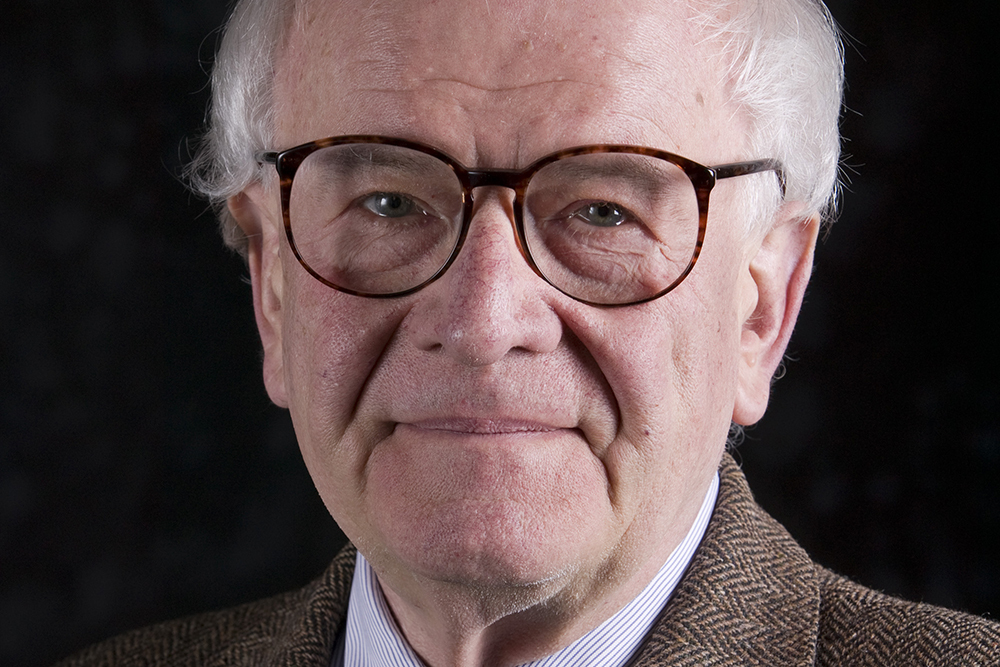
Eminent theoretical physicist and Dirac Medalist Roman Jackiw, MIT professor emeritus and holder of the Department of Physics' Jerrold Zacharias chair, died June 14 at age 83. He was a member of the MIT physics community for 54 years. A leader in the sophisticated use of quantum field theory to illuminate physical problems, his influential work on topology and anomalies in quantum field theory (QFT) underlies many aspects of theoretical physics today. Iain Stewart, the MIT Center for Theoretical Physics (CTP) director and Otto (1939) and Jane Morningstar Professor of Science, says that Jackiw 'served as an inspiration for what one can achieve as a theoretical physicist. He made profound contributions to physical problems in a wide range of areas, including particle physics, condensed matter physics, and gravitational physics.' 'Professor Jackiw was a pioneer in the field of mathematical physics,' says Nergis Mavalvala, the Curtis and Kathleen Marble Professor of Astrophysics and dean of the MIT School of Science. 'His imaginative use of quantum field theory shed light on physical problems, including his work on topological solitons, field theory at high temperatures, the existence of anomalies, and the role of these anomalies in particle physics."...
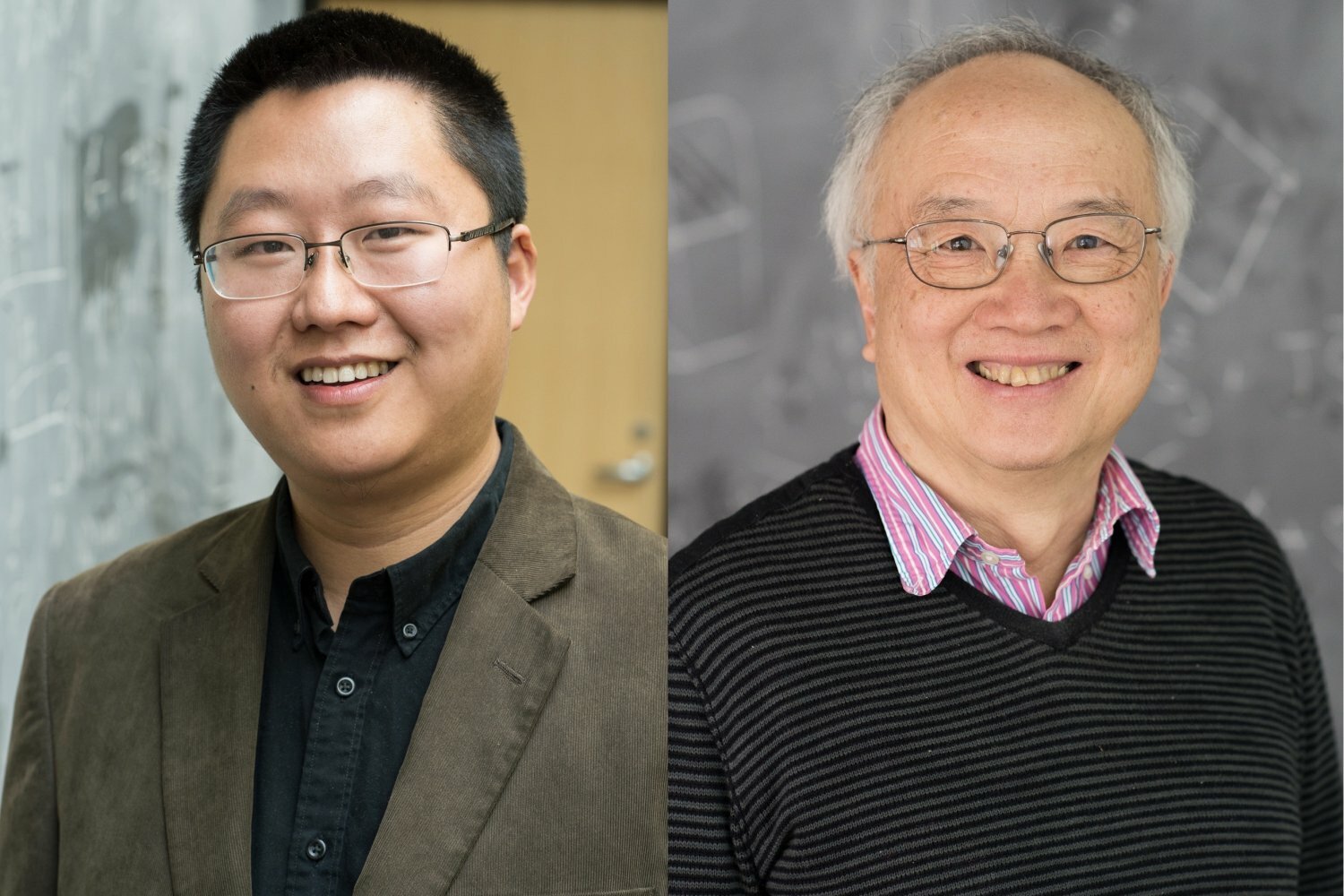
MIT condensed matter theory professors of physics Liang Fu and Patrick A. Lee received the inaugural Larkin Awards in Theoretical Physics, awarded by the William I. Fine Theoretical Physics Institute at the University of Minnesota. Fu received the 2022 Anatoly Larkin Award for a junior researcher for his work on 3D topological insulators and odd-parity topological superconductors, crystalline topological insulators, and Majorana zero modes, 'and for being an intellectual leader of his generation.' Fu is interested in novel topological phases of matter in solid state physics to predict new phases of matter and topological materials. He works on the theory of topological insulators and topological superconductors, and the potential applications of topological materials, ranging from tunable electronics and spintronics to quantum computation. He received his BS in physics from the University of Science and Technology of China in 2004 and his PhD in physics from the University of Pennsylvania in 2009. He was a junior fellow at Harvard University before joining the MIT Department of Physics as an assistant professor in 2012....
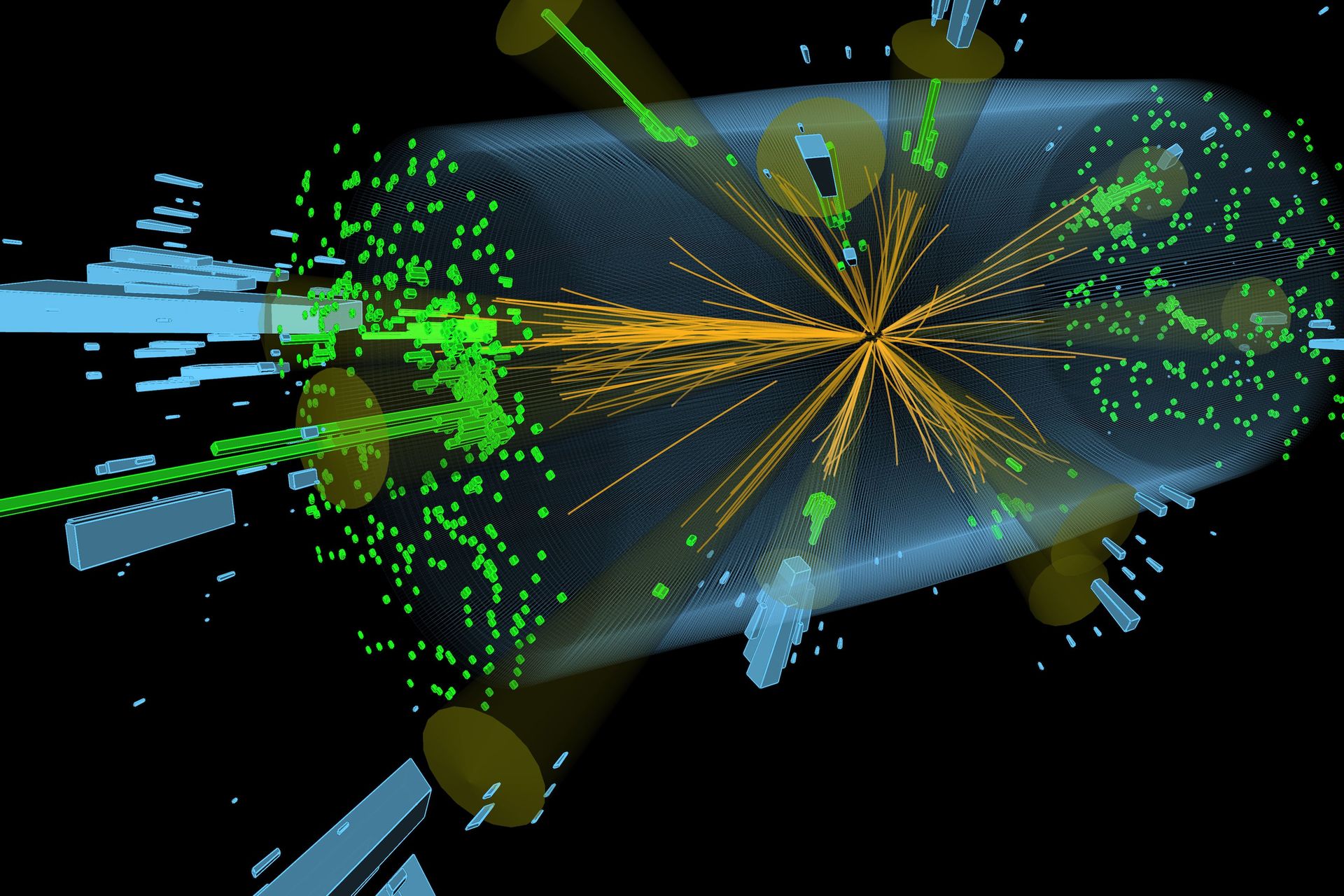
Center for Theoretical Physics professors Daniel Harlow, Aram Harrow, Hong Liu and Jesse Thaler have been named recipients of research awards in the U.S. Department of Energyâs new program in Quantum Information Science (QIS).
The awards were made in conjunction with the White House Summit on Advancing American Leadership in QIS, highlighting the high priority that the current administration places on advancing this multidisciplinary area of research, which is expected to lay the foundation for the next generation of computing and information processing as well as an array of other innovative technologies.
The awards honor scientists at 28 institutions of higher learning across the nation and nine Department of Energy national laboratories. They cover a range of topics from developing hardware and software for a new generation of quantum computers, to the synthesis and characterization of new materials with special quantum properties, to probing the ways in which quantum computing and information processing provide insights into such cosmic phenomena as dark matter and black holes....