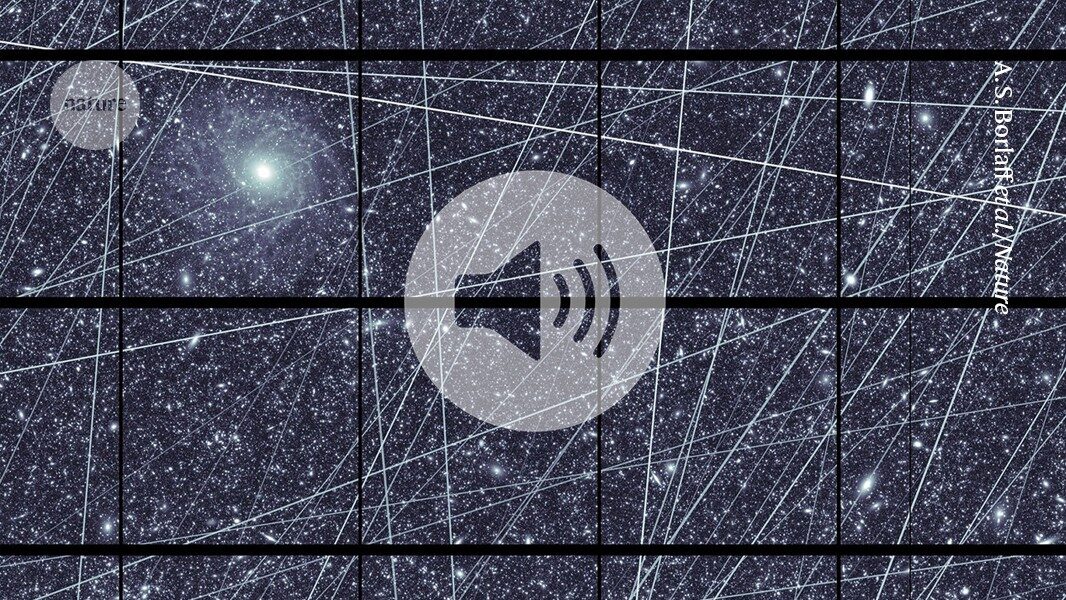
The ability of space-based telescopes to image the distant Universe could be in peril, according to new research investigating the impacts of light-pollution from future satellites. Streaks of reflected light from satellites currently in low-Earth orbit are already seen in telescope images, and planned launches could raise the number of satellites from around 15,000 to more than half-a-million. Computer modelling revealed that this drastic increase would result in images taken by instruments such as the Hubble Space Telescope becoming unusable by astronomers. The team proposes a series of strategies to help mitigate these impacts, preventing this future becoming reality. Glitches in video calls are an annoying feature of everyday life, but these brief interruptions could have serious real-world impacts, according to analysis from a team of researchers. In one experiment, the team found that video calls with glitches decreased the likelihood of someone being hired for a job. Analysis of other data suggested glitchy calls were associated with lower chances of individuals being granted parole. The team behind the work thinks that these visual errors break the illusion that a video call is a real face-to-face conversation, potentially impairing judgements about the quality of the information discussed....
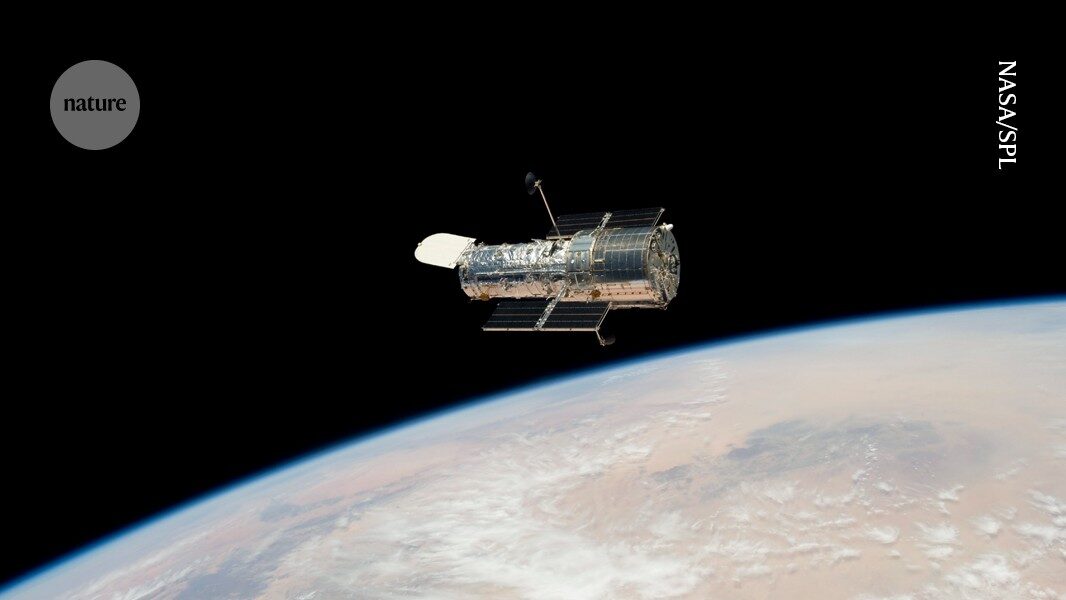
Blurry streaks of light created by fast-moving artificial satellites are already known to mar images taken by ground-based observatories. Today, researchers report1 in Nature that space-based telescopes will not escape such interference as fleets of private satellites proliferate. The researchers found that in the next decade, satellite trails could taint roughly 96% of the images taken by some space-based telescopes, and a single image could contain as many as 92 streaks. The findings are 'truly frightening', says Patrick Seitzer, an astronomer at the University of Michigan in Ann Arbor, who was not involved in the work. 'This is a very important study for the future of space-based astronomy.' Around 15,000 satellites launched by various companies currently orbit Earth, and several firms plan to launch groups of thousands more, forming 'megaconstellations' that will be used for telecommunications (see 'Rocketing upwards'). For example, aerospace company SpaceX plans to grow its existing Starlink fleet to some 34,000 satellites....
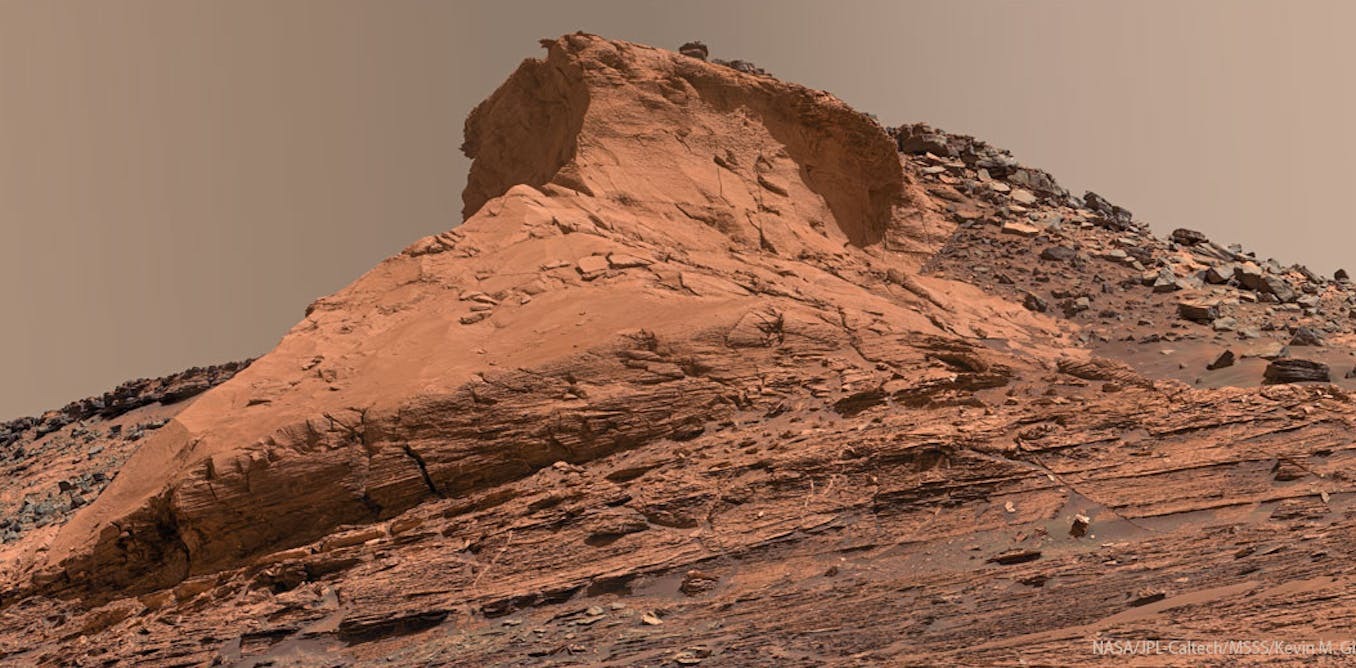
The English name for the planet comes from the Romans, who named it after their god of war because its color reminded them of blood. In reality, the reddish color of Mars comes from iron oxide in the rocks and dust covering its surface. Your blood is also red because of a mixture of iron and oxygen in a molecule called hemoglobin. So in a way, the ancient connection between the planet Mars and blood wasn't completely wrong. Rust, which is a common form of iron oxide found here on Earth, also often has a reddish color. In my current research on exoplanets, I observe different types of signals from planets beyond Earth. Lots of interesting physics goes into how researchers perceive the colors of planets and stars through different types of telescopes. Probes sent from Earth have taken pictures showing rocks with a rusty color. A 1976 picture from the Viking lander, the very first spacecraft to land on Mars, shows the Martian ground covered with a layer of rusty orange dust. Not all of Mars' surface has the same color. At the poles, its ice caps appear white. These ice caps contain frozen water, like the ice we usually find on Earth, but these ice caps are also covered by a layer of frozen carbon dioxide ' dry ice....
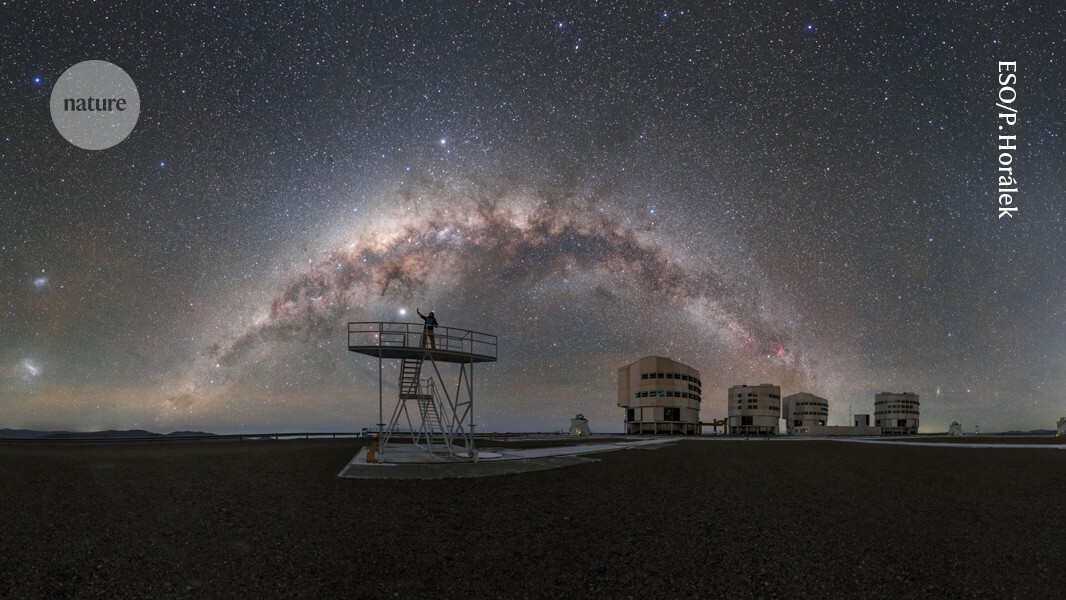
A massive green hydrogen plant proposed for construction in Chile could increase light pollution at one of the world's most powerful telescopes by at least one-third, says the European Southern Observatory (ESO), the consortium that operates the telescope and will either host or operate others being built nearby. An ESO analysis released on Monday found that light pollution would increase by at least 35% at the Very Large Telescope (VLT) ' one of the most advanced optical telescopes in the world ' and by at least 55% at the southern array of the Cherenkov Telescope Array Observatory (CTAO), which is now under construction and will be the largest ground-based observatory for very-high-energy '-ray astronomy. The analysis also found that the green-energy project would increase atmospheric turbulence at the telescopes and cause vibrations that will damage the sensitive equipment. Together, the effects will cause 'devastating, irreversible' damage that cannot be mitigated, astronomer Itziar de Gregorio-Monsalvo, the ESO's representative in Chile, said at a media briefing on Monday. 'It will reach a point where it is highly likely that we won't be able to operate these telescopes.'...