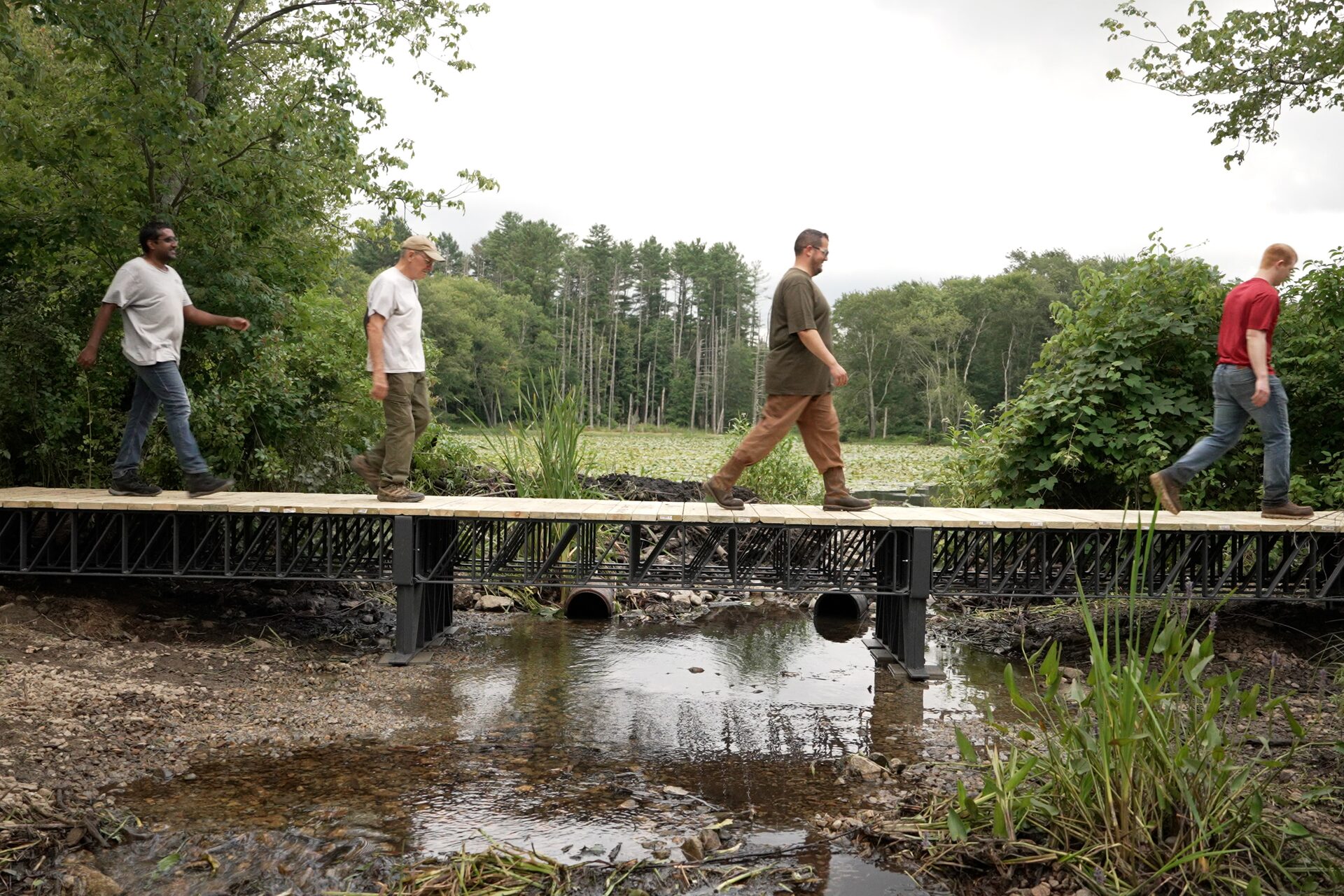
Atlas Building Composites, a spinout of MIT, is on a mission to address both problems with a single solution. The company has developed an AI-powered robotic manufacturing platform capable of turning single-use plastics into durable building materials. The company emerged from MIT HAUS, a research effort in the MIT Department of Mechanical Engineering that's short for 'Home Architecture for Universal Sustainability.' Atlas uses waterless plastic recycling and large-scale composite additive manufacturing technology to make parts like home foundations, decks, and trusses for walls, floors, and roofs. 'Our mission is to convert waste plastic pollution into durable composites to build 1 billion homes,' says Atlas chair and co-founder A.J. Perez '13, MNG '14, PhD '23, who is also an MIT research scientist. 'You can't divorce these things from each other. We're not here just to build homes, and we're not here just to recycle plastic. The conventional way of building homes involves cutting down trees, mining, refining, and a bunch of other dirty activities. We want to avoid all that and address all the plastic bound for our oceans and landfills. We're turning bottles into buildings.'...

How will global access to food, water, and energy evolve in coming decades' A new study co-authored by MIT researchers suggests the answers could be very different depending on region, resource, and income. Based on extensive modeling of many different resource scenarios, the study finds that in some regions, lower-income people could be spending roughly 50 percent of their income on food by the year 2050, in contrast to higher-income groups that could spent about 5 percent of income on food in the same areas. 'For a lot of these outcomes, the lower-income groups see much worse potential insecurity,' says Jennifer Morris, a principal research scientist at the MIT Center for Sustainability Science and Strategy and the MIT Energy Initiative, and co-author of a new paper detailing the findings. The results, she notes, can be evaluated by policymakers in different global regions to understand what the long-term, large-scale resource security risks may become for different parts of their populations....
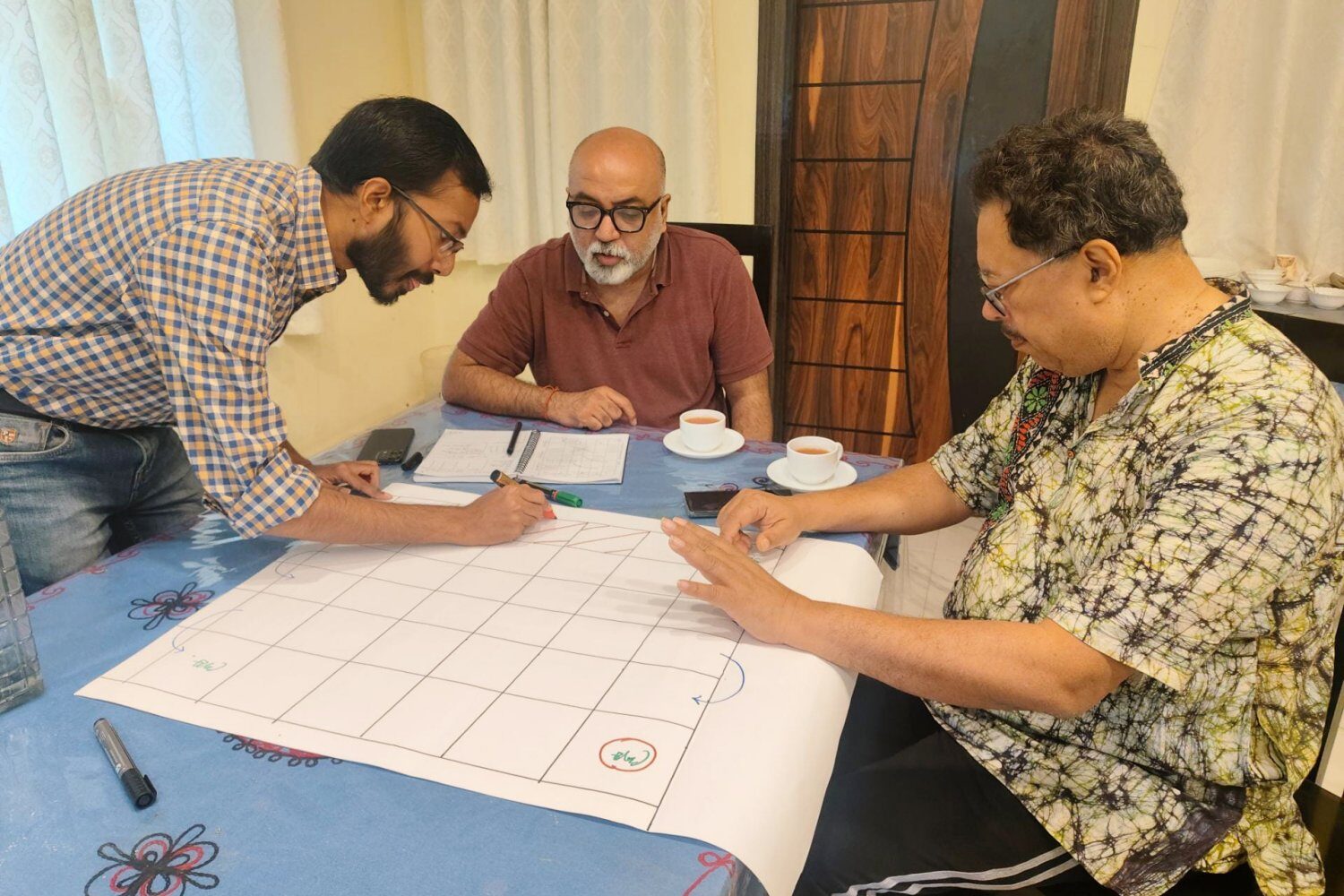
Sai Ravela, principal research scientist in MIT's Department of Earth, Atmospheric and Planetary Sciences (EAPS), works with a team of researchers, local partners, and community collaborators to develop game-based computer models to help local communities find solutions to their unique geographical and environmental challenges. Ravela came to MIT as a postdoc in 2002. Prior to that, he had been working on robotics and computer vision, but he was excited by the idea of studying the climate system and wanted to work in the field of sustainability. 'Suddenly, overnight, I became a climate person,' Ravela says. His project, funded by a 2025 Abdul Latif Jameel Water and Food Systems Lab (J-WAFS) India Grant, explores how agricultural decision-making occurs under climate stress. Using localized climate projections and a participatory approach, the project aims to help communities discover ways to improve their collective agricultural resilience. EAPS postdoc Anamitra Saha is a key contributor on the grant, working with Ravela and local collaborators to combine downscaled climate modeling, participatory decision-making, and community-based adaptation planning. Other team members include Myisha Ahmad (Carthago Consultancy), Jayanta Basu (University of Calcutta), Anusree Ghosh (Bangladesh Open University), Showmitra Sarkar (Khulna University of Engineering and Technology), and Bivuti Sikder (Dhaka University)....
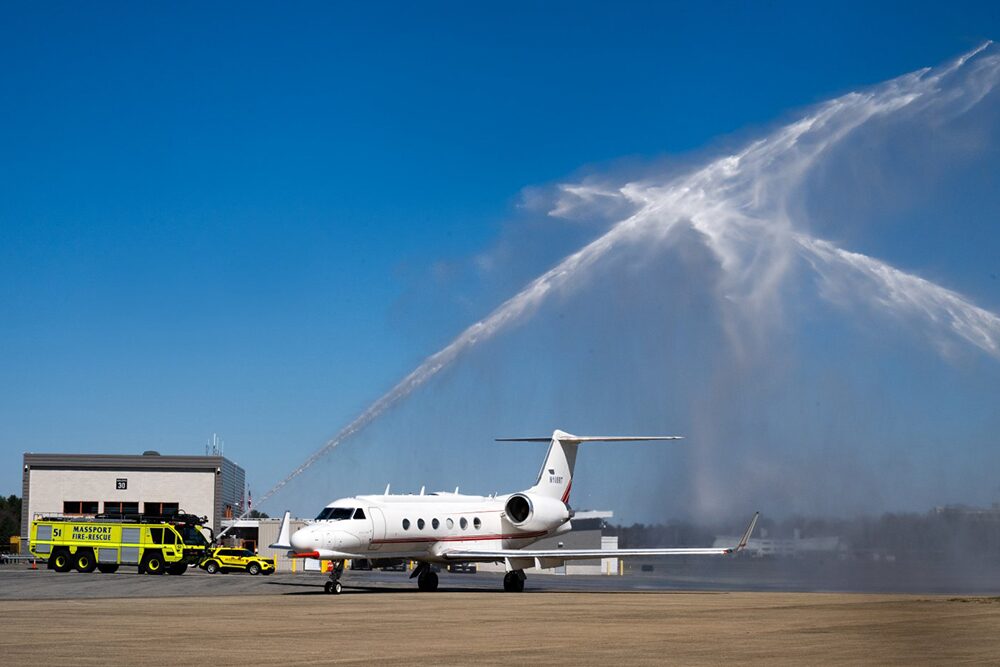
After extensive modifications over the past seven years, the Gulfstream IV (G-IV) aircraft operated and maintained by MIT Lincoln Laboratory's Tactical Defense Systems Group and Flight Test Facility (FTF) recently flew home from Canada. Transforming the standard business jet into a highly specialized research platform ' which will support the U.S. Air Force's Air Vehicle Survivability Evaluation (AVSE) program for decades to come ' represented the largest and most complex airborne test bed modernization in Lincoln Laboratory history. The Tactical Defense Systems Group, assisted by the FTF, coordinated the effort with the Toronto-based aerospace company Field Aviation. "Our team made hundreds of trips to Canada and dedicated countless weekends to keep the project moving along," says David Culbertson, FTF manager. "Seeing the aircraft finally return to the laboratory invoked a sense of pride and satisfaction." For more than 40 years, the Tactical Defense Systems Group has supported the AVSE program, leveraging airborne test beds to assess how U.S. aircraft and space assets fare against current and emerging threats. The group had been conducting airborne testing for the AVSE program with a modified Gulfstream II (G-II) since the early 1990s. In 2013, they began a series of studies to replace the G-II because parts availability issues were looming. These studies concluded that the G-IV was the best option, given its performance and capabilities, including its respectively higher altitude and longer range; long-term sustainability; and cost. The laboratory purchased the G-IV in 2015....