The most successful early-career researchers often rely on a network of mentors who each have different roles ' from advising on research and grants to making professional introductions and providing emotional support, finds a study of nearly 900 scientists just starting out1. The findings are consistent with what mentorship scholars and practitioners have long argued: no single mentor can meet all of a trainee's scientific, professional and psychosocial needs, says Keivan Stassun, an astrophysicist at Vanderbilt University in Nashville, Tennessee. 'It is encouraging to see these patterns emerge so clearly in a large data set of successful early-career investigators,' says Stassun, who has won awards for his mentorship. For the study, which was posted on the bioRxiv preprint server and hasn't been peer-reviewed, researchers analysed responses from recipients of K awards, issued by the US National Institutes of Health for career development. These prestigious grants support early-career researchers in strengthening their research skills and provide time for training activities that prepare them to become independent investigators....

At the Community College of Philadelphia, generative AI tools didn't magically free up people's time or supercharge one productivity metric across the board. An analysis found that GenAI resulted in different workflow gains for key roles: decisiveness for executives, speed for operational leaders, and resolution efficiency for student-facing professionals. When judging GenAI's success, examine how your organization's work changed shape. The authors performed a four-year, fixed-window observational analysis of administrative work inside a large U.S. public higher-education institution. Generative AI tools were introduced to executive leaders, operational leaders, and student-facing professionals throughout the organization in 2026. Staffing levels and work hours remained stable across the period studied. The analysis focused on work composition, decision quality, and coordination patterns rather than task speed or automation rates. What we saw inside a large public higher-education institution, the Community College of Philadelphia, wasn't less work, but work that changed form. When generative AI entered our organization's everyday workflows in 2026, coordination didn't vanish. It shifted away from meetings and toward writing, away from clarification and toward clearer first passes, away from back-and-forth deliberation and toward faster closure on decisions....
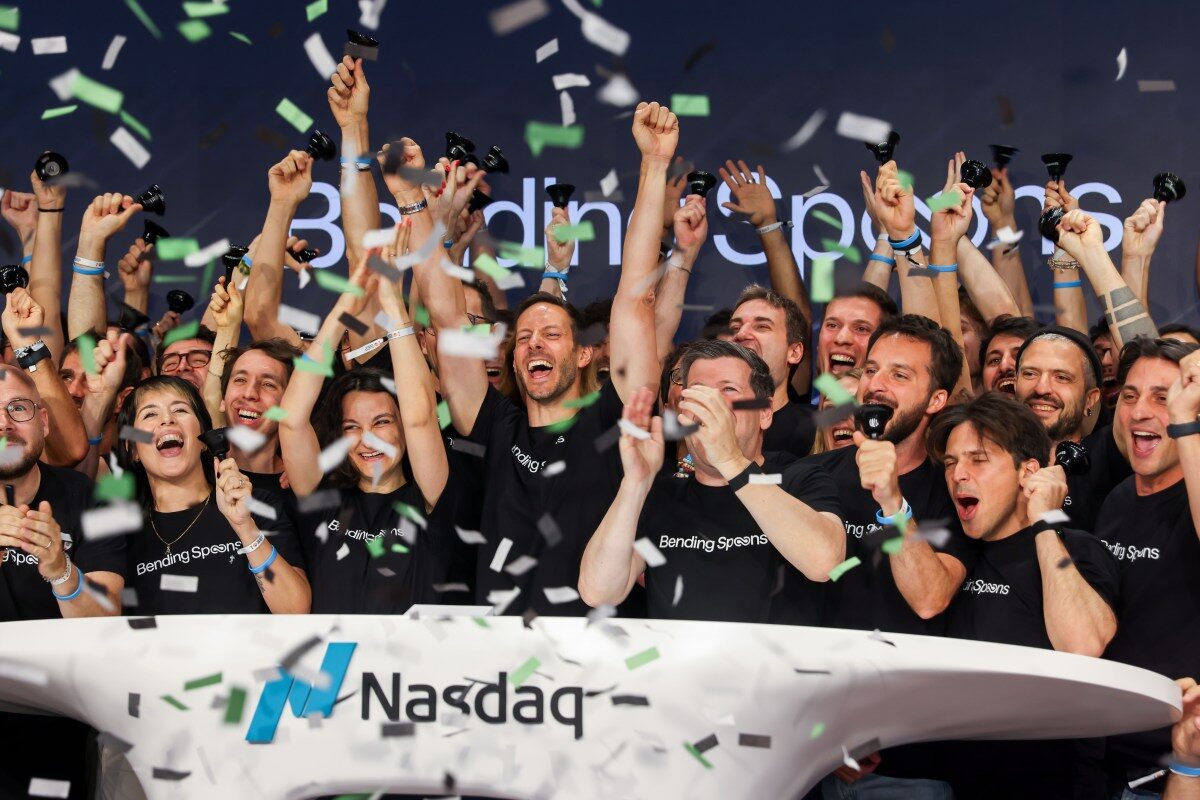
AOL is public again ' sort of. Its owner Bending Spoons, the 13-year-old Italian company that has been quietly acquiring beloved but ailing internet brands for the past decade, went public on the Nasdaq today, opening at an over $18 'billion valuation, with the stock then popping 40% by market close. Headquartered in Milan, Bending Spoons applied some of the private equity playbook to a long series of acquisitions ' Meetup, Eventbrite, Vimeo, WeTransfer, and many others. But it is not a flip-and-sell scheme: It wants to transform these companies with tech and then hold on to them. The 'how' has generated controversy over the years, especially around layoffs. But the company also drove revenue growth, even more so with AI. 'In the past year and a half, we've witnessed an incredible acceleration in the pace at which we were able to ship new features and create value for users,' Danieli told TechCrunch. That may be the right thing to say when investors, public and private, have much more appetite for AI than for aging SaaS businesses. But Bending Spoons has a case: Its F-1, the equivalent of S-1 forms for foreign companies, includes a chapter called 'AI before it was cool' ' a nod to its roots....
Over the past 80 years, America's bold, sustained investment in scientific research, and the discoveries, ideas and innovations that flowed from it made America a world leader. The nation's scientific leadership has been essential to our shared prosperity and national security, and delivered real benefits for all Americans. On June 16, Scientific American released a special section, 'The Young American Scientists,' which celebrates early-career professionals actively engaged in scientific research, and features commentary from MIT faculty on why they continue to be so devoted to curiosity-driven science, demonstrating how their hard work and dedication make Americans safer, healthier, and more prosperous. Among the section's profiles are many MIT faculty, students, and alumni, who share their advice for young scientists and their reasons for optimism in uncertain times. President Sally Kornbluth emphasizes the importance of curiosity-driven research, noting that discovery 'is part of our American DNA and has yielded vast returns to the citizens of this country and the world.' She adds, 'what's needed is a rededication to public investment in American science. Even if I were not the leader of a premier scientific institution, this is what I'd say. Investing in American science is not a gamble; if you look back in time, there is no question about the benefits.'...