To build cyber resilience, organizations need to think about fostering internal relationships instead of just compliance. Social capital'the relationships, trust, and shared understanding that support cooperation'is an integral feature of how business units interact, cooperate, and pursue shared organizational goals, and in this cybersecurity is no different than anything else. Yet it is often overlooked in how companies address cyber risk. New research offers three important findings for leaders: 1) security benefits from compliance activities have a ceiling, 2) shared social capital effectively increases AI and cybersecurity, and 3) large, complex organizations see bigger payoffs from social capital. Taking a social capital approach to drive increased AI and cybersecurity is more a mindset than a process redesign, but leaders can take several concrete steps to invest in building it....
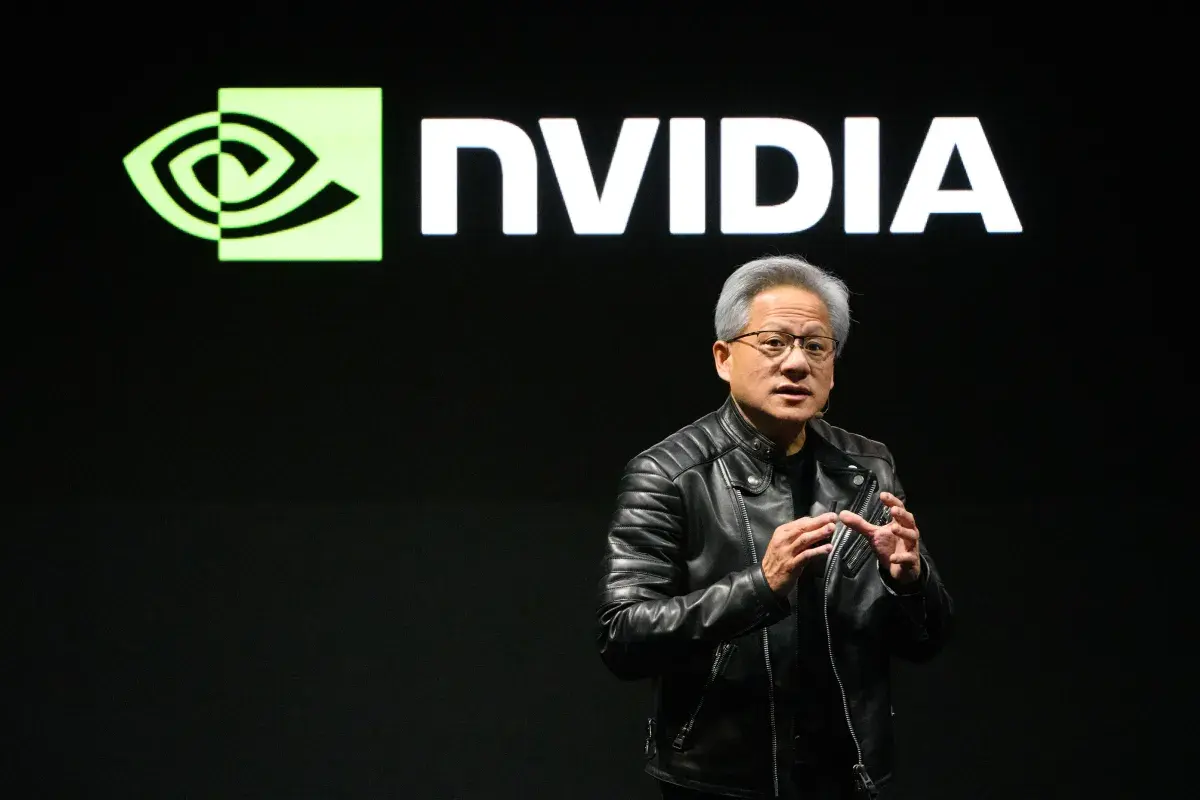
The Nemotron 3.5 Super VL is a large, 120-billion-parameter model geared for agents used by the enterprise. While it uses fewer parameters than the Nemotron 3 Ultra model, Nvidia says it can deliver similar accuracy in instruction-following and tool-use tasks. At the other end of the spectrum, the company also launched two lightweight Bolt models. These are intended to run locally on the new AI PCs (running the Nvidia RTX Spark chip) and workstations running the DGX Spark. Such PCs, aimed at consumers, programmers, and enterprise knowledge workers, are being released right now into the market through partners like Microsoft and Dell. 'Any organization that wants to run agents on Nvidia infrastructure now has an open, optimized model for their tier without having to choose between capability and deployability,' Nvidia's vice president of Open Models and Software, Kari Briski, wrote in the blog post announcing these models. Nvidia claims that the Super VL completes tasks faster than competing models from Anthropic and OpenAI (Opus 5, GPT 6.1 Sol, Luna, Astra) when post-trained on specific agentic tasks. These tasks include document intelligence, financial accounting, scientific experimentation, medical insurance claims, and security attack resilience....

Researchers found that high levels of the enzyme are linked to low levels of inflammation in the brains of aged mice. They also showed that the enzyme boosts the growth of neurons in ageing brains. The findings were reported on 15 October in Nature Neuroscience. 'This is a fantastic, very thoughtful approach to get at what could be protecting neurons,' says Timothy Hohman, a neuroscientist and geneticist at the Vanderbilt Memory & Alzheimer's Center in Nashville, Tennessee, who was not involved in the study. 'This is a great example of how you can use a model system to get at some of these resilience mechanisms that are super challenging to study in humans.' The enzyme in question is a phospholipase, which breaks down fatty compounds. The authors homed in on the enzyme after finding that the gene encoding it suddenly became more active when connections between some of the neurons in the brains of mice were disrupted. To learn more, the scientists genetically altered mice to lack the gene, called Pla2g2f, and looked at what happened as they aged. The researchers saw a surge of inflammation and neuron degradation compared with the brains of unaltered control animals. By contrast, mice that had excess Pla2g2f displayed less inflammation and better-connected neurons in their brains as they got older....
Cyberattacks now move too quickly for companies to assume they can simply restore every system and resume normal operations. The organizations that recover fastest prepare to run the business while parts of their technology environment remain unavailable or untrusted. They define a 'minimum viable enterprise': the essential outcomes, decisions, applications, and manual fallbacks needed to protect customers, employees, compliance, and revenue during the first hours and days of disruption. Leaders should identify that core before a crisis, assign decision rights, map the dependencies that could halt it, maintain a clean recovery environment, and regularly test their plans under realistic conditions. Cyber resilience is less about restoring everything quickly than knowing what must keep running when everything else goes down....