
Relay, an AI-powered workflow automation tool built as an alternative to Zapier, shut down entirely in August. The product let users automate email and task workflows using AI agents, but as OpenAI, Google, and other larger platforms built similar automation directly into their own tools, five-year-old Relay struggled to hold on to a reason to exist as a stand-alone product. Aside from Character.ai and Relay, plenty of AI bets never even survive inside the companies that build them. According to S&P Global Market Intelligence, about 42% of AI initiatives are ultimately abandoned by their corporate parents. The reasons vary: insufficient funding, technical challenges, competition, difficulty scaling, or just weak user demand. The result is a growing AI graveyard. Below is a look at some of the most notable AI products, startups, launches, and bets that have shut down, pivoted, or significantly missed expectations. Think of it less as a scorecard of flops than as a record of what these attempts can (hopefully) teach the rest of the industry....

OpenCode, an open-source AI coding agent that has been gaining ground among developers as an alternative to Claude Code and Cursor, said Saturday that attackers broke into an older system overnight, affecting 1.4% of users of its online platform, OpenCode Console, where some users store the API keys, or digital passwords, they use to access AI services. As the OpenCode team struggled to keep pace with the attack, the scramble to respond highlighted a growing problem: companies without vetted access to AI models with fewer safety restrictions have a hard time defending against large-scale, AI-driven cyberattacks. 'We had a security breach last night related to a large-scale distillation attack that impacted 1.4% of OpenCode Console users,' the company wrote on X. 'We have notified them all this morning via email.' Users who did not receive an email were not impacted, the company said. While the company didn't specify how the distillation attack occurred, leaked API keys can help users in countries with restricted access to American models generate the high volume of outputs needed for that process. Some skeptics called the framing an overstretch, arguing that the incident was a straightforward breach whose use for distillation remains unproven....
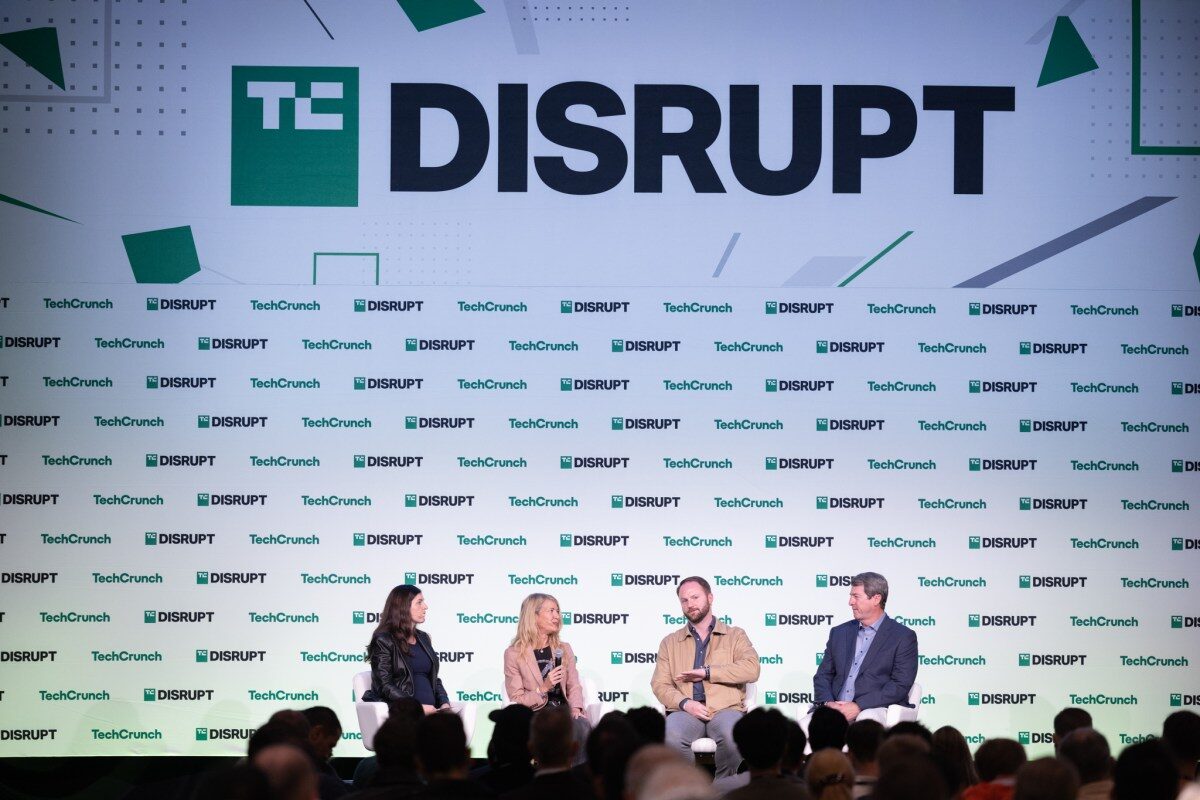
The lowest prices for TechCrunch Disrupt 2026 end in just a few days, this Friday, August 21 at 11:59 p.m. PT. Once that window closes, your chance to save up to $300 on your pass, or get an even larger discount on group pricing, will come to an end. If you've been circling around Disrupt, then now's the best time to lock in your pass and start getting ready to join the rest of the startup community gathering in San Francisco from October 13-15 at Moscone West! Each year, TechCrunch Disrupt brings together more than 10,000 founders, investors, and startup community members, driving innovation forward. And for our event this year, you'll find a keen focus on building and developing in the AI era across all of our stages of programming. If you want to be on the cutting edge running into 2027, this is the event for you. And you don't have to be a founder to get value out of Disrupt. Whether you're raising capital, scouting investments, hiring talent, launching a startup, or building strategic partnerships, Disrupt puts you in the middle of the conversations shaping what's next and can help you make the connections that propel your next year of growth....

Developers detest drudgery. The entire field of programming is proof of how hard people will work to automate away the boring tasks involved in building things. And, as vibe coding has proved, they've even managed to find ways to not do most of the work of putting products together. So I wasn't very surprised to hear that Naive, which offers infrastructure that lets AI agents take on the bulk of the work involved in running a business, had signed up over 30,000 developer customers within months of its launch. Taking vibe coding a step further, the startup claims its infra can automate most of the work in setting up and running a business ' provided you supply the AI agents and the required token budget, of course. It packages the process of assembling payments, email accounts, phone numbers, cloud infrastructure, storage, and company incorporation behind a single API. Naive supplies a prompt that developers can provide to tools like Cursor, Claude Code, or Codex, which can connect to the company's API to provision the infrastructure to set up a business. It lets an agent orchestrate the formation of a U.S. LLC, supplying details such as the state, industry code, business description, and proposed names, though users are still required to be involved to complete KYC/KYB processes and make any required payments....


