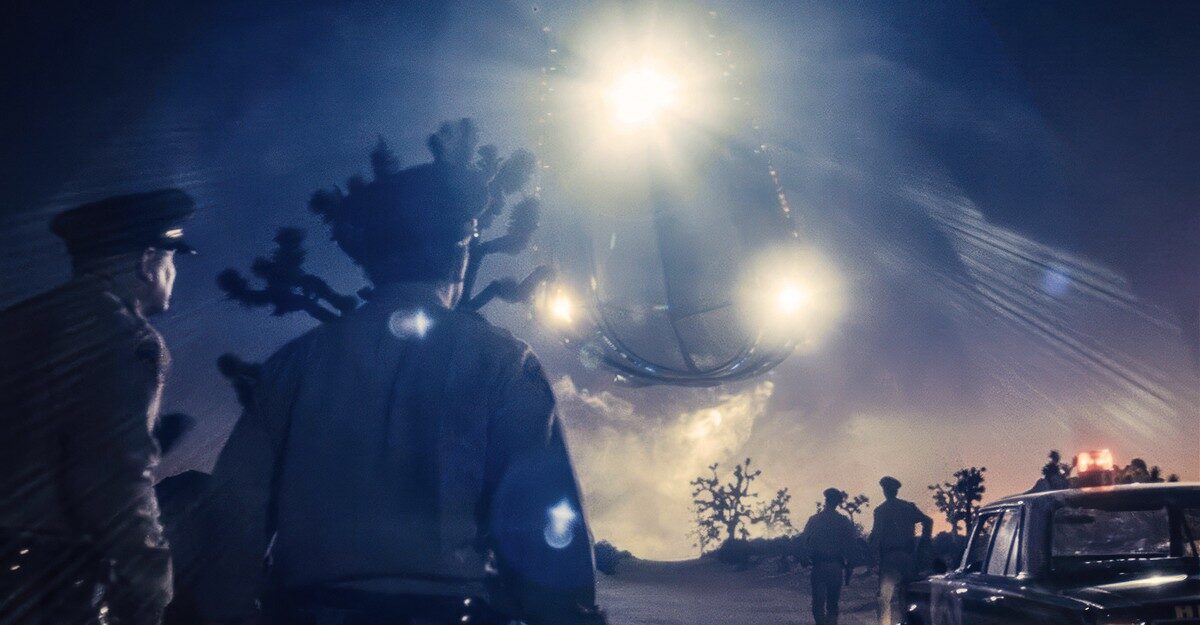
Late in Steven Spielberg's new film, Disclosure Day, a former nun-to-be calls the abbess of the convent she left behind. The world is about to learn that aliens have been living on Earth for decades. Although Jane, the onetime novitiate, is no longer religious, she still thinks that the idea of God is what 'keeps whole civilizations together.' She's worried that when people find out that humans aren't the only intelligent beings in the universe, they'll lose their faith, and society will crumble. In other words, Jane shouldn't be afraid. The existence of aliens does not necessarily conflict with belief in God. As Sister Maura says later in the conversation, 'Why would he make such a vast universe yet save it only for us'' Jane seems not to have heard this perspective before, and it reassures her. But centuries of Catholic writing and thinking about the universe demonstrate that Sister Maura's view on God and aliens is hardly novel. Although the Catholic Church takes no official position on the existence of extraterrestrial life, past and present Catholic figures have explored the possibility and not found it threatening. The 15th-century cardinal Nicholas of Cusa surmised that 'none of the other regions of the stars are empty of inhabitants' and even that some said inhabitants might be 'brilliant, illustrious, and intellectual.' In 1821, the Catholic philosopher Joseph de Maistre puzzled over the fact that some of his contemporaries regarded other planets as 'mere globes, destitute of life and beauty, which the Almighty has launched into space, apparently like a tennis-player, for his amusement solely.' And in a 2010 interview, the former head of the Vatican Observatory, Brother Guy Consolmagno, said that he would be 'delighted' if humans were to discover intelligent life beyond our world....

This year's new university students are settling into life on campuses often notable for their diversity ' and that includes in religion. Over 33,000 Buddhist students started university in the UK in 2023-24, for instance, alongside 769,220 Christian and 37,520 Sikh students. We surveyed 1,000 students twice, one year apart. We wanted to investigate how the university environment, or campus climate, influences how students engage with other religions and worldviews. To assess this we asked students how far they agreed with statements such as 'there are people of other faiths or beliefs whom I admire', 'I try to build relationships with people who hold religious or non-religious beliefs that I disagree with', and 'my faith or beliefs are strengthened by relationships with those of diverse religious and non-religious backgrounds'. First, students feel more positive about difference when they see a diversity of worldviews around them. When students think of their campus as a place inhabited by students of a wide range of religious and non-religious worldviews, this correlates with growth in pluralism orientation. Interestingly, this is less about actual diversity than perceived diversity. We tested an analysis of actual diversity, and it wasn't significant. It's what students perceive that makes a difference....
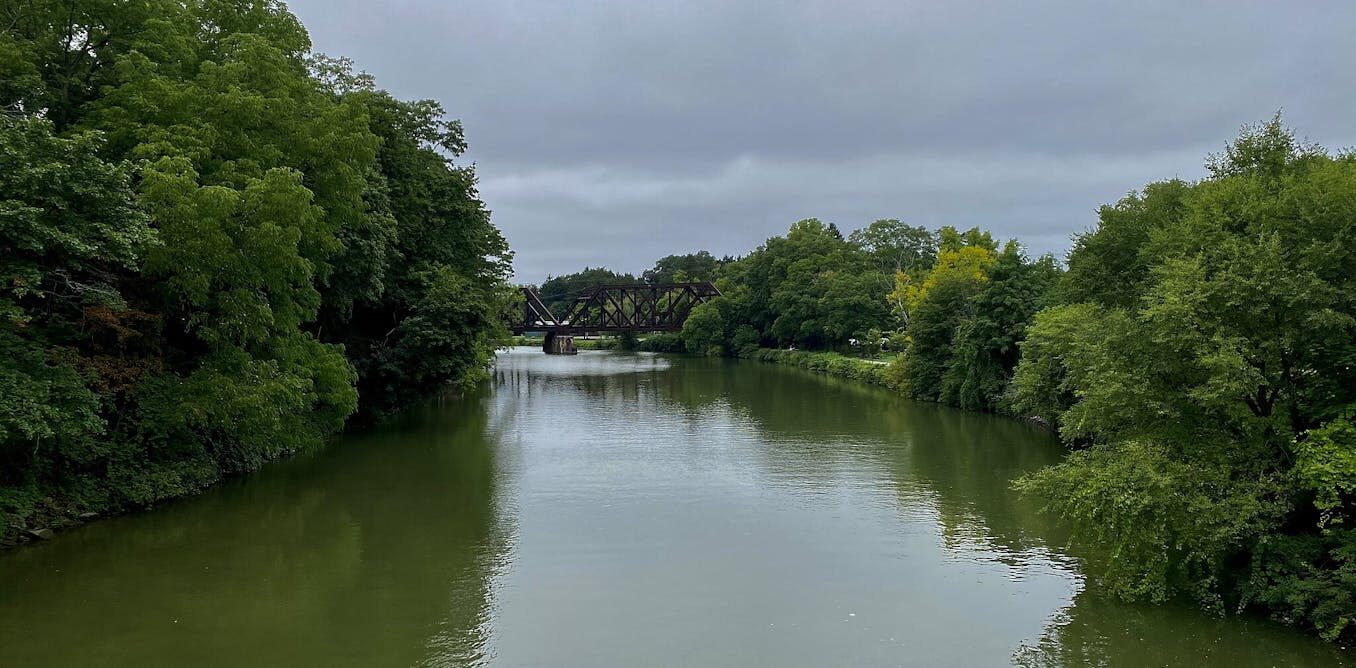
Two hundred years ago, on Oct. 26, 1825, New York Gov. DeWitt Clinton boarded a canal boat by the shores of Lake Erie. Amid boisterous festivities, his vessel, the Seneca Chief, embarked from Buffalo, the westernmost port of his brand-new Erie Canal. Clinton and his flotilla made their way east to the canal's terminus in Albany, then down the Hudson River to New York City. This maiden voyage culminated on Nov. 4 with a ceremonial disgorging of barrels full of Lake Erie water into the brine of the Atlantic: pure political theater he called 'the Wedding of the Waters.' The Erie Canal, whose bicentennial is being celebrated all month, is an engineering marvel ' a National Historic Monument enshrined in folk song. Such was its legacy that as a young politician, Abraham Lincoln dreamed of becoming 'the DeWitt Clinton of Illinois.' As a historian of the 19th-century frontier, I'm fascinated by how civil engineering shaped America ' especially given the country's struggles to fix its aging infrastructure today. The opening of the Erie Canal reached beyond Clinton's Empire State, cementing the Midwest into the prosperity of the growing nation. This human-made waterway transformed America's economy and immigration while helping fuel a passionate religious revival....
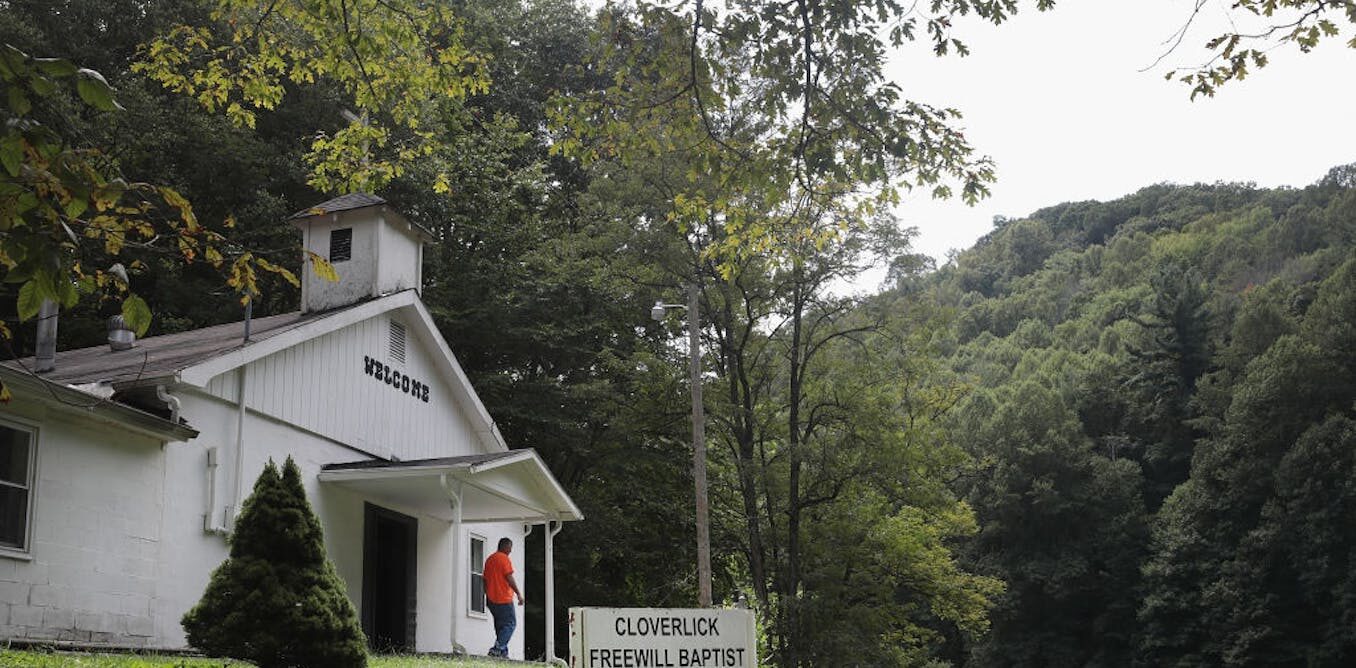
In October 2025, Cecil Roberts will officially retire from his role as president of the United Mine Workers of America. A sixth-generation coal miner, he has led the union for 30 years. Only one man held the role longer: John L. Lewis, whom many consider one of the most important labor leaders of the 20th century. Roberts has seen the union through an especially difficult period for the coal industry and grew up immersed in it. He was raised in Cabin Creek, West Virginia, where his great-grandmother ' an activist in her own right ' let miners camp on her property during a legendary strike in 1912. Bill Blizzard, his great-uncle, led miners during the Battle of Blair Mountain, the largest labor uprising in U.S. history. Both of his grandfathers died in mine accidents. And there's another way Roberts is steeped in Appalachian history: Before an audience of workers, observers have often noted, he speaks like a preacher. Roberts likens miners' struggles to biblical stories, references the power of God and the teachings of Jesus, and speaks in the dynamic cadences found in an Appalachian church....


