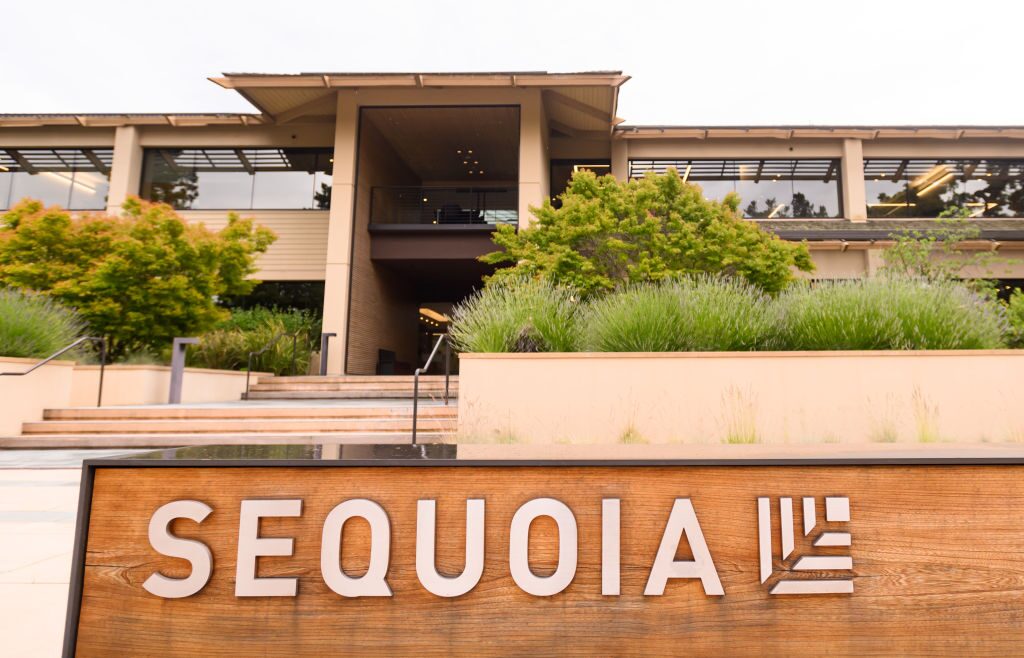
In recent days, founders and founders-turned-investors took to X to share horror stories about being mistreated by VCs. Their complaints ranged from VCs falling asleep during pitch meetings to investors suggesting a founder fire a co-founder. 'The 'sequoia scam' is worse than a single horror story,' Foody wrote on X. 'in the last 6 [months] ive seen a half dozen rounds where sequoia invests in 2 tranches. everyone pretends they only did the higher valuation. founders misrepresent this to their employees & then shop it to angels too.' TechCrunch has previously reported on VCs investing in the same round at different valuations. Under this mechanism, the lead VC firm invests a significant chunk of its capital at a lower, preferential valuation, while putting a much smaller portion of capital in at a drastically higher price. The massive 'headline' valuation that gets announced manufactures the perception of a dominant market winner, masking the fact that the lead investor's actual average entry price was significantly lower....

Slate Auto, the electric vehicle startup backed by Jeff Bezos and LA Dodgers owner Mark Walter, will announce pricing and start taking non-refundable preorders for its low-cost electric vehicle on June 24, ahead of the first deliveries late this year. The company sent out emails to prospective buyers on Thursday that encouraged them to make a $50 reservation now ahead of the $300 preorders starting next month, in order to get a 'delivery window before non-reservers.' Slate previously said it would announce pricing in June. An FAQ section of the preorder page that went live Thursday shows the company will announce pricing on June 24. The company did not respond to a request for comment. The four-year-old company came out of stealth in April 2025 after TechCrunch revealed its secretive plans to build a low-cost, no-frills, customizable vehicle. Slate once touted that the base version of its EV ' which can be converted from a two-seater truck to a five-seater SUV, for a price ' would start at 'under $20,000' with a $7,500 federal tax credit. But that credit was killed by the Trump administration and Congress late last year, and Slate has remained tight-lipped about pricing, only saying the vehicle will start in the mid-$20,000 range....

A close friend of mine, a serial entrepreneur, launched a fintech platform with an unbeatable value proposition: it was entirely free for businesses. The strategy was to monetize later through third-party transaction fees, effectively stripping away all upfront friction for enterprises and catalyze rapid adoption. His company raised a few million in seed, and lifted the curtain, and ' crickets. Nothing happened. Businesses didn't sign up. My friend was confused while prospective clients hesitated. This simply didn't sit well with them. Then the founder decided to do something odd. He charged money on top of the original monetization plan. Same product, same value proposition, but now there is a monthly subscription. Almost overnight, new businesses began signing up. The price-quality heuristic is a cornerstone of behavioral economics. When buyers lack complete transparency, they use price as a shortcut for quality. This is why identical items, from fine wines to electronics, are rated higher when they cost more. In B2B, this effect is amplified: A cybersecurity solution priced far below the market doesn't look like a bargain; it looks like a risk....

S3 Ventures led the financing, which included participation from MHS, Active Capital, NextView Ventures and Ritual. It brings Boulder, Colorado-based Schematic's total funding since its 2023 inception to $12 million. Schematic builds entitlements and enforcement infrastructure for SaaS and AI companies. Put more simply, it serves as a digital gatekeeper for software and AI companies. For example, if a company's sales team wants to give a major client a special discount or extra storage, they have to ask an engineer to go in and 'move the walls.' The process can be slow, expensive and tedious. Instead of burying those rules in the code, a company can plug Schematic into its product. Then, if it, for example, wants to launch a new 'AI Tier' or change how many users a client can have, a person in marketing or sales can flip a switch in a simple dashboard. 'When a software company sells you a plan, something inside their product has to enforce what you can do and access based on what you paid for,' said CEO and co-founder Fynn Glover. 'Most companies build that enforcement infra themselves, often badly, and it becomes the thing that slows down every future monetization change. Schematic is the infrastructure that handles it, so engineering doesn't have to.'...


