
Lidar systems use pulses of infrared light to measure distance and map a 3D scene with high resolution, allowing autonomous vehicles to rapidly react to obstacles that appear in their path. But traditional lidar sensors are expensive, bulky systems with many moving parts that degrade over time, limiting how the sensors can be deployed. A new study from MIT researchers could help to enable next-generation lidar sensors that are compact, durable, and have no moving parts. The key advance is a novel design for a silicon-photonics chip, which is a semiconductor device that manipulates light rather than electricity. Typically, such silicon-photonics chip-based systems have a restricted field of view, so a silicon-photonics-based lidar would not be able to scan angles in the periphery. Existing workarounds to this problem increase noise and hamper precision. To avoid these drawbacks, the MIT researchers designed and demonstrated an array of integrated antennas that minimizes unwanted crosstalk between the antennas. Their innovation allows a lidar chip to scan a wider field of view while maintaining low-noise operation compared to other silicon-photonics-based approaches....

Joannopoulos was a prolific researcher in the field of theoretical condensed-matter physics, and an early pioneer in the study and application of photonic crystals. Many of his discoveries, in the ways materials can be made to manipulate light, have led to transformative and life-saving technologies, from chip-based optical wave guides, to wireless energy transfer to health-monitoring textiles, to precision light-based surgical tools. His remarkable career of over 50 years was spent entirely at MIT, where he was known as much for his generous and unwavering mentorship as for his contributions to science. He made a special point to keep up rich and meaningful collaborations with many of his former students and postdocs, dozens of whom have gone on to faculty positions at major universities, and to leadership roles in the public and private sectors. In his five decades at MIT, he made lasting connections across campus, both in service of science, and friendship. 'A scientific giant, inspiring leader, and a masterful communicator, John carried a generous and loving heart,' says Yoel Fink PhD '00, an MIT professor of materials science and engineering who was Joannopoulos' former student and a longtime collaborator. 'He chose to see the good in people, keeping his mind and heart always open. Asking little for himself, he gave everything in care of others. John lived a life of deep impact and meaning ' savoring the details of truth-seeking, achieving rare discoveries and mentoring generations of students to achieve excellence. With warmth, humor, and a never-ending optimism, JJ left an indelible impact on science and on all who had the privilege to know him. Above all, he was a loving husband, father, grandfather, friend, and mentor.'...
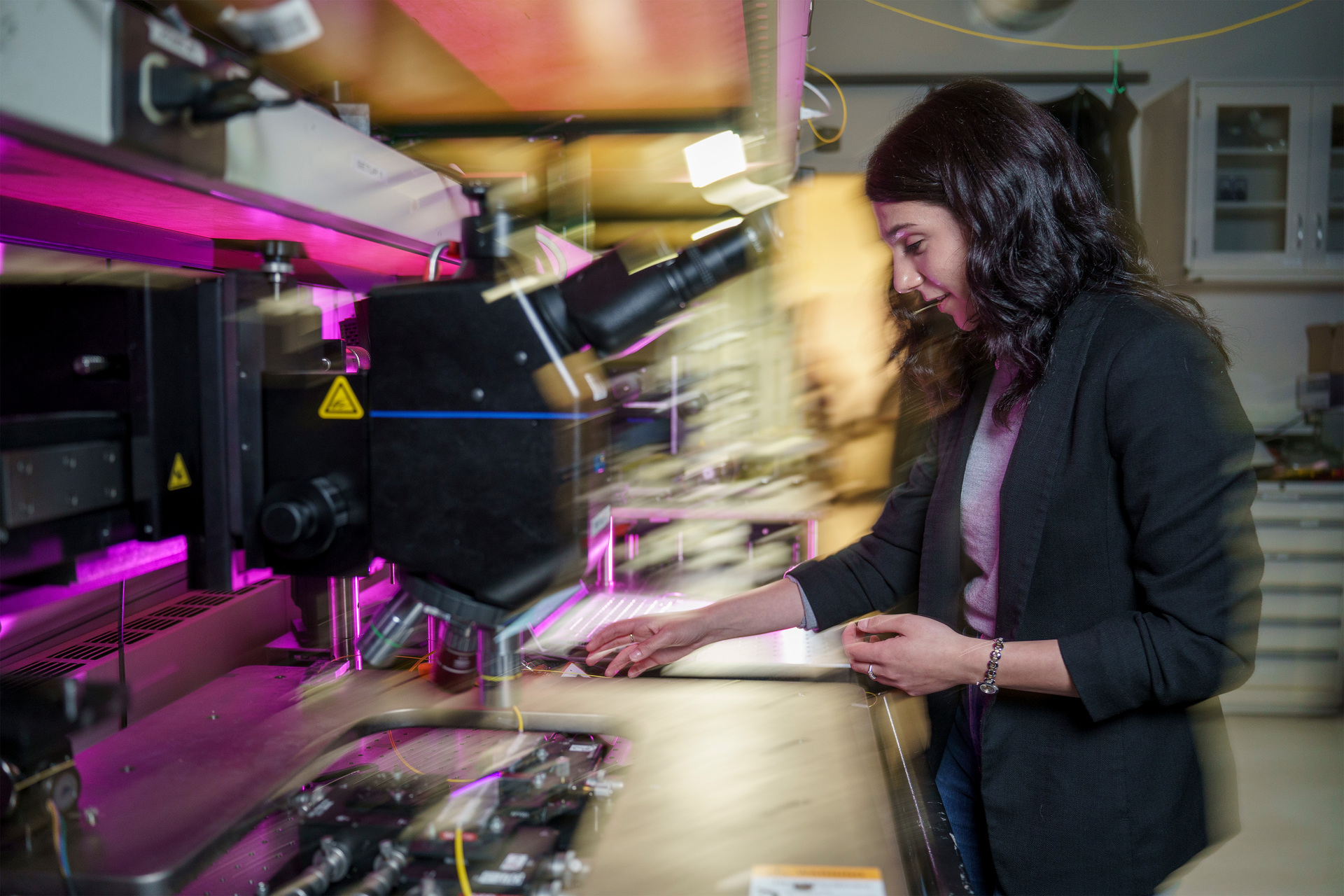
Inspired by the 'Harry Potter' stories and the Disney Channel show 'Wizards of Waverly Place,' 7-year-old Sabrina Corsetti emphatically declared to her parents one afternoon that she was, in fact, a wizard. That conversation stuck with Corsetti throughout her childhood, all the way up to her decision to double-major in physics and math in college, which set her on a path to MIT, where she is now a graduate student in the Department of Electrical Engineering and Computer Science. While her work may not involve incantations or magic wands, Corsetti's research centers on an area that often produces astonishing results: integrated photonics. A relatively young field, integrated photonics involves building computer chips that route light instead of electricity, enabling compact and scalable solutions for applications ranging from communications to sensing. Corsetti and her collaborators in the Photonics and Electronics Research Group, led by Professor Jelena Notaros, develop chip-sized devices which enable innovative applications that push the boundaries of what is possible in optics....
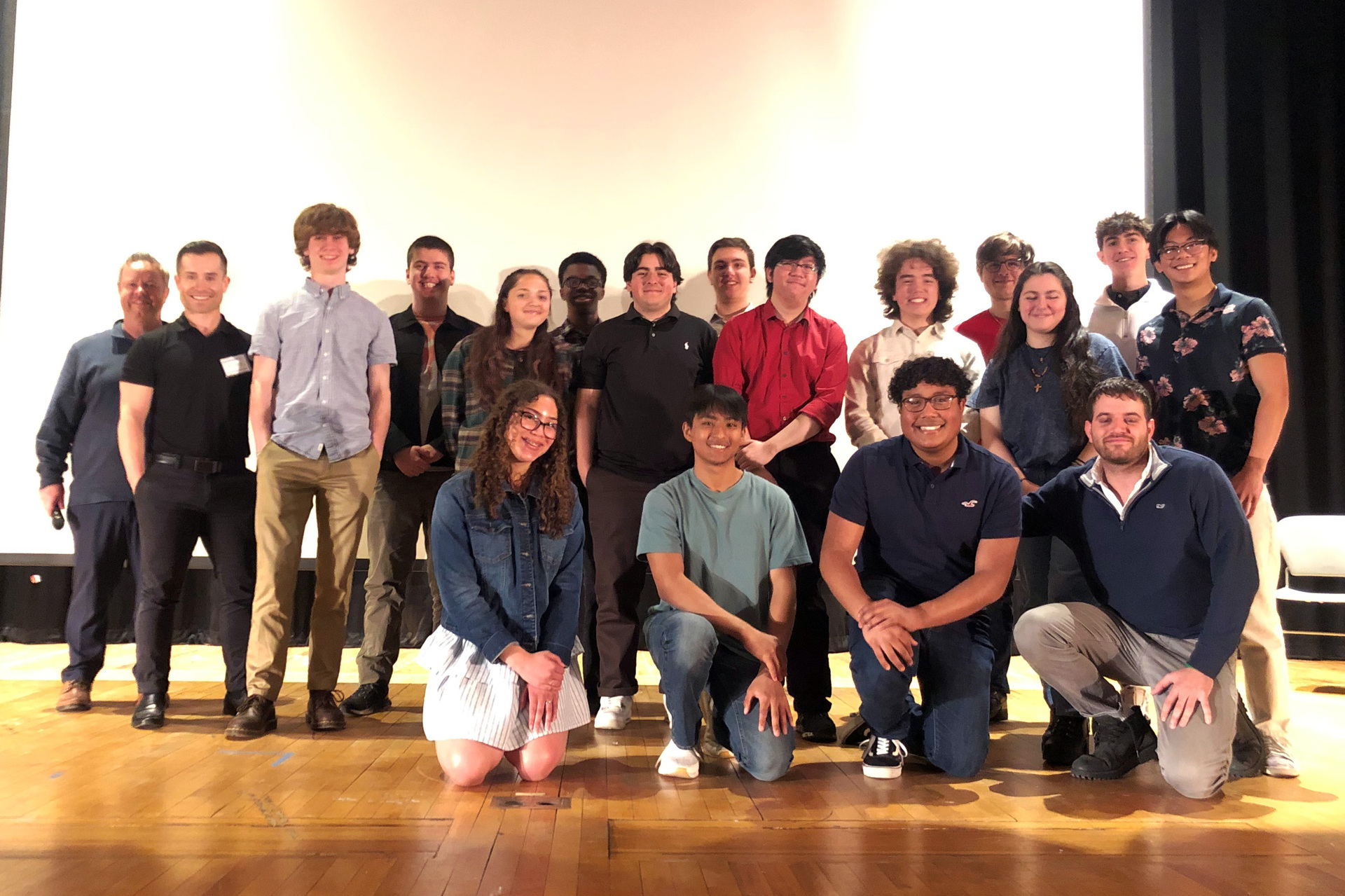
In 2019, Kevin McComber '05, PhD '11 was at MIT working on integrated photonics ' chip-based devices that send and receive signals using light ' and set out to hire someone to design photonic chips. The experience made him realize just how little expertise the U.S. workforce has in integrated photonics design, a problem that's part of a broader shortage of workers in semiconductor manufacturing. Despite having no background in photonics design at the time, McComber decided to leave MIT and start a photonics design services company called Spark Photonics. To directly address the talent shortage he witnessed, McComber and his co-founder, Al Kapoor, launched the Spark Photonics Foundation, a nonprofit that teaches K-12 and college students about concepts in STEM and advanced manufacturing, using semiconductors and photonics technologies. 'The Foundation came from recognizing the need for workers and thinking long-term about what makes the most sense, not just for us but for the country, to address the gap in photonics and in semiconductor manufacturing more broadly,' McComber says....