
For the wealthy families who manage their own money through a family office, the math right now is simple, according to Djoann Fal, a family office advisor and investor at the private wealth platform Atlas Capital in San Francisco. A family office might want to put money into something like green energy for the long haul. But in the current environment, if a fund manager offers a deal that could triple an investor's money over three years, and another deal could triple it in three months, the choice is easy. As Fal put it: If they have one deal that has the chance to make them 3x in three years, and another deal that could make them 3x in one quarter, 'they're just going to invest in the AI deal that does 3x in three months.' It isn't surprising that family offices want in on the action, given that everything around AI is so hot right now, from valuations to pricing to the potential for returns. A bigger shift is that they no longer necessarily want to invest the traditional way, through a venture capital fund manager. Instead, family offices are increasingly buying existing shares in a private company from existing shareholders, or making direct deals on their own. Both approaches get them exposure to the hottest companies without having to hand over control of their money to a fund manager for a decade....
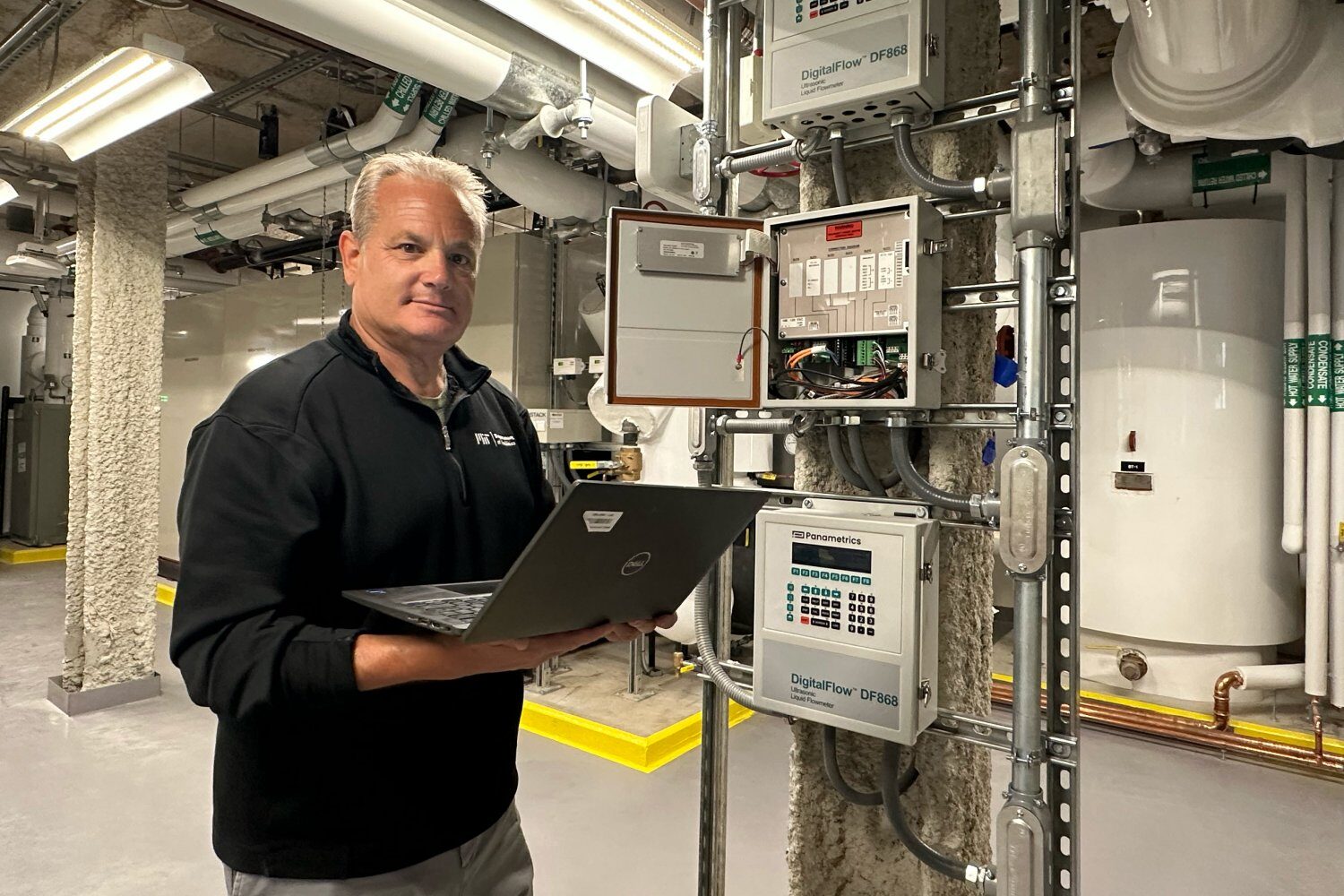
In 2021, MIT set campus decarbonization goals as part of its Fast Forward climate action plan. Five years later, many of those goals have been met or are on track for completion, including efforts to make the Institute's buildings more efficient, expand rooftop solar installations, and attain net-zero emissions. 'Decarbonizing our campus goes hand-in-hand with MIT playing a leadership role in promoting carbon reduction and climate resilience through its research, innovation, and efforts to inform public policy in this area,' says Glen Shor, executive vice president and treasurer. 'Our teams are leveraging that same innovative spirit to meet our campus climate goals.' Over the past decade, the Institute has decreased energy use per square foot by more than 10 percent, even as the campus has grown and research activity has intensified. Rooftop solar power generation has increased by more than five times in the same period, with installations added to the Stratton Student Center (Building W20), the Dewey Library (Building E53), the New Vassar undergraduate residence hall (Building W46), Graduate Junction (Buildings W87 and W88), and the theater arts building (Building W97). Thirty-three MIT building projects have earned Leadership in Energy and Environmental Design (LEED) certification. And in May, the Tina and Hamid Moghadam Building (Building 55) became MIT's first Living Future Zero Carbon Certified building....

The most successful early-career researchers often rely on a network of mentors who each have different roles ' from advising on research and grants to making professional introductions and providing emotional support, finds a study of nearly 900 scientists just starting out1. The findings are consistent with what mentorship scholars and practitioners have long argued: no single mentor can meet all of a trainee's scientific, professional and psychosocial needs, says Keivan Stassun, an astrophysicist at Vanderbilt University in Nashville, Tennessee. 'It is encouraging to see these patterns emerge so clearly in a large data set of successful early-career investigators,' says Stassun, who has won awards for his mentorship. For the study, which was posted on the bioRxiv preprint server and hasn't been peer-reviewed, researchers analysed responses from recipients of K awards, issued by the US National Institutes of Health for career development. These prestigious grants support early-career researchers in strengthening their research skills and provide time for training activities that prepare them to become independent investigators....

Collaborative Fund, the 15-year-old, New York-based generalist venture firm that has roughly $1 billion under management and that made early bets on Lyft, Reddit, Sweetgreen, and Olipop, among others, is taking a stake in the soccer club D.C. United and its stadium, Audi Field. To recap, Joshua Kushner's Thrive launched a new vehicle, Thrive Eternal, explicitly built to hold 'iconic franchises and cultural institutions' for decades, funded by many of the same investors already in Thrive's venture and growth funds. The firm kicked things off by announcing a stake in the San Francisco Giants. Months later, the same vehicle ' with former Disney CEO Bob Iger, a Thrive partner, joining as co-owner ' bought the Lakers outright for a record $12.5 billion. That's new. Historically, money has poured into pro sports two other ways: individual tech fortunes and private equity. For example, Vinod Khosla and his family agreed this summer to buy the Seattle Seahawks for a record $9.6 billion soon after the Khosla family also took a stake in the San Francisco 49ers alongside OpenAI chairman Bret Taylor. That was a personal-wealth play, the kind we've seen over and over....


