
I see a boy standing outside the rubble that was his home 15 minutes ago. I can't see his face. I see position of his body. Shock of the blast has most likely made him temporarily deaf. He barely stands on his feet. His arms are hanging alongside his body like two abandoned rows. His body is covered with dust. The video I am watching in order to understand use of AI in wars and conflicts around the world continues rolling in front of me like a livestreamed horror movie. Seconds later, another hit and I cannot see the boy anymore. Only a cloud of dust rising over the place that, seconds before, was where that boy was standing. Somewhere in an air-conditioned room far away, a human issued an order to a machine. The machine executed meticulously. The positioning, distance, satellite imagery, intended damage and efficiency of the strike were processed by the machine in real time. AI systems are also carrying out instructions based on rules of engagement determined by humans, rules that could be built on tolerances that do not prioritize civilian harm reduction. If a military decides that it's acceptable to have five civilians die for every suspect who is targeted, that is what it is telling the machine is acceptable. AI systems used for this purpose are largely developed and produced by the private sector....

At last, parents, your prayers have been answered! On Tuesday, Spotify announced that it's finally doing something to fix how your kids' listening habits ruin your end-of-year Spotify Wrapped experience, and then some. The company said it's introducing a new toggle that will allow you to exclude kids' and family music from your taste profile. That means no more Kidz Bop or Disney tunes in your personalized playlists, and no more K-Pop Demon Hunters track 'Golden' as your most-played song of the year. (Or whatever the kids are into!) That's because home devices, like TVs and smart speakers, tend to be linked to a parent's account so the family can stream music without restrictions. These devices are often found in common areas of the home, like living rooms, dens, and playrooms, where kids have access. Plus, many kids may have a speaker in their bedroom to stream things like bedtime tunes and lullabies. Kids also tend to demand control of the music while in the car. And parents acquiesce, as they'll essentially do anything to get a moment's peace ' even if that requires listening to Jack Black's 'Steve's Lava Chicken' from the Minecraft movie over and over....
If your pitch still leads with 'we use AI,' you're describing infrastructure, not a business. Consider that 97% of the products nominated for this year's Products That Count Product Awards are deeply integrated with AI, highlighting the extent to which the days of AI as a differentiator are officially gone. We analyzed Crunchbase data on 576 venture-backed, AI B2B companies that raised $50 million-plus rounds since the start of 2025 using Hamilton Helmer's 7 Powers framework and layered in insights from Products That Count's 600,000-plus product leader community. Counter-positioning is what happens when a newcomer builds a business model so structurally different that the incumbent can't copy it without destroying their own economics. Netflix versus Blockbuster is the canonical example. Blockbuster could have matched the subscription model, but doing so would have gutted late-fee revenue, which kept their stores alive. So they didn't, until it was too late. In the AI era, this power is rare and underutilized. Only 5% of companies in our dataset leverage counter-positioning. Investors price that scarcity at a median enterprise value of 5.3x per dollar raised ' the highest multiple of any power in the analysis....
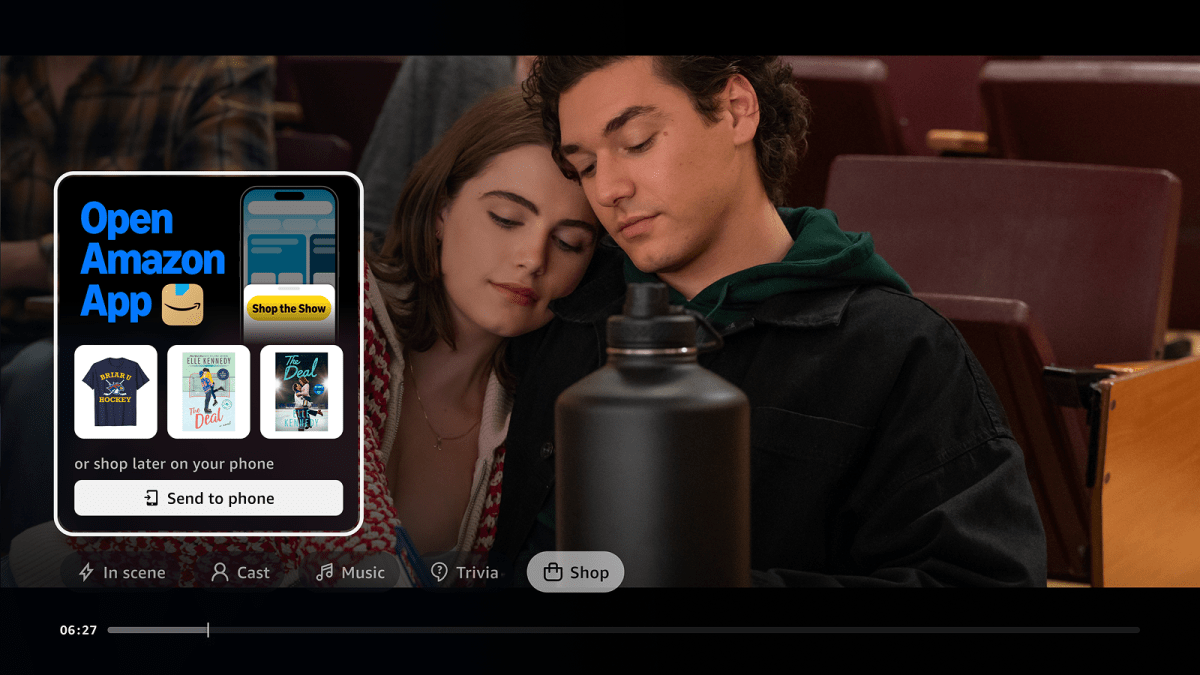
Amazon is going to make it easier to shop when you're watching TV. The retail giant on Thursday announced a series of new features that will allow customers to discover products across thousands of Prime Video titles through integrations with its existing X-Ray experience, which today displays real-time actor bios, character names, soundtrack music, and more. It will also introduce a new way to 'shop the scene' using Amazon's Lens technology, along with other updates. The changes follow last year's launch of 'Shop the Show,' a second-screen shopping experience available through the Amazon mobile shopping app. Instead of interrupting your viewing experience or displaying product information on-screen, this feature would take you to products tied to a given movie, show, or live sports event when you typed 'shop the show' into the Amazon Search app. Amazon joins a number of services that are working to integrate shopping suggestions into the viewing experience to create an additional revenue stream. YouTube has long offered creators a merch shelf to hawk their products and offers shoppable connected TV ads. Peacock in 2023 added a Must ShopTV feature that lets viewers buy products that appeared in its content. Roku also offers a way to shop with its remote. Disney has experimented with shoppable TV, including in streaming ads on Disney+, Hulu, and ESPN....


