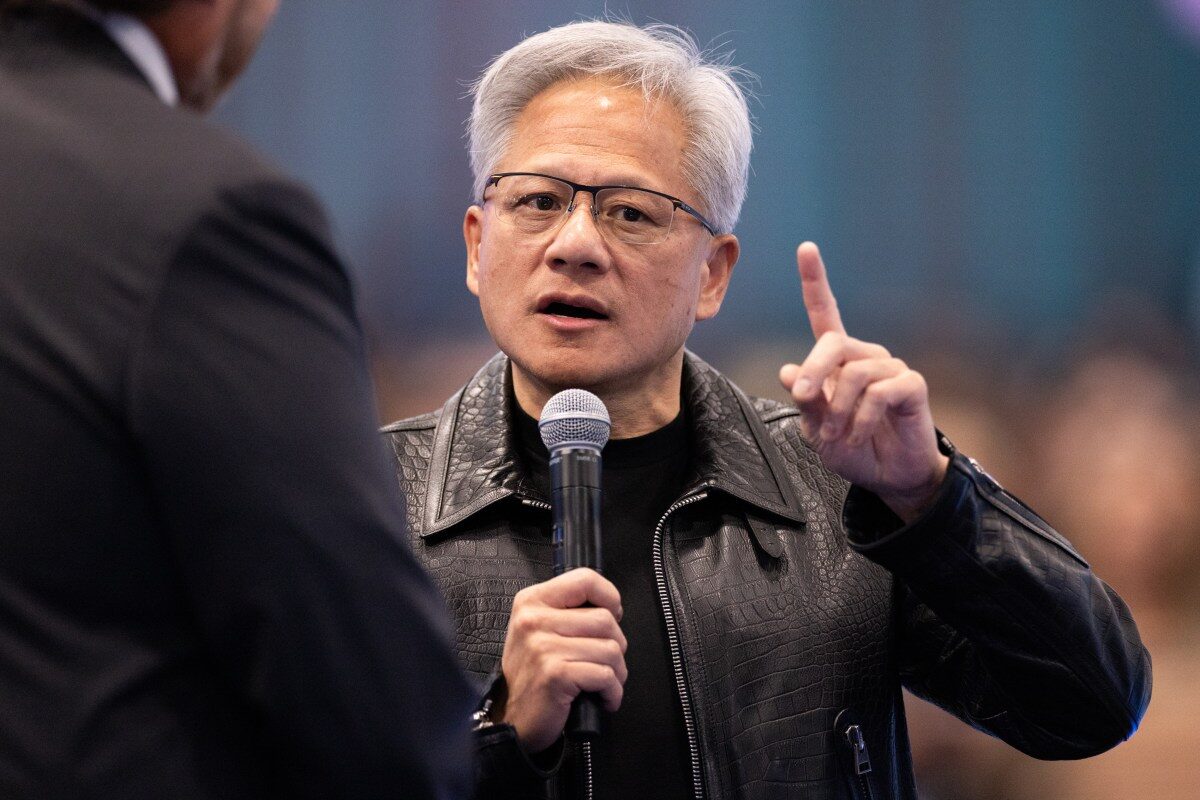
We're seeing a big debate over AI safety and a potential slowdown, as Anthropic CEO Dario Amodei recently published a plan to 'pace the frontier,' while Nvidia CEO Jensen Huang has publicly echoed President Donald Trump's claims that the AI backlash is a hoax and regulation is unnecessary. And when Kristen asked whether a combination of existing regulation and the workings of the free market could provide enough safeguards on their own, Sean replied, 'We have a federal government at the moment that certainly does not seem eager to enforce regulations broadly speaking, let alone specifically speaking here.' Plus, he argued, 'There does not seem like there is a ton of consumer choice driving this market, in the sense of, okay, if one of these companies does something really bad, then they will see an impact in how many cancellations there are or whatever.' So this was a pretty immediate flip of what I said a week ago, to hear this from Dario at Anthropic and Sam at OpenAI and even Elon Musk to a certain degree ' and we can get into whether we believe that or not. I will say, I don't think I was completely wrong, because even with these loose plans that Dario laid out in a blog post and and some of the other leaders have talked about, I feel like we're still missing a lot of specifics here, not only on some of the claims about why these people think there are dangers and risks, but also specifics on what they mean by slowing down....

There is no dearth of different forms of hardware for meeting note-taking, including pendants, pins, and credit-card-styled devices. That hasn't stopped Vocci from releasing a new device for the same use case in a ring form factor, which is convenient but could create some privacy issues. The ring form factor is one of the easiest for anyone who wants to just press a button and have the device start recording. Pebble's new Index 01 Ring, which I am testing right now, lets you hold the button and take a note or a reminder. Stream Ring, made by Sandbar, works similarly with a control pad on the top. Vocci's ring takes a different path, with meeting note-taking as a central function. The ring has a button, which you can double-tap to start recording and double-tap again to stop. You can tap and hold the button to ask Vocci AI questions, but that only works when you have the app open. There is an indicator light and a haptic motor for recording feedback. The ring is lightweight at under 6 grams and uses titanium material on the inner and outer surfaces ' likely a coating....

' Hey, Linas here! Welcome back to a ' weekly free edition ' of my daily newsletter. Each day, I focus on 3 stories that are making a difference in the financial technology space. Coupled with things worth watching & the most important money movements, it's the only newsletter you need for all things when Finance meets Tech. How to Use GPT-6 Astra, the OpenAI Model Jensen Huang Called AGI ' [8 GPT-6 Astra workflows, copy-ready prompts, and practical settings for founders, builders, investors, and entrepreneurs who want to build products, research investments, and get more value from AI] The Ultimate Guide to Grok Bot: The First Real AI Agent OS ' [The complete guide to building a persistent AI agent operating system with Grok Bot ' setup, working prompts, 8 end-to-end workflows, multi-agent teams, security, and the economics of AI teammates] The Age of the One-Person Company ' [What the latest data reveals about solo founders building million-dollar companies with AI agents instead of employees, and where the next big opportunity is in 2026]...
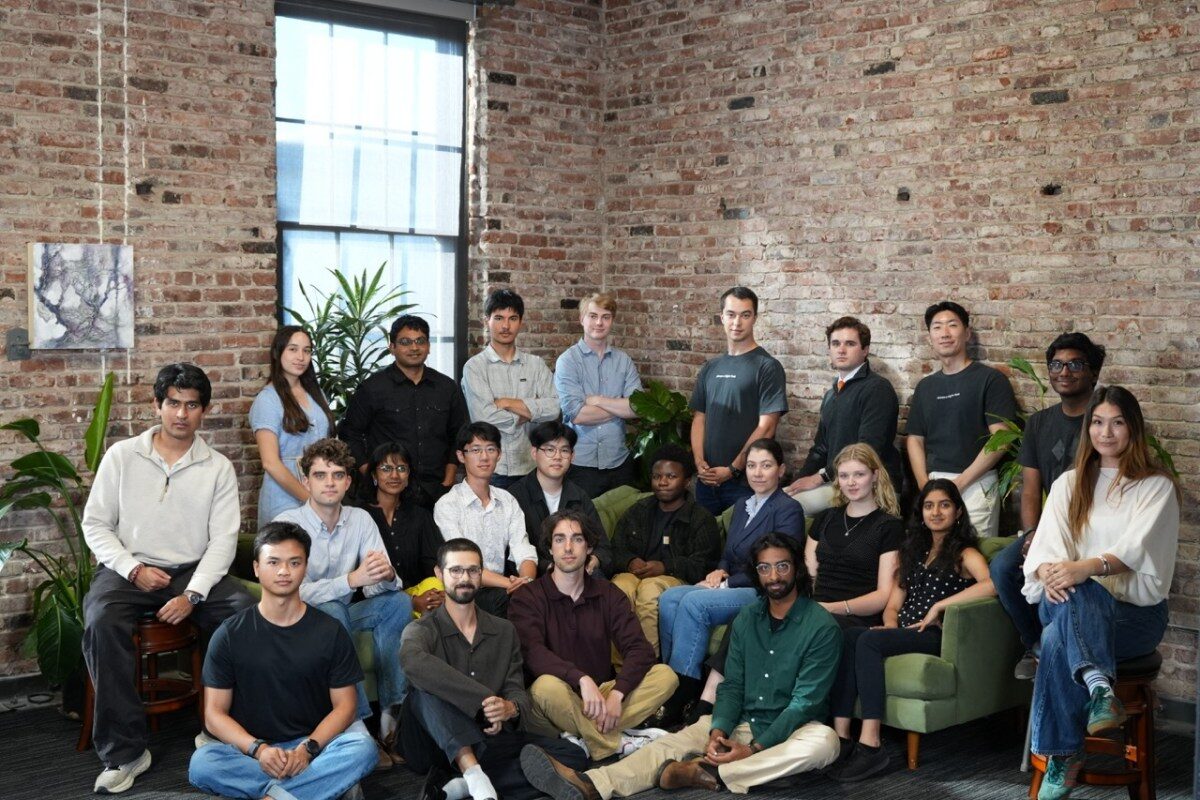
Benchmarking has become the industry norm for how AI companies validate their models' capabilities and, when the metrics swing in their favor, stand out from competitors and advertise their superiority. In other words, good benchmarks pretty much always mean good PR. Vals, a startup formed in 2024, says that it is on a mission to fix this very imperfect system. In the span of less than two years, the company has established itself as a notable presence in the tech industry and, last year it managed to secure a seed round led by 8VC and Bloomberg Beta. Then, last month, after a period of rapid growth, it raised $40 million in a series A led by Andreessen Horowitz. Rayan Krishnan, the company's 25-year-old co-founder, previously interned at Palantir, and, as an undergraduate at Stanford, worked for Microsoft and the school's much lauded artificial intelligence lab. Krishnan says Vals was born from his own observations about how benchmarking was falling behind the advances of the industry it was designed to measure....


