' 2026 Conde Nast. All rights reserved. WIRED may earn a portion of sales from products that are purchased through our site as part of our Affiliate Partnerships with retailers. The material on this site may not be reproduced, distributed, transmitted, cached or otherwise used, except with the prior written permission of Conde Nast. Ad Choices...
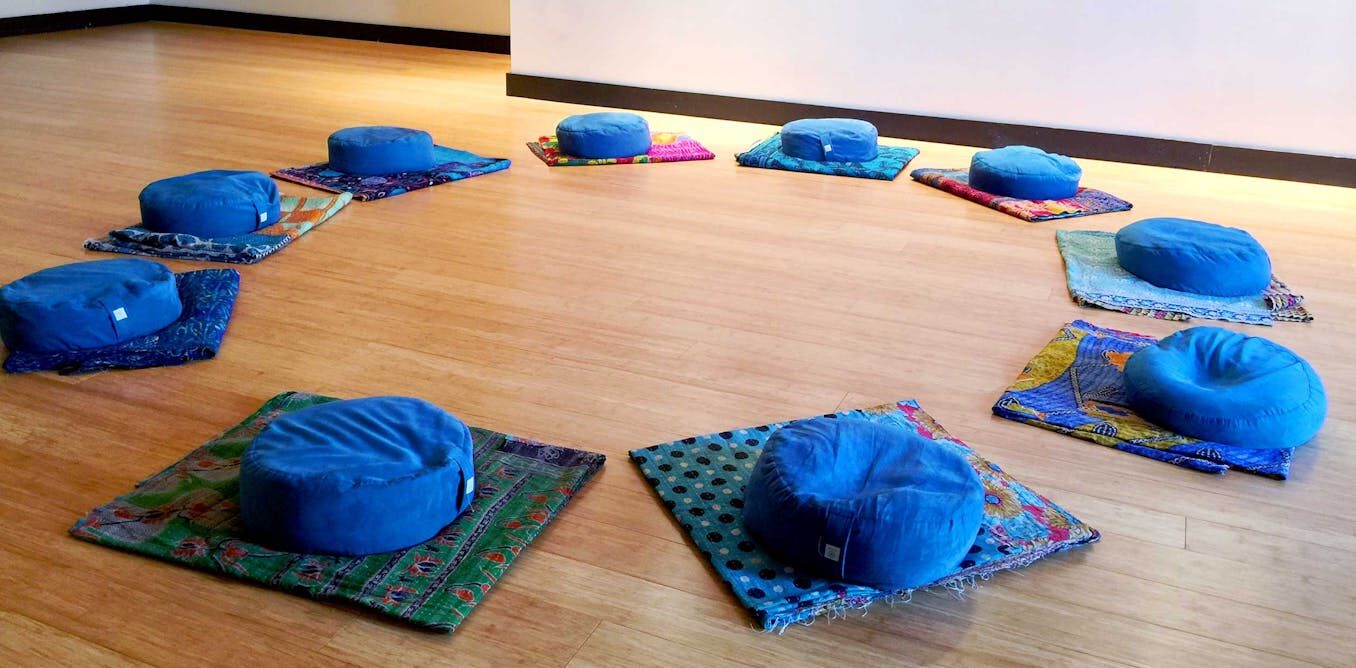
Regular mindfulness practice has been linked to many positive health benefits, including reduced stress and anxiety, better sleep and quicker healing after injury and illness. Mindfulness can help us to be present in a distracted world and to feel more at home in our bodies, and in our lives. There are many different types of meditation. Some mindfulness practices ask meditators simply to sit with whatever thoughts, sensations or emotions arise without immediately reacting to them. Such meditations cultivate focus, while granting more freedom in how we respond to whatever events life throws at us. Other meditations ask practitioners to deliberately focus on one emotion ' for example, gratitude or love ' to deepen the experience of that emotion. The purpose behind this type of meditation is to bring more gratitude, or more love, into one's life. The more people meditate on love, the easier it is to experience this emotion even when not meditating. One such meditation is known as 'metta,' or loving-kindness. As a scholar of communication and mindfulness, as well as a longtime meditation teacher, I have both studied and practiced metta. Here is what loving-kindness means and how to try it out for yourself:...

Sarah, who is in her early thirties and didn't want her real name used due to privacy concerns, says the tapes'which she had been listening to on and off for months'took her on a roller-coaster journey of out-of-body experiences. 'I was in and out of time and space,' she says. It felt like a bad trip, she says, despite the fact she was sober. She recalls a subsequent three-week period of disorienting instability that veered from feelings of intense spiritual connection to fears that she may never again relate with others. Looking back, she is relieved she was not left 'in a kind of a spiritual psychosis,' but she sees the events as part of an ultimately positive 'awakening' process. Sarah is not the only one to report baffling and petrifying experiences thanks to the Gateway Process, which has been around for over 50 years and has exploded in popularity since the pandemic. But, like many others, she also credits it with helping her calm her mind and make transformative life changes. Developed by radio broadcasting executive Robert Monroe, the Gateway Process claims to be 'a voyage of self-discovery' that can help people go 'farther, deeper and faster into different dimensions of consciousness.' Monroe founded the Monroe Institute in 1971 in Faber, Virginia. Dubbed an American 'Hogwarts' by one consciousness content creator, the facility claims to help coax people out of their bodies via in-person and virtual retreats, and even Spotify playlists, by way of self-hypnosis style exercises powered by 'binaural beats''sounds attuned to different frequencies which play in each headphone ear. Proponents claim binaural beats balance the two sides of the brain and boost wellness. And while there is still an absence of scientific evidence to support the institute's methods, that hasn't stopped the military from taking an interest in Monroe's mysterious courses which also include manifestation and 'remote viewing''a form of clairvoyance in which one leaves the body to investigate the real world using only the mind....

When it was first invented in the 1300s in medieval Europe, this holiday was a celebration of romantic love, the coming of spring and the freedom to choose a partner, rather than having one chosen for you. Today that ancient and optimistic message remains but is often buried under a pile of consumer goods ' chocolates, cards, stuffed animals, plastic toys, expensive dinners and roses that cost so much more than you think. Yet love is one of the richest and most diverse human emotions. There are many ways to experience love ' so this holiday, as a scholar of mindfulness and communication, I encourage you to try out a practice of 'metta,' or loving-kindness. In the ancient Pali language, the word 'metta' has two root meanings. The first is 'gentle,' in the sense of a gentle spring rain that falls on young plants without discrimination. The second is 'friend.' A metta friend is a true friend ' someone who is always there for you without fail and without demanding anything in exchange, or someone who supports you when you're in pain and who is happy for you when you're happy, without a tinge of jealousy....