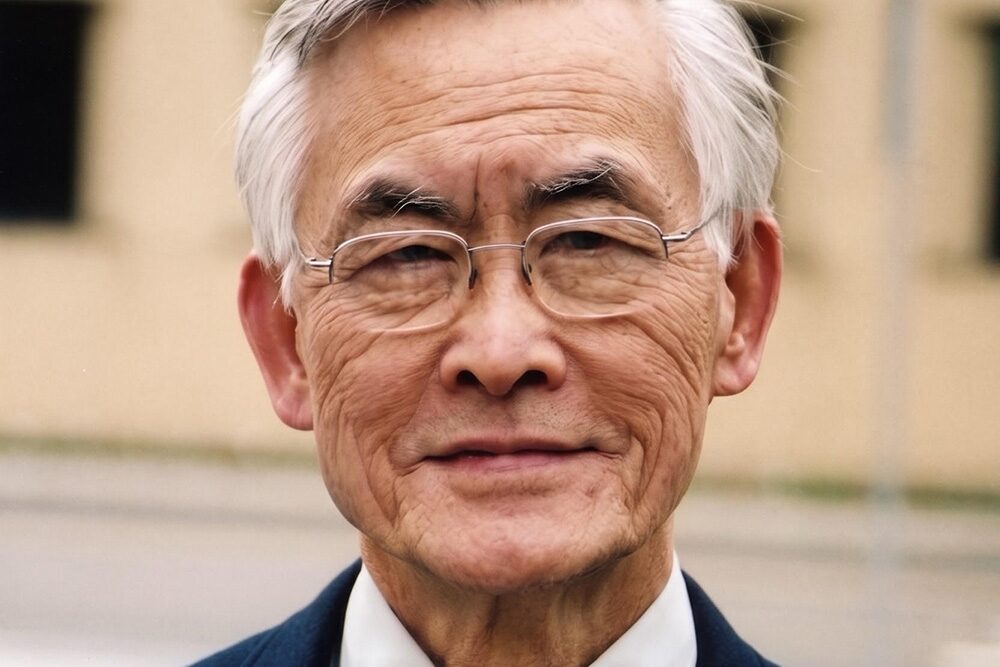
Chiang Chung "C.C." Mei, professor emeritus in the MIT Department of Civil and Environmental Engineering (CEE), a renowned hydrodynamicist whose work shaped the field's understanding of ocean waves and their interactions with coastal and offshore structures, passed away peacefully at home in Waltham, Massachusetts, on July 16. He was 91. For more than four decades, Mei was a defining presence in CEE. Since joining the MIT faculty as an associate professor in 1965, he became one of the world's foremost authorities on theoretical hydrodynamics, fluid mechanics, and ocean and coastal wave phenomena, retiring in 2010 after 45 years on the faculty. Throughout his career, he earned a reputation among colleagues and students as a generous mentor and thoughtful leader. Mei's research advanced the science of ocean wave hydrodynamics, spanning nearly every aspect, including nearshore currents, sediment transport and resuspension, the formation of sand ripples and bars on beaches, wave-induced stresses and seabed deformation, and the removal of contaminants from soils. In later years, he extended his mathematical approach to biofluid dynamics, publishing on flow problems in blood vessels and the inner ear, including a paper on "Streaming and diffusion in the cochlea" that appeared in the Journal of Fluid Mechanics in July 2025....
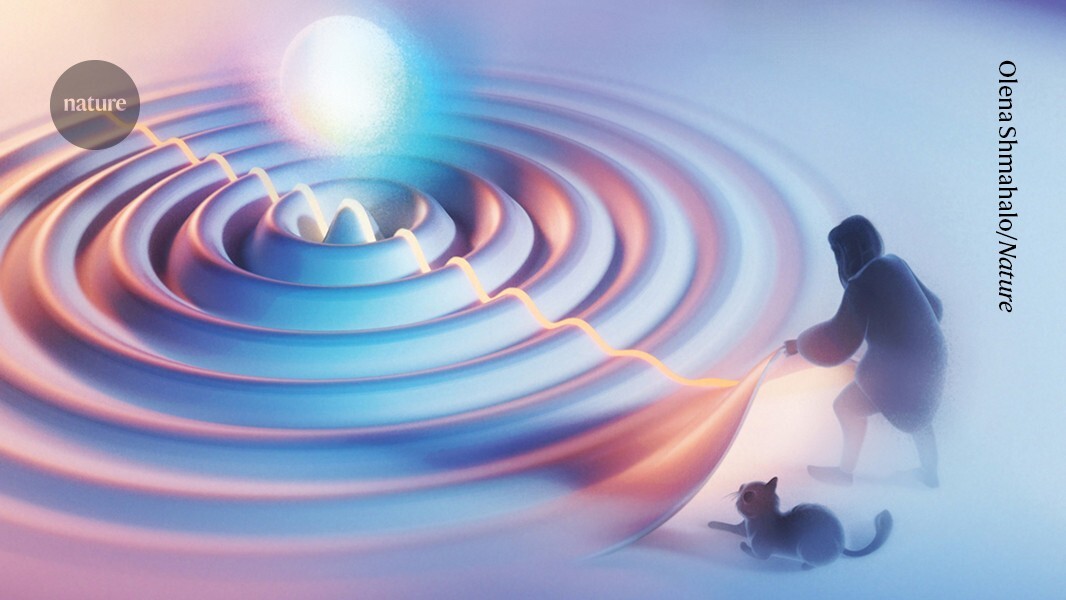
Quantum mechanics is one of the most successful theories in science ' and makes much of modern life possible. Technologies ranging from computer chips to medical-imaging machines rely on the application of equations, first sketched out a century ago, that describe the behaviour of objects at the microscopic scale. At an event to mark the 100th anniversary of quantum mechanics last month, lauded specialists in quantum physics argued politely ' but firmly ' about the issue. 'There is no quantum world,' said physicist Anton Zeilinger, at the University of Vienna, outlining his view that quantum states exist only in his head and that they describe information, rather than reality. 'I disagree,' replied Alain Aspect, a physicist at the University of Paris-Saclay, who shared the 2022 Nobel prize with Zeilinger for work on quantum phenomena. To gain a snapshot of how the wider community interprets quantum physics in its centenary year, Nature carried out the largest ever survey on the subject. We e-mailed more than 15,000 researchers whose recent papers involved quantum mechanics, and also invited attendees of the centenary meeting, held on the German island of Heligoland, to take the survey....

'Faster, mommy, faster!' Allison's toddler squealed as she ran down the hill by her house with her jogging stroller. As a longtime runner and running biomechanics researcher, she found herself in the same situation as many parents of young children: squeezing in runs between work meetings, meal prep and nap schedules. The two of us ' Allison Altman Singles and Joe Mahoney ' are professors and biomechanics researchers interested in how running form affects injury risk. Together, we founded the Biomechanics and Gait Evaluation Laboratory, or BaGEL, at Penn State Berks. Biomechanics is the science of how the body moves ' blending biology and physics to understand how muscles, bones and joints work together like a machine. Allison's experience with stroller running raised questions we couldn't find clear answers to in the research ' so we brought these questions into the lab. For the past four years, we've been studying how running with a stroller affects gait and the risk of overuse injuries....

In 1896, the Swedish physicist Svante Arrhenius realized that carbon dioxide (CO2) traps heat in Earth's atmosphere'the phenomenon now called the greenhouse effect. Since then, increasingly sophisticated modern climate models have verified Arrhenius' central conclusion: that every time the CO2 concentration in the atmosphere doubles, Earth's temperature will rise between 2 and 5 degrees Celsius. First, in 2022, physicists settled a dispute over the origin of the 'logarithmic scaling' of the greenhouse effect. That refers to the way Earth's temperature increases the same amount in response to any doubling of CO2, no matter the raw numbers. Then, this spring, a team led by Robin Wordsworth of Harvard University figured out why the CO2 molecule is so good at trapping heat in the first place. The researchers identified a strange quirk of the molecule's quantum structure that explains why it's such a powerful greenhouse gas'and why pumping more carbon into the sky drives climate change. The findings appeared in The Planetary Science Journal....