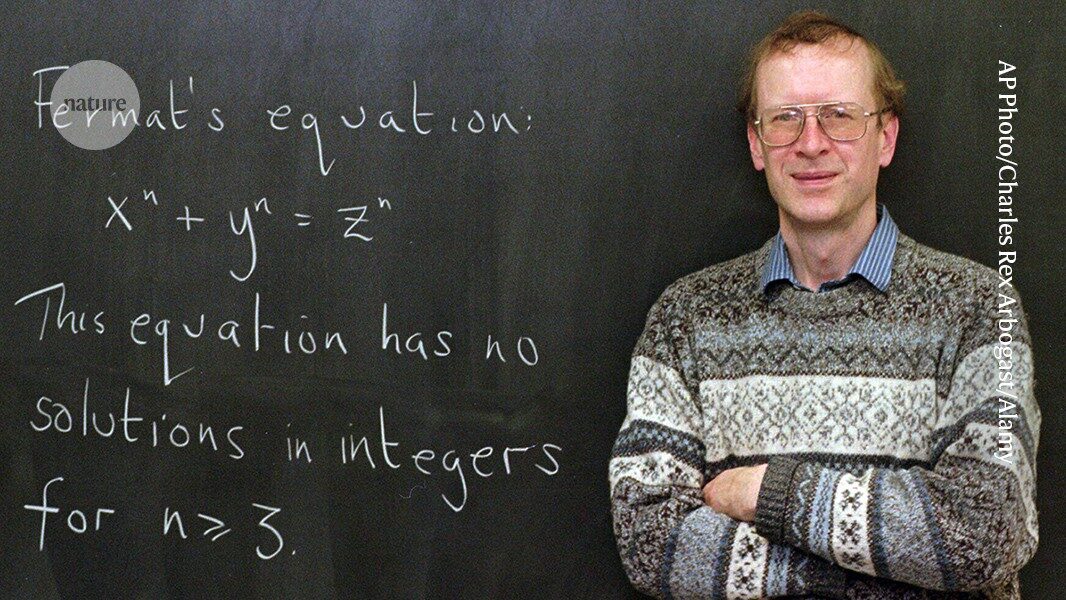
Fermat's last theorem, one of the most celebrated mathematical results of the last half-century, has been turned into computer-verified code for the first time, using an advanced prototype of the artificial-intelligence (AI) chatbot Claude. The fact that a machine could turn the work of human mathematicians into a 13-million-line-long, ironclad proof 'just completely blew my mind', says Alex Kontorovich, a number theorist at Rutgers University in Piscataway, New Jersey. Claude-maker Anthropic AI, of San Francisco, California, announced the breakthrough on 4 September. The model finished in 11 days a project that was expected to take humans 10 years. The result shows that AI will play an increasingly important part in checking the work of mathematicians ' as well as in producing new mathematical reasoning. At the current pace of progress, it is not unthinkable that AI could soon be able to scrutinize the entire library of mathematical knowledge, perhaps finding that some well-known results are wrong. 'Two years ago, that was a fantasy,' says Kevin Buzzard, a mathematician at Imperial College London....
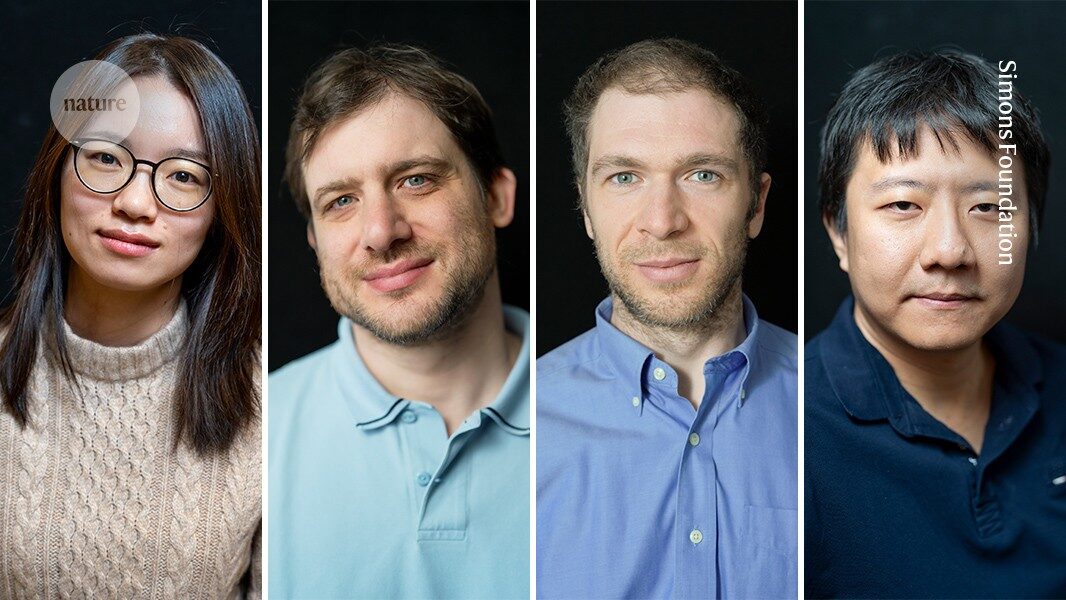
Mathematicians Yu Deng, John Pardon, Jacob Tsimerman and Hong Wang have won the 2026 Fields Medal ' one of the most coveted awards in their discipline. Their names were revealed at the International Congress of Mathematicians (ICM) today in Philadelphia, Pennsylvania. The four winners represent a range of subfields of maths, from number theory to mathematical physics. They had all been rumoured as favourites to win the medal, which is awarded every four years to up to four mathematicians under the age of 40. The winners all work in North America, but two ' Deng and Wang ' were born and raised in China. They are only the second and third Chinese nationals to have earned a Fields Medal: Shing-Tung Yau, who is now at Tsinghua University in Beijing, won his in 1982, before either Deng or Wang were born. Wang is also only the third woman to win in the award's 90-year history, after the late Maryam Mirzakhani in 2014 and Maryna Viazovska in 2022. Deng, who is 37 and grew up in Shenzhen, did his PhD at Princeton University in New Jersey. He is now at the University of Chicago in Illinois, where he specializes in differential equations, which are often used to describe physical phenomena. He says that hearing he had won the medal made him 'really happy, not just for myself, but for the field I'm representing'....
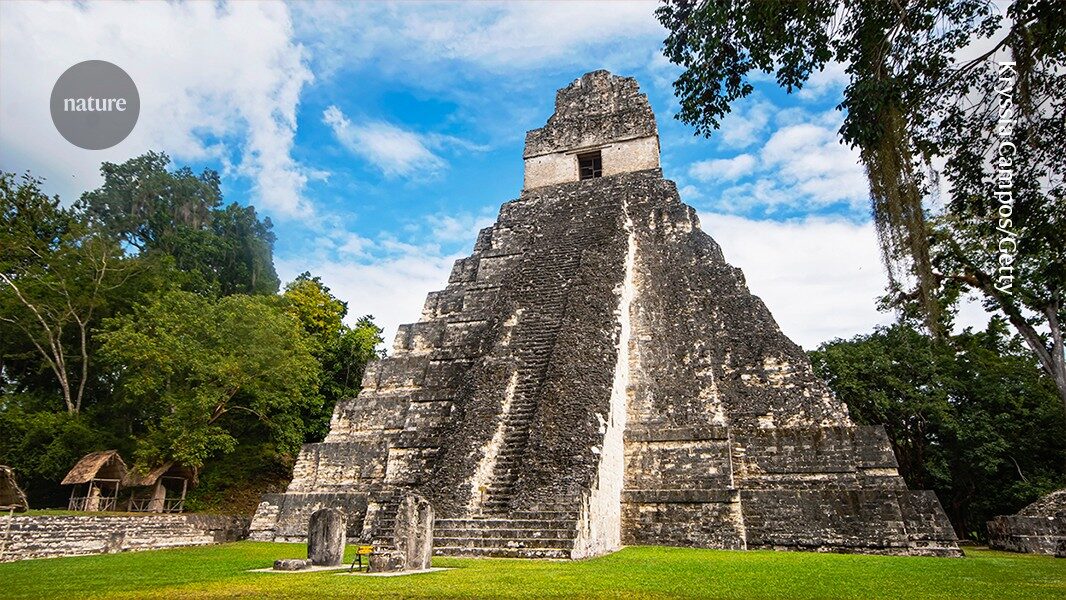
A mathematical formula inscribed on a wall at the Maya site of Xultun in Guatemala has revealed the name of an important Maya mathematician-astronomer for the first time. Researchers suggest Sak Tahn Waax, or 'White-Chested Fox', was a scholar comparable with mathematical giants of the past. In a study published 14 July in the journal Antiquity1, Heather Hurst, an archaeologist at Skidmore College in Saratoga Springs, New York, and her colleagues describe their analysis of a mathematical text from a chamber in Xultun that was originally excavated in 20112. The chamber's walls are painted with human figures and hieroglyphic texts. These include mathematical calculations based on astronomical calendars, which were used by the Maya people to decide the timing of events such as the inaugurations of kings. Hurst and her colleagues suggest that the chamber was a workspace for scribes making codices in the mid-eighth century ad. The authors analysed one set of hieroglyphs in particular, referred to as Text 19. Hurst says that this set of mathematical calculations expresses the relationships between several calendar systems in a playful manner that hasn't been seen before in Mayan texts. 'I think it was a mathematical flex. Somebody was saying 'I've got this amazing pattern, and it's so good it needs to be written down'. It was like, 'Boom! Mic drop!',' says Hurst....
The test ' part of a project called First Proof, which aims to evaluate the ability of AI to solve complex questions in mathematics ' posed ten research-level maths problems to four AI systems. A jury of anonymous human specialists in the relevant mathematical fields then assessed the models' answers. This test was the first of its kind to satisfy three key conditions simultaneously: first, it consisted of research-level maths questions; second, it involved problems that did not appear in the training data; and third, it was formally graded by mathematicians. The results were unveiled on the First Proof website on 10 June. These findings follow recent AI breakthroughs in solving maths problems. Last month, for example, a chatbot made by the technology firm OpenAI, in San Francisco, California, solved an 80-year-old maths challenge set by the late mathematician Paul Erdos. The First Proof team says that future iterations of the test could help researchers to judge how useful AI models could be for mathematicians; for example, in solving problems autonomously, checking proofs or acting as research assistants....


