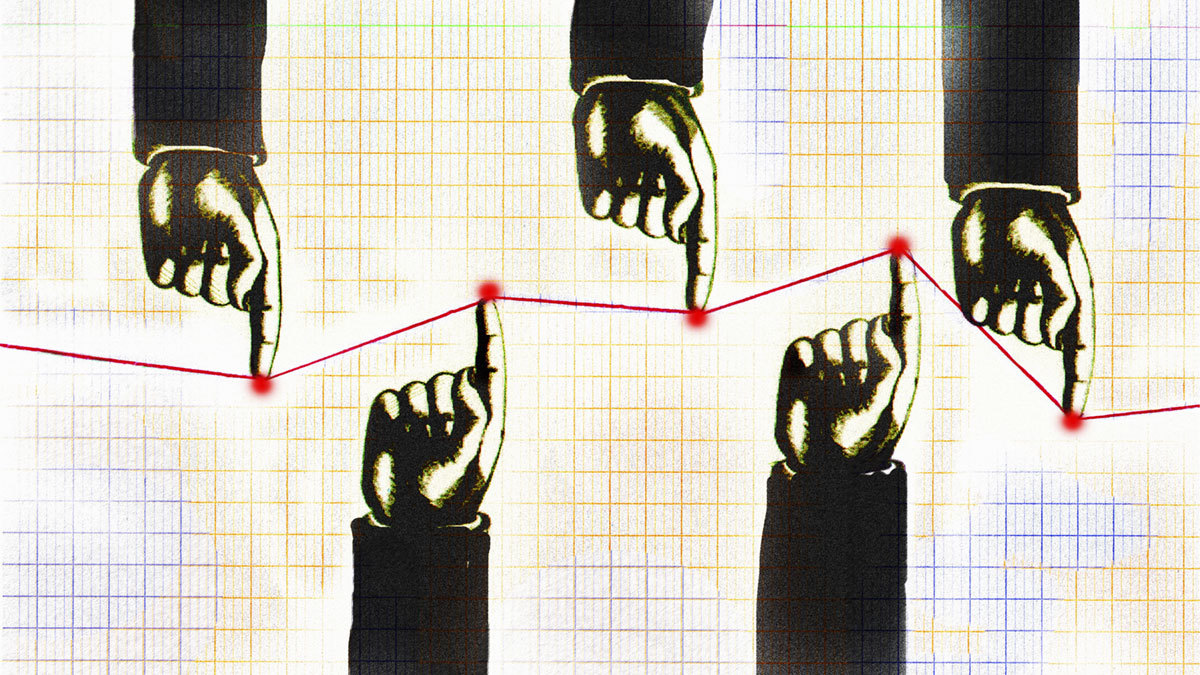
ItâÂÂs a little hard to imagine a Nobel Prize in physics being shared by (1) a guy famous for advancing a particular hypothesis and (2) a guy famous for relentlessly attacking that hypothesis. This of course is what the Nobel committee has done with this yearâÂÂs economics award, with the added Hegelian twist of giving another third of the prize to a guy who came out somewhere in between. Thesis (Gene Fama)! Antithesis (Bob Shiller)! Synthesis (Lars Peter Hansen)!
This is, to a certain extent, further evidence that economics isnâÂÂt a science like physics is a science (and yeah, yeah, the economics Nobel isnâÂÂt a real Nobel prize). But thatâÂÂs not because economists are all frauds â itâÂÂs at least partly because economics is harder than physics. And the interaction over the decades between the differing ideas of Fama and Shiller, while maybe not exactly scientific, has certainly been enlightening, and had a huge impact on the world.
Like a lot of people, I know much more about Fama and Shiller than about Hansen. ThatâÂÂs partly because Fama and Shiller have been willing (downright eager, in ShillerâÂÂs case) to explain their work to the public, while Hansen apparently prefers to sit in his office and do math. ItâÂÂs also because Fama and Shiller are the obvious poles of the debate, while Hansen is one of a number of people who have been plowing the extensive acreage between them. I think he got the Nobel nod (instead of somebody like Andy Lo, or Mordechai Kurz, or Roman Frydman) because he was (1) very early to the game, (2) a macroeconomist (the Nobel people generally seem more comfortable with macro than with finance), and (3) most suited to being shoehorned into a narrative of steady scientific progress. ItâÂÂs also possible that Hansen just got the prize because his work is so great and/or has spawned lots of productive further research, but IâÂÂm really in not in a position to judge that â his stuff is really dense. So IâÂÂm not going to pretend that I know much about his contributions; you need to go elsewhere for that....
To solve the worldâÂÂs biggest challenges, such as climate change and inequality, the business community will have to play a critical role. And we need CEOs who understand the challenges and want to drive deep change in how business operates. Last month, nearly 200 CEOs declared, through the Business Roundtable (BRT), that the purpose of business is no longer just maximizing shareholder profit. But are they ready to follow through?...
What would be your perfect job? Although there are well-defined parameters around what people actually want from work, our career-related choices are not always consistent with those parameters â even when we are consciously aware of them....
The global financial crisis prompted many companies to pull in their horns, hoard cash, trim costs, and take a wary view of large investments. Yet the same crisis ushered in a new age of capital superabundance. Bain & CompanyâÂÂs Macro Trends Group carefully analyzed the global balance sheet and found that the world is awash in money. Global capital balances more than doubled between 1990 and 2010 â from $220 trillion (about 6.5 times global GDP) to more than $600 trillion (9.5 times global GDP). And capital continues to expand. Our models suggest that by 2025 global financial capital could easily surpass a quadrillion dollars, more than 10 times global GDP....