Dust and rock collected from the asteroid Bennu contained many of life's building blocks, including all five nucleobases used in DNA and RNA, 14 of the 20 amino acids found in proteins, and a rich collection of other organic molecules. These are built primarily from carbon and hydrogen, and they often form the backbone of life's chemistry. Even more surprising, these amino acids from Bennu were split almost evenly between 'left-handed' and 'right-handed' forms. Amino acids come in two mirror-image configurations, just like our left and right hands, called chiral forms. On Earth, almost all biology requires the left-handed versions. If scientists had found a strong left-handed excess in Bennu, it would have suggested that life's molecular asymmetry might have been inherited directly from space. Instead, the near-equal mixture points to a different story: Life's left-handed preference likely emerged later, through processes on Earth, rather than being pre-imprinted in the material delivered by asteroids....
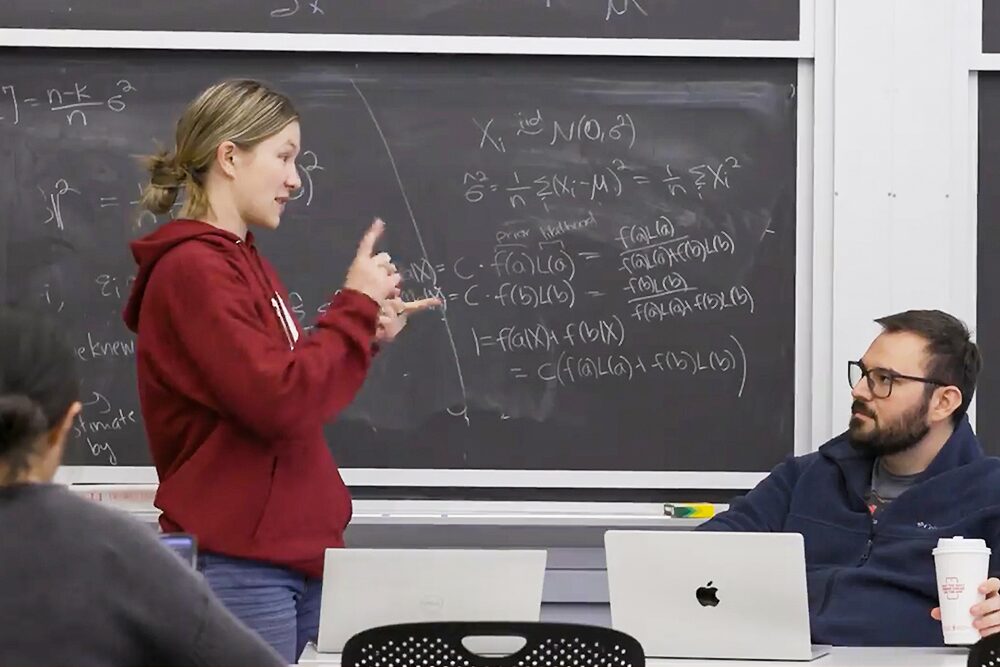
Artificial intelligence optimization offers a host of benefits for mechanical engineers, including faster and more accurate designs and simulations, improved efficiency, reduced development costs through process automation, and enhanced predictive maintenance and quality control. 'When people think about mechanical engineering, they're thinking about basic mechanical tools like hammers and ' hardware like cars, robots, cranes, but mechanical engineering is very broad,' says Faez Ahmed, the Doherty Chair in Ocean Utilization and associate professor of mechanical engineering at MIT. 'Within mechanical engineering, machine learning, AI, and optimization are playing a big role.' In Ahmed's course, 2.155/156 (AI and Machine Learning for Engineering Design), students use tools and techniques from artificial intelligence and machine learning for mechanical engineering design, focusing on the creation of new products and addressing engineering design challenges. 'There's a lot of reason for mechanical engineers to think about machine learning and AI to essentially expedite the design process,' says Lyle Regenwetter, a teaching assistant for the course and a PhD candidate in Ahmed's Design Computation and Digital Engineering Lab (DeCoDE), where research focuses on developing new machine learning and optimization methods to study complex engineering design problems....
If you rotate an image of a molecular structure, a human can tell the rotated image is still the same molecule, but a machine-learning model might think it is a new data point. In computer science parlance, the molecule is 'symmetric,' meaning the fundamental structure of that molecule remains the same if it undergoes certain transformations, like rotation. If a drug discovery model doesn't understand symmetry, it could make inaccurate predictions about molecular properties. But despite some empirical successes, it's been unclear whether there is a computationally efficient method to train a good model that is guaranteed to respect symmetry.A new study by MIT researchers answers this question, and shows the first method for machine learning with symmetry that is provably efficient in terms of both the amount of computation and data needed. These results clarify a foundational question, and they could aid researchers in the development of more powerful machine-learning models that are designed to handle symmetry. Such models would be useful in a variety of applications, from discovering new materials to identifying astronomical anomalies to unraveling complex climate patterns....
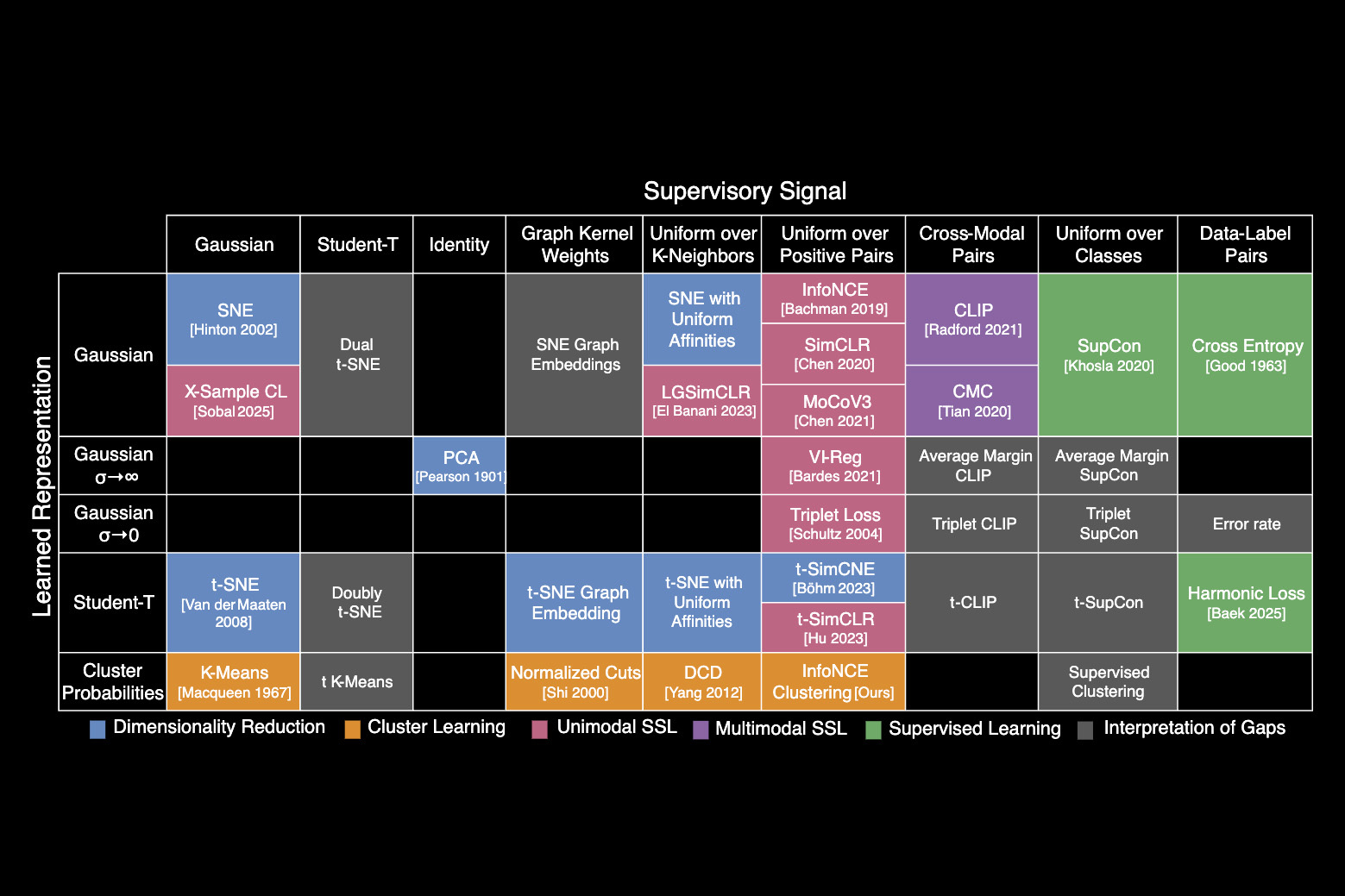
MIT researchers have created a periodic table that shows how more than 20 classical machine-learning algorithms are connected. The new framework sheds light on how scientists could fuse strategies from different methods to improve existing AI models or come up with new ones. For instance, the researchers used their framework to combine elements of two different algorithms to create a new image-classification algorithm that performed 8 percent better than current state-of-the-art approaches. The periodic table stems from one key idea: All these algorithms learn a specific kind of relationship between data points. While each algorithm may accomplish that in a slightly different way, the core mathematics behind each approach is the same. Building on these insights, the researchers identified a unifying equation that underlies many classical AI algorithms. They used that equation to reframe popular methods and arrange them into a table, categorizing each based on the approximate relationships it learns....