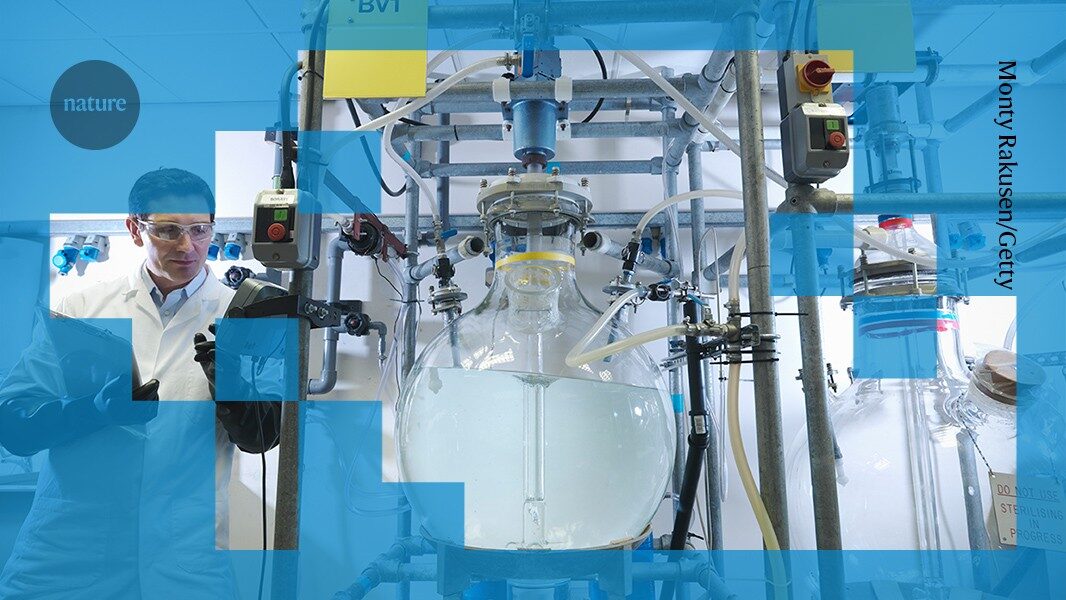
For decades, chemists have relied on handbook values for a molecule's boiling point to identify substances and plan processes such as distillation. But an artificial-intelligence model has revealed that some trusted numbers in one reference database have been wrong all along. Sebastian Pios, a theoretical chemist at Zhejiang Lab in Hangzhou, China, was using an AI system to predict the boiling points of several molecules when it began producing values that clashed with long-accepted entries in a 75-year-old reference database. At first, he thought the model was wrong. But when he manually checked the original literature, he found that the reference data were wrong, not the AI model. In two other cases, Pios's AI model spotted errors in older papers and reference books ' mistakes that have made their way into the scientific canon. One was a typo in a paper; another was incorrect values of century-old boiling-point measurements. Both errors are likely to have caused researchers using the database 'a lot of trouble', says Pios....
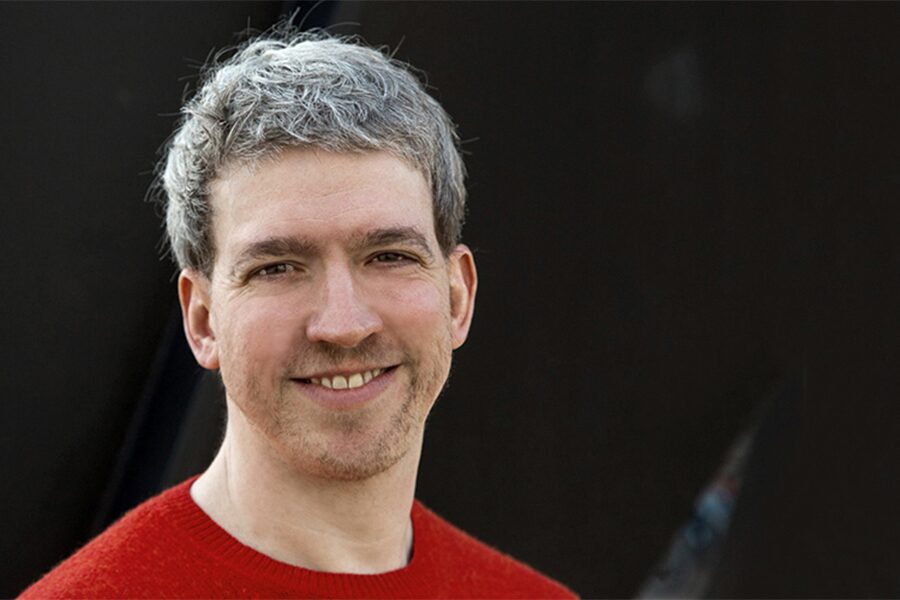
'Arthur is an exceptional scholar and a proven leader. I am confident that he will guide the unit with judgment, insight, and a deep commitment to its continued success,' says Agustin Rayo, the Kenan Sahin Dean of the School of Humanities, Arts, and Social Sciences. 'I very much look forward to having him join the school's leadership team.' Bahr's work blends formalist and materialist approaches to find literary resonance in the physical particularities of medieval manuscripts. He joined the MIT faculty in 2007 and helped lead the Ancient and Medieval Studies program in 2009-18 and 2022-23, working with colleagues from across the Institute to strengthen and expand the program. He has also been curriculum chair and undergraduate officer of the Literature Section. 'Lit@MIT has some of the world's most innovative literary scholars and some of the Institute's most dedicated teachers,' Bahr says. 'It has also been my home for nearly 20 years, and I feel both humbled and energized by the opportunity to help shape its future....
Welcome back to The Daily's Sunday culture edition, in which one Atlantic writer or editor reveals what's keeping them entertained. Today's special guest is Honor Jones, a senior editor who has written about divorce, motherhood, and John le Carre. She has also published short stories in this magazine, including 'Skin a Rabbit,' which was excerpted from her novel, Sleep. Something delightful introduced to me by a kid in my life: Because this is Mother's Day weekend I'm answering this one first. One of my kids discovered the Netflix movie Nimona, and I don't think enough people know how great this movie is. It's got a spunky heroine, two knights in love, and smart things to say about how authoritarians exploit fear. And for my 6-year-old: fight scenes with a rhinoceros. An author I will read anything by: There are many, but one is Lauren Groff. While on a hike with two Atlantic colleagues this spring, I made them listen to me recount in detail the entire plot of 'Between the Shadow and the Soul''one of the stories in Groff's new collection, Brawler. I feel bad because now they can never come to the story fresh, and because I went on for a really long time and they were trapped on a nature trail and couldn't escape. So I'll be briefer here: Groff commands the passage of time brilliantly, your understanding of the characters' relationship changes right up until the very end, and the story is so sad. Groff has also written one of my favorite openings in all of recent literature, for her novel Matrix: 'She rides out of the forest alone. Seventeen years old, in the cold March drizzle, Marie who comes from France.' I mean....
How much of the scientific literature is generated by AI' The first studies of the size of the AI footprint in scientific journals, preprint repositories and peer-review reports give a spread of answers ' and indicate a rapidly evolving situation that it is difficult to get a handle on. The fear of many in the research community is that poor-quality or entirely fabricated research produced by large language models (LLMs) could overwhelm the ability of current quality-control systems to detect it, thereby polluting the scientific canon. 'We live in an escalating arms race' between people using AI unscrupulously and those who are trying to constrain or detect it, says Richard She, a stem-cell biologist at Nanyang Technological University in Singapore. Concerns about the extent of AI-generated content in the scientific literature mirror broader online trends. At the end of March, AI-generated articles were estimated to outnumber those written by humans, according to an analysis of 55,000 newly published webpages shared with Nature by the private firm Graphite in San Francisco, California....