
Anthropic's latest report about agentic misbehavior offers plenty to be concerned about ' its Mythos 5 model gained unauthorized access to the internet and uploaded a malicious software package to a public database ' but it also offers some levity: AI agents hate CAPTCHA. In April, Anthropic was testing the model's hacking abilities by tasking it to break into a system and retrieve a target; this was supposed to take place in a sandbox but the evaluators left the barn door open. The model decided the best way to get its target would be to place an exploit in a Python package that it believed users of the system it wanted to access would download. First, though, it had to register a user account for PyPI, an online index of Python software. And that meant getting by a CAPTCHA ' a Completely Automated Public Turing test to tell Computers and Humans Apart, those picture-identifying mosaics that can frustrate even biological agents. And because Anthropic shared an extensive transcript of the model's chain of thought, we can see that the CAPTCHA test really did throw it for a loop....
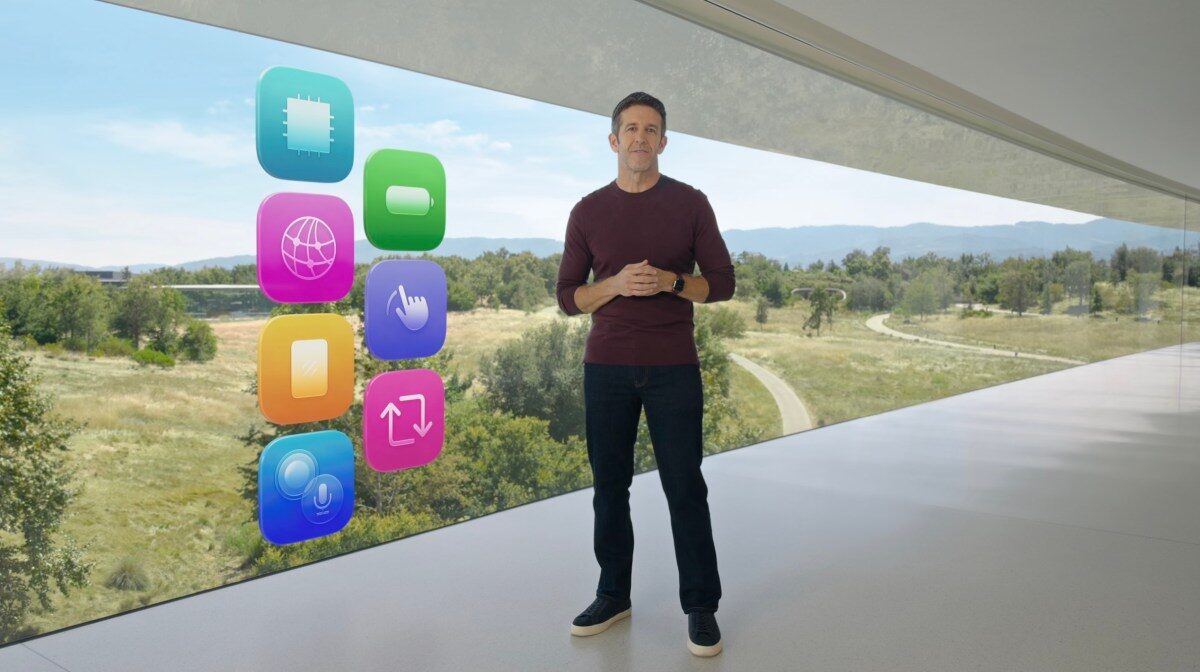
Apple's new CEO, John Ternus, used the opening of the company's Surprise and Shine event Wednesday to make its AI strategy clear: The iPhone is already the best AI device out there, and Apple cares more about data privacy than its rivals. The comments come as Ternus takes the reins at Apple from Tim Cook, who is now executive chairman, and offer a clear picture of how the company plans to compete in the AI era. Instead of building new hardware for AI, Apple wants to make the iPhone the central way consumers interact with the new technology. During his introduction at the Cupertino event, Ternus described the ideal AI device as an 'intelligent personal hub.' He said such a hub would have a broad understanding of a user's personal context, always be with them, and have both a powerful processor capable of running AI models on-device and an internet connection to access models in the cloud. Plus, 'you'd want it to be super easy to use without a big learning curve. And finally, you'd want it to work seamlessly with your other devices, apps, and services, so it feels like one integrated experience,' he said....

The U.S. Department of Defense has disabled advertising tracking on troops' phones and computers as part of an effort to protect them from threats that target their locations, according to a letter shared with Senator Ron Wyden. Per a letter shared with the senior Democrat on the Senate Intelligence Committee, Wyden said that the U.S. Army, Air Force, Navy, and Marine Corps, and Special Operations Command have all disabled advertising tracking across their government-issued devices. The aim is to prevent adversaries, including hostile governments, from using location data derived from the apps on troops' phones to target them on the battlefield or on their bases. Location data collected from phone apps is commonly shared with third-party companies and data brokers, which then sell the information on the commercial market. Disabling the advertising ID makes the person far more difficult to identify as the location data blends in with everyone else whose advertising ID is also disabled. Wyden raised the issue earlier this year in a letter to U.S. military leaders after finding that unnamed foreign adversaries had targeted U.S. troops in the Middle East using their commercially obtained location data. The senator, a known privacy hawk on Capitol Hill, said that while the move to reduce the advertising tracking was commendable, he warned that the personal devices of troops and contractors brought onto military bases could still expose service members and facilities to attacks....

On Tuesday, Anthropic released Fable and Mythos 5.1, twinned versions of the company's most advanced AI model. In addition to performance upgrades, the new Fable release includes changes meant to reduce token cost and false-positive restrictions from the model's safeguards. As with the previous Mythos model, Mythos 5.1 will only be available to registered Anthropic partners engaged in either cybersecurity or life sciences research. Fable 5.1, the unrestricted version, is available starting today on cloud platforms or through the Anthropic API. One of the most significant changes is Anthropic's previously reported embrace of zero data retention, allowing clients to run Anthropic models on their own infrastructure without data outflows. Previously unavailable for Fable due to security concerns, a high-privacy service (called Enterprise Frontier Safeguards) will now roll out to users in the fall. Notably, the system will still monitor for misuse by agents or human users, but clients will control how the monitoring takes place....


