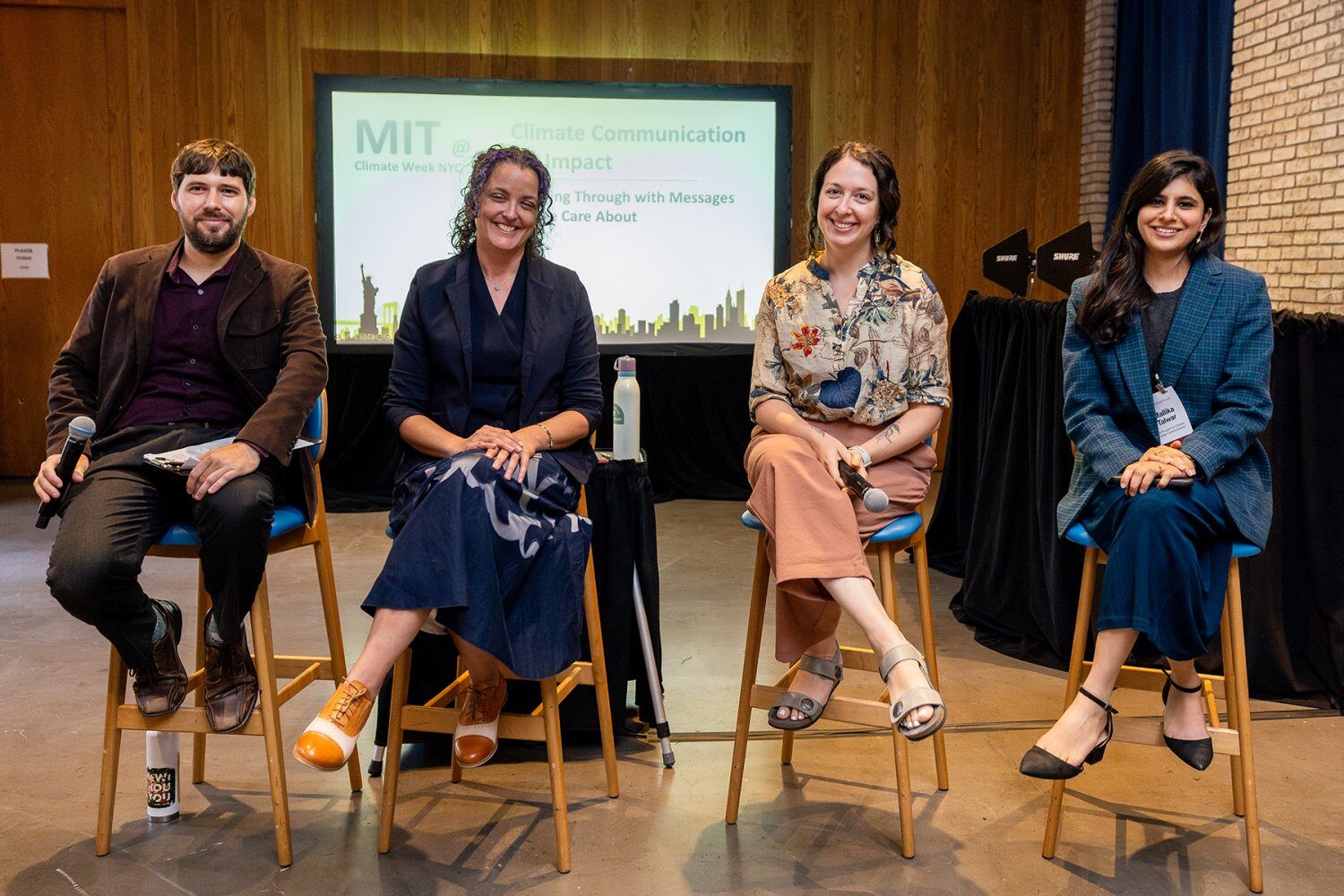
Each year, Climate Week NYC brings together more than 100,000 people in more than 1,000 events across the city to discuss climate challenges, explore solutions, and spur action. Participants come from industry, academia, philanthropy, nonprofits, government, and finance and venture capital. And this year, the mix included a strong, cross-campus presence from MIT. The MIT community could be seen multiple days during Climate Week, with appearances by Evelyn Wang, vice president for energy and climate, at the official opening ceremony discussing artificial intelligence and the climate equation; an event co-hosted by MIT and the Bezos Earth Fund on climate innovation; and 14 sessions organized by the MIT Climate Project and eight MIT departments, labs, centers, and initiatives ' including the Abdul Latif Jameel Water and Food Systems Lab (J-WAFS), the MIT Sloan Sustainability Initiative, the Center for Transportation and Logistics (CTL), MIT Lincoln Laboratory, MIT Open Learning, the MIT Initiative for New Manufacturing (INM), the MIT Climate Policy Center, and the Priscilla King Gray (PKG) Center for Social Impact....

Artificial intelligence is getting more efficient, which apparently means everyone needs to spend more money on it. This week, DeepSeek released inference software, NVIDIA offered faster AI factory construction, Meta and SpaceX reported enormous investments, and Legora collected another $550 million to help lawyers work. The budget meeting must be going beautifully. DeepSeek's contribution was DeepInfer, the framework behind its production inference services. The open release supports DeepSeek-V4.1-Flash on NVIDIA and Huawei hardware, using techniques such as drafting tokens before verifying them and overlapping scheduling with computation. It provides an inference core; operators still need caching and load balancing for a complete service. The economic ambition is straightforward: squeeze more output from expensive hardware. If serving each request becomes cheaper, developers can afford agents that make many more requests. Efficiency can sell GPUs. Intelligence is impressive. Intelligence with a better gross margin gets a spreadsheet....
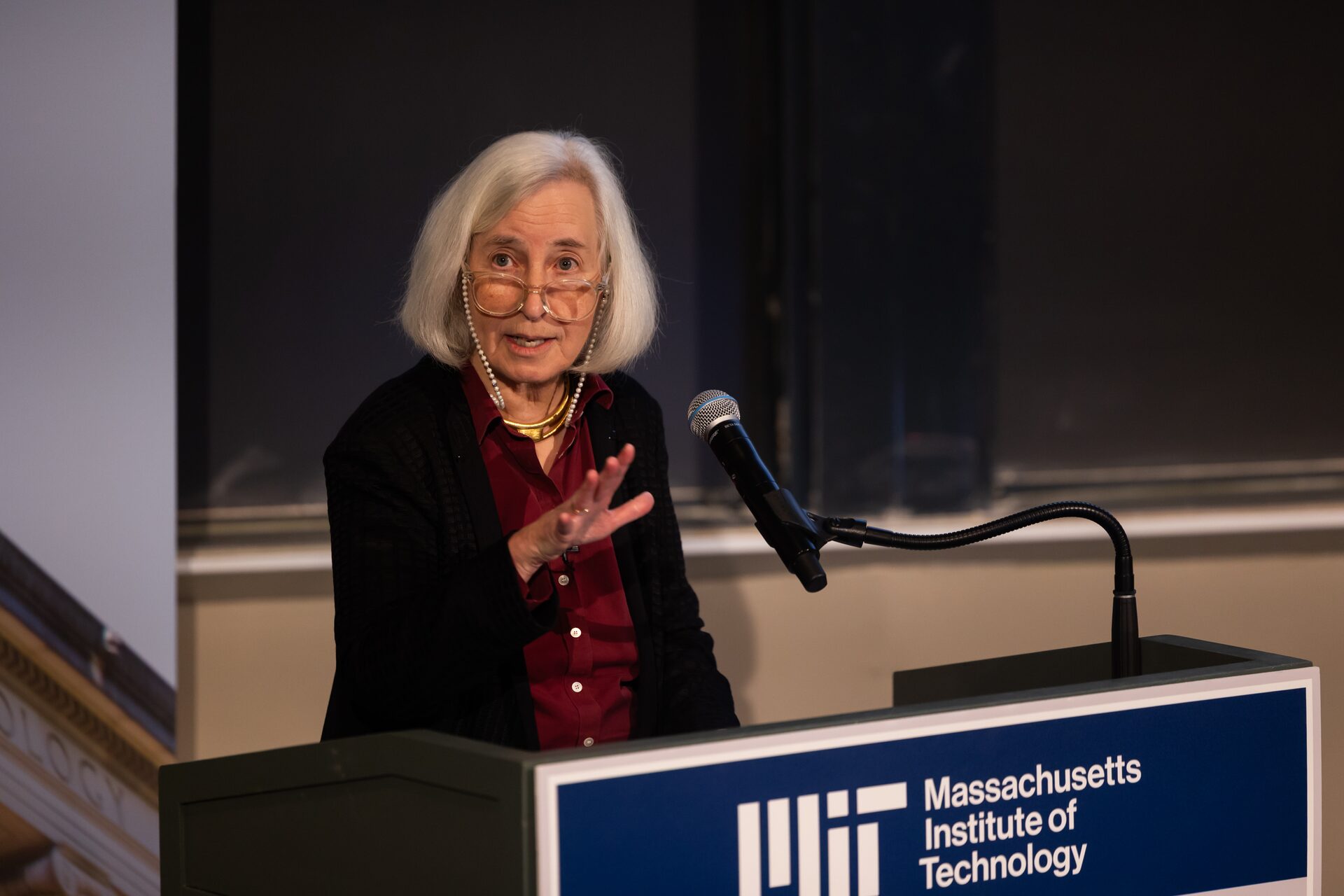
Legal scholar Martha Minow delivered this fall's Compton Lecture at MIT on Thursday, examining the civic foundations of democracy ' and describing how artificial intelligence is undermining it, but could be used to help reinforce traditional U.S. governance. 'It's not a good time for democracy or constitutionalism,' said Minow, who is the 300th Anniversary University Professor at Harvard University, and a prominent expert in constitutional law and human rights. She noted a litany of challenges to democracy in recent years, including violations of laws and norms, the stifling of free speech, a diminution of congressional authority, disregard of legal rulings, the common vilification of others in society, and more. Her remarks assessed the state of the U.S. in terms of what she called four key 'ingredients' of democracy: education, reliable and accessible information, security from violence, and fairness. Minow evaluated how AI has, among other things, influenced these areas of life ' but also suggested ways people could use contemporary technology to help....
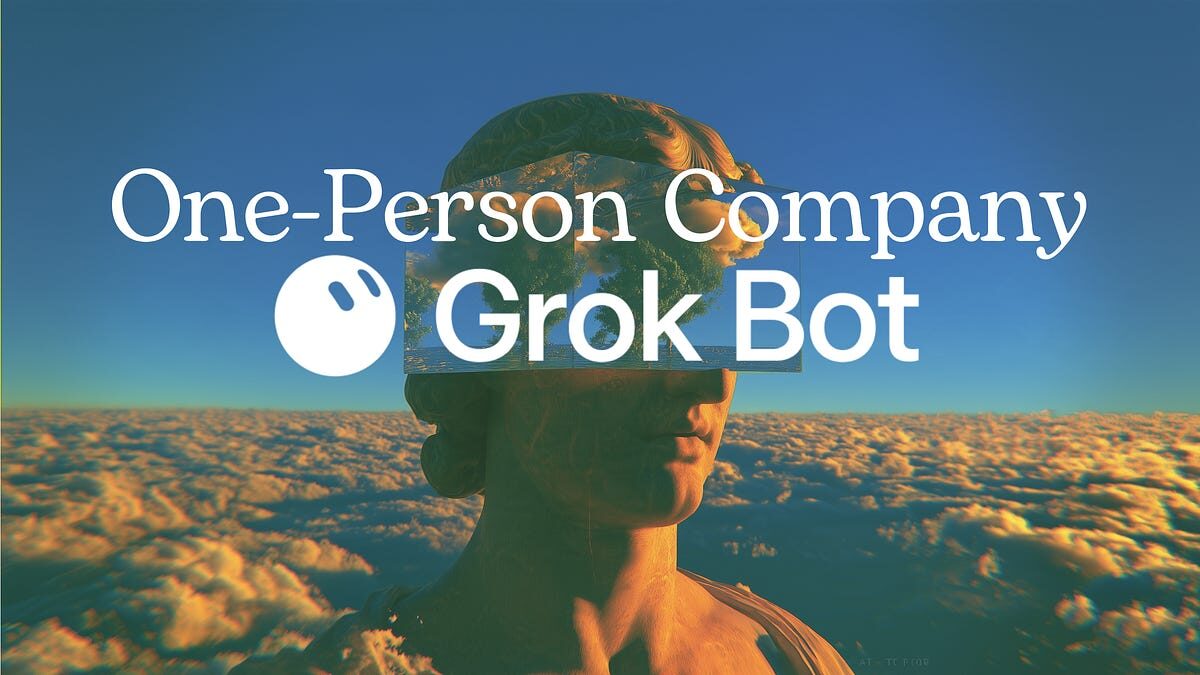
' Hey, Linas here! Every day, I break down 3 stories shaping the future of FinTech & Artificial Intelligence - plus the money movements and trends worth tracking. First time here' 400k+ FinTech and AI leaders get this daily. Join them: In September, three people from SpaceXSI sat down in a San Francisco studio with an empty GitHub org, an empty Slack, and no idea. Their plan was to build a company live with Grok Bot. Seventy-two hours later, they had shipped a game, Thursday Arena, from a brand-new X account with a blank profile picture. On stream, they reported more than 400 merged pull requests, about 2,000 players on launch day, and the top Google result for the game's name. Not too shabby! ' That number is probably the most useful thing to come out of the entire Grok Bot Galaxy event. The team proved that a few people with bots can build, test, ship, support, and market a product in days. They also proved that bots don't decide what to build, don't make anyone care, and don't close a sale. In the closing retrospective, Roshan Sadanani named 'getting people to care' as the hardest part of building anything, even with unlimited AI....


