Good morning & happy Monday! Today, we're exploring the collapse of the Stripe-Advent bid for PayPal to see why Stripe refusing to stretch past $60.50 is the most important data point in the whole saga (the $7-9B gap that was never close, why PayPal's Q2 'beat" didn't change anything for buyers, a third buyer that was part of the original consortium and quietly dropped out before anyone knew, and what PayPal's board now has to prove every quarter to justify the cash it turned down + bonus deep dives into Stripe, the latest PayPal's financials & How to Turn Claude Fable 5 Into a McKinsey-Level Consulting Engine inside), and going to dive deep into Affirm's latest financials to see how the most profitable operator in BNPL just beat the top of its own guidance on every line (breaking down the most important facts & figures from Affirm's Q4 2026, including the 5.8% cost of funds that built every point of margin over 2 years and has now stopped moving, the fiscal 2027 guide that quietly assumes rates go the other way, & the two agentic-commerce launches that appear in no earnings document, to see whether AFRM 0.00%' is still worth your time & money + bonus deep dives into the latest financials of Klarna & Nubank inside). So let's jump straight into the interesting stuff ''...

Good morning & happy Wednesday! Today, we're diving deep into Nubank's latest financials to see how the best-run bank on Earth just printed its first-ever $1 billion quarter - and why it was really an $896M quarter with a $165M tax break (breaking down the most important facts & figures from Nubank's Q2 2026, including the $500M buyback nobody mentioned & the AI flywheel incumbents can't copy, to see whether NU 0.00%'is still worth your time & money + bonus guide on how to Turn Claude Opus 5 Into a Financial Analyst That Never Sleeps inside), and Razorpay Vulcan, India's first AI foundation model built purely for payments (what a "shared brain" trained on 4 billion payments actually does, how Vulcan stacks up against Stripe, Nubank's nuFormer & Revolut's PRAGMA, and why the real endgame is agentic commerce + bonus deep dives into How to Build an Agentic OS with Claude Fable 5 & The Complete Guide to YC's Open-Source AI Agent Harness inside). So let's just jump straight into the finnovative stuff ''...
About what, you ask' That's a necessary question! There's so much worth fretting about, including the 57-or-so reckless and unwise things the Trump administration and the president himself are doing at any given moment. But this latest bout of anxiety isn't directly tied to what's going on in the Trump White House, though that is making an important contribution to what has me so concerned. What really has me worried is that Joe Biden's presidency hit the rocks, making it very difficult for Kamala Harris to win in 2024, in large part because of the inflation (and interest rate) surge of 2022. Donald Trump followed his political instincts in putting concerns about the cost of living near the center of his pitch for another term as president, and it worked. But over the past year and a half, his administration has pursued policies (from massive and chaotically imposed tariffs, to the Iran War and a resulting spike in energy costs, to AI accelerationism, to runaway spending and tax cuts adding rapidly to the already enormous national debt) that have produced ' elevated inflation and interest rates....
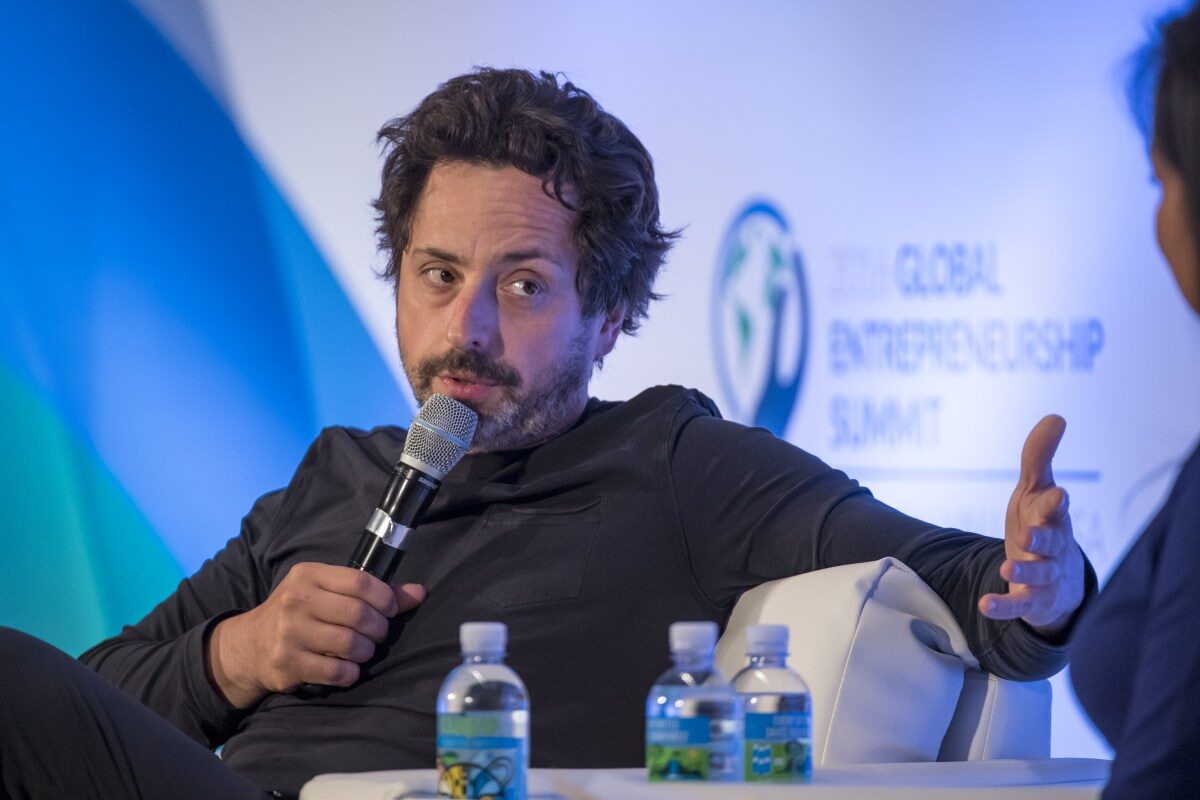
Google co-founder Sergey Brin has donated another $20 million to Build a Better California, an organization advocating against California's proposed billionaire tax, according to a new filing. That means that the world's fourth-richest man, whose net worth hovers around $267 billion, has now spent more than $100 million to avoid an estimated $13.3 billion tax payment. California's Prop 40, known as the billionaire tax, would impose a one-time 5% tax on the net worth of around 200 billionaires that live in the state. The windfall from this proposed tax would mostly go toward funding California's healthcare programs. The state's Medicaid program alone could lose up to $30 billion in federal funding once Trump's budget cuts take effect next year. Brin isn't the only tech mogul seeking ways to avoid such a tax. It's no coincidence that Meta founder Mark Zuckerberg reportedly bought a $170 million mansion near Miami this year. Former Uber CEO Travis Kalanick, venture capitalist Peter Thiel, and Brin's fellow Google co-founder Larry Page have also left the state....