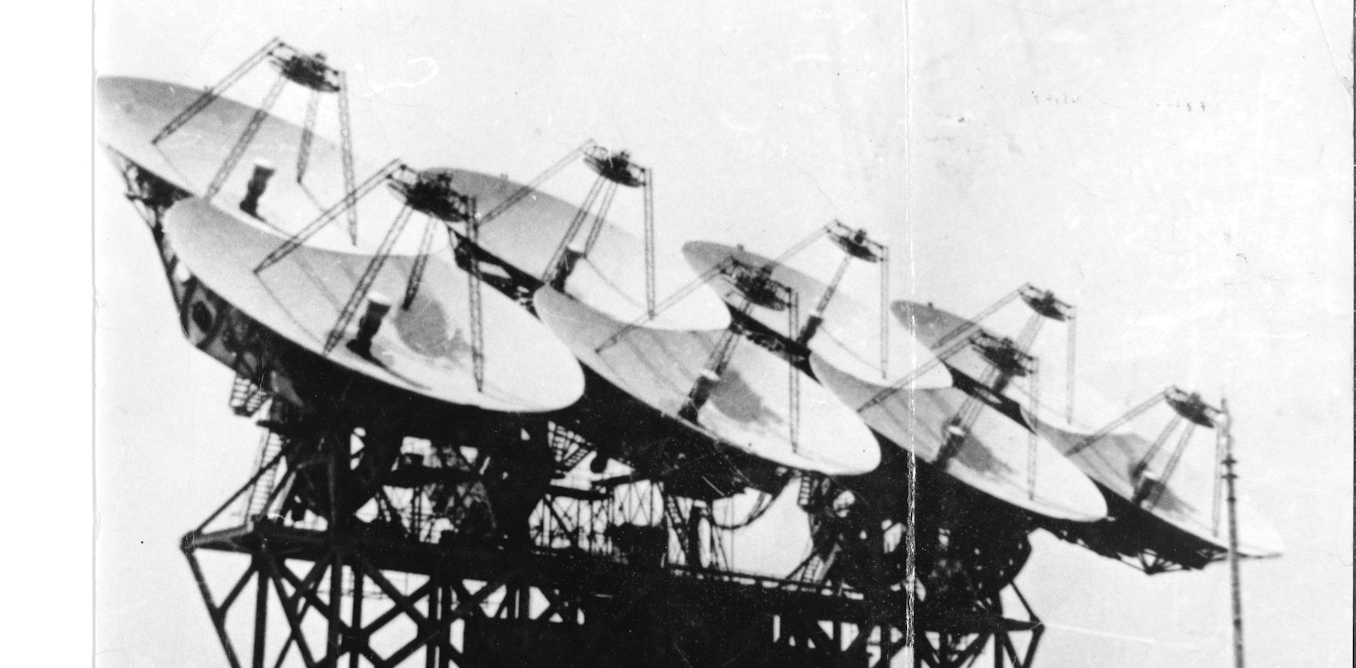
As humans began to explore outer space in the latter half of the 20th century, radio waves proved a powerful tool. Scientists could send out radio waves to communicate with satellites, rockets and other spacecraft, and use radio telescopes to take in radio waves emitted by objects throughout the universe. However, sometimes radio telescopes would pick up the artificial radio signals from telecommunications. This interference threatened sensitive astronomy observations, causing inaccurate data and even damaging equipment. While this interference frustrated scientists, it also sparked an idea. During the Cold War, a new field emerged at the intersection of radio astronomy and radio communications. It put forward the idea that astronomers could search for radio communications from possibly existing extraterrestrial civilizations. Astronomy usually dealt with observing the universe's natural phenomena. But this new field made the detection of technologically, or artificially produced radio waves, the object of a natural science....
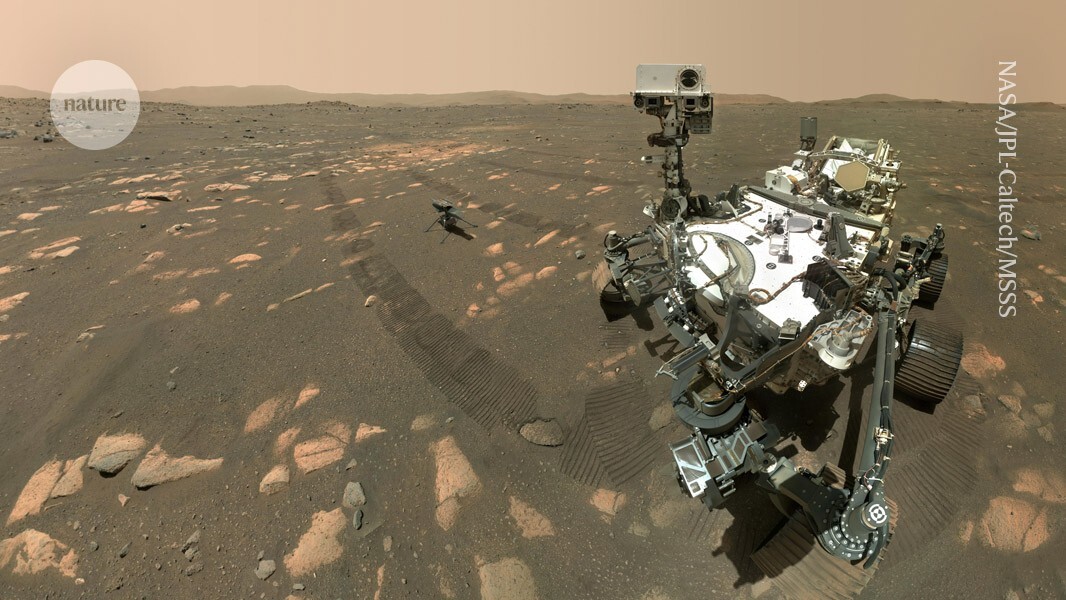
AstroAgents comprises eight 'AI agents' that analyse data and generate scientific hypotheses. It joins a suite of other AI tools that aim to automate the process of science, from reading the literature to coming up with hypotheses and even writing papers. The tool's creators say they will use it to study samples that NASA plans to retrieve from Mars. The agents will help to determine whether the samples harbour organic molecules that indicate the presence of past or present life. The researchers presented AstroAgents on 27 April at the International Conference on Learning Representations in Singapore. 'It's helping us build a better understanding of how molecules form in space, how molecules form from life on Earth and how they're preserved ' and then which specific signs should we be searching for,' says astrobiologist Denise Buckner at the NASA Goddard Space Flight Center in Greenbelt, Maryland, who co-authored a preprint describing AstroAgents1. The tool is an example of 'agentic AI' systems. These are typically based on large language models (LLMs) and are designed to be more-active participants than conventional AI tools, deciding what needs to be done and how to do it, evaluating outcomes and adapting in response. Their emergence has prompted lively debate about whether agentic AI can come up with truly original scientific ideas, and how novelty should even be defined....
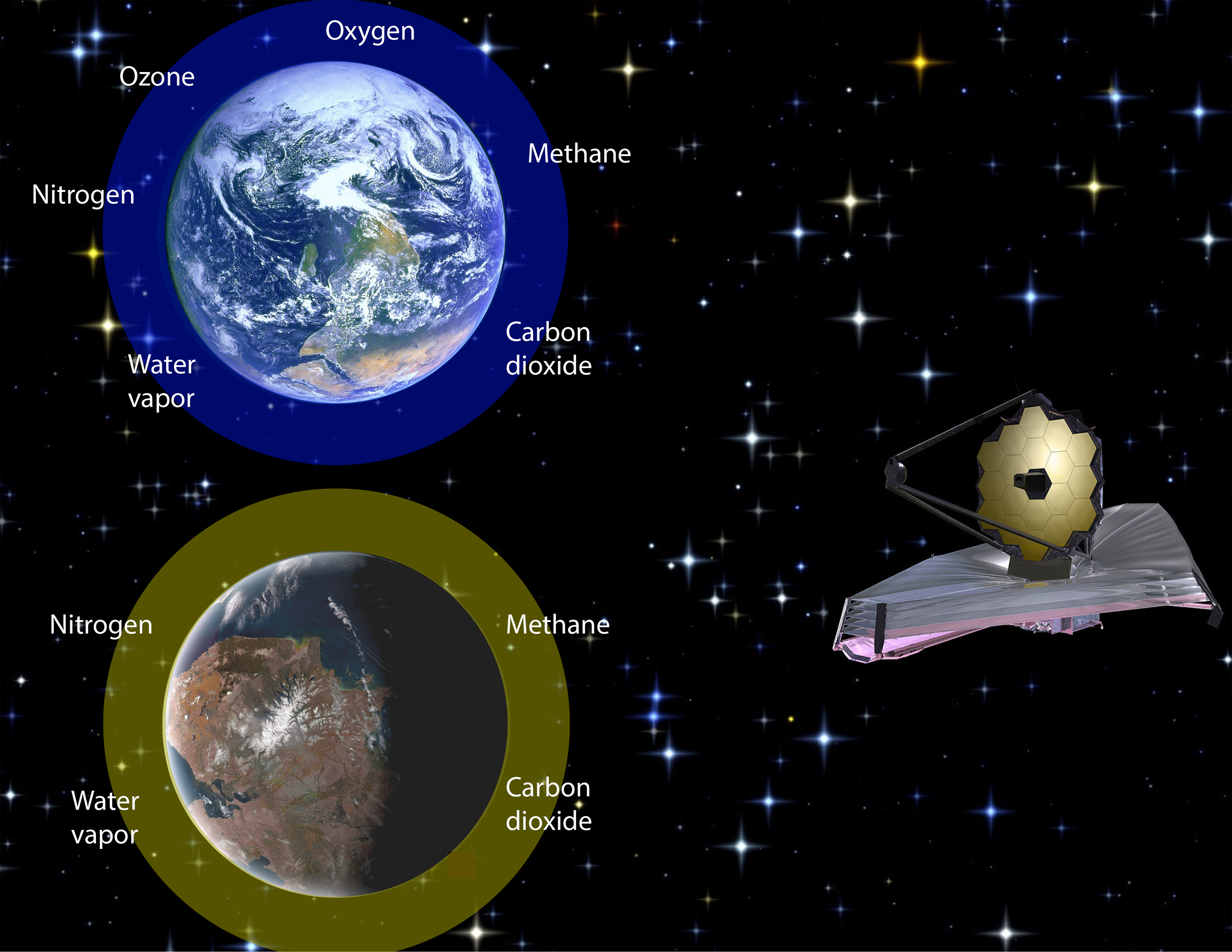
The detection of life beyond Earth would be one of the most profound discoveries in the history of science. The Milky Way galaxy alone hosts hundreds of millions of potentially habitable planets. Astronomers are using powerful space telescopes to look for molecular indicators of biology in the atmospheres of the most Earth-like of these planets. But so far, no solid evidence of life has ever been found beyond the Earth. A paper published in April 2025 claimed to detect a signature of life in the atmosphere of the planet K2-18b. And while this discovery is intriguing, most astronomers ' including the paper's authors ' aren't ready to claim that it means extraterrestrial life exists. A detection of life would be a remarkable development. The astronomer Carl Sagan used the phrase, 'Extraordinary claims require extraordinary evidence,' in regard to searching for alien life. It conveys the idea that there should be a high bar for evidence to support a remarkable claim. I'm an astronomer who has written a book about astrobiology. Over my career, I've seen some compelling scientific discoveries. But to reach this threshold of finding life beyond Earth, a result needs to fit several important criteria....
We have only one example of biology forming in the universe ' life on Earth. But what if life can form in other ways' How do you look for alien life when you don't know what alien life might look like' These questions are preoccupying astrobiologists, who are scientists who look for life beyond Earth. Astrobiologists have attempted to come up with universal rules that govern the emergence of complex physical and biological systems both on Earth and beyond. I'm an astronomer who has written extensively about astrobiology. Through my research, I've learned that the most abundant form of extraterrestrial life is likely to be microbial, since single cells can form more readily than large organisms. But just in case there's advanced alien life out there, I'm on the international advisory council for the group designing messages to send to those civilizations. Many of these exoplanets are small and rocky, like Earth, and in the habitable zones of their stars. The habitable zone is the range of distances between the surface of a planet and the star it orbits that would allow the planet to have liquid water, and thus support life as we on Earth know it....