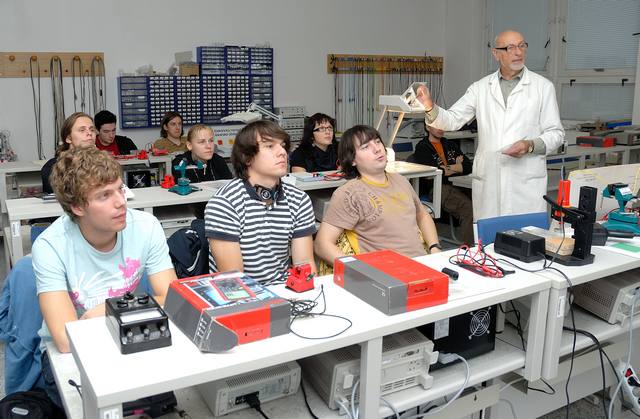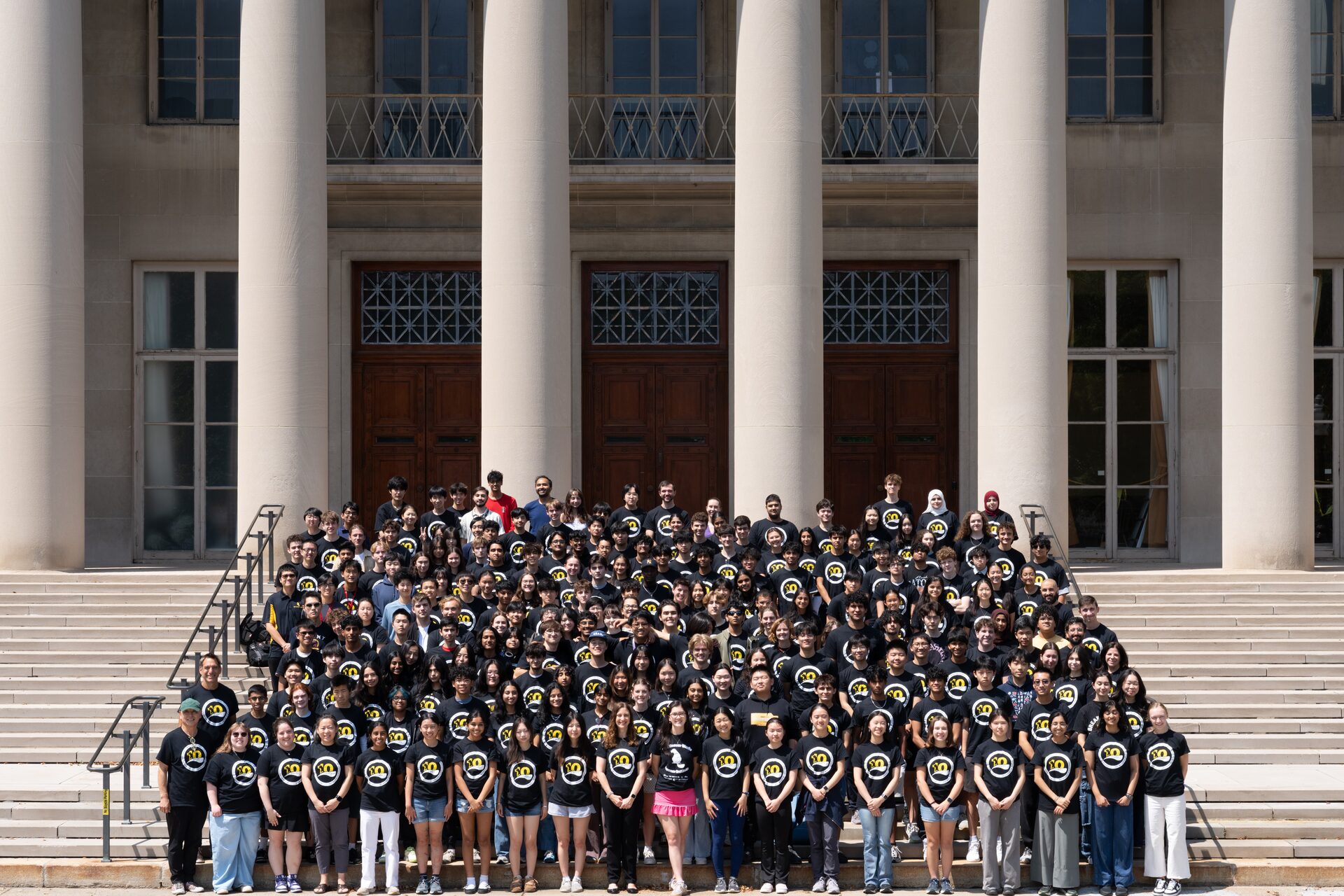
Eleven years ago, MIT Lincoln Laboratory staff member Robert Shin was challenged by a colleague to find a way to extend the resources of Beaver Works ' a joint education and research center created by the MIT School of Engineering and the laboratory ' to some of the best and brightest engineering students around the country. A year later, in summer 2016, the MIT Beaver Works Summer Institute (BWSI) was born. BWSI, which celebrated its 10th anniversary this summer, is a four-week program designed to offer high school students a transformational hands-on experience while teaching them skills to fuel their future studies and careers in science, technology, engineering, and mathematics (STEM). "As I look back at the last 10 years of BWSI, I am humbled and grateful to be a part of this amazing journey," says Shin, who has served as the founding director and then the STEM program director for BWSI since 2016. "What started as an idea has evolved into something much bigger and more impactful than we ever imagined. Each year, our students have exceeded every expectation through their curiosity, hard work, willingness to accept challenges, and perseverance."...
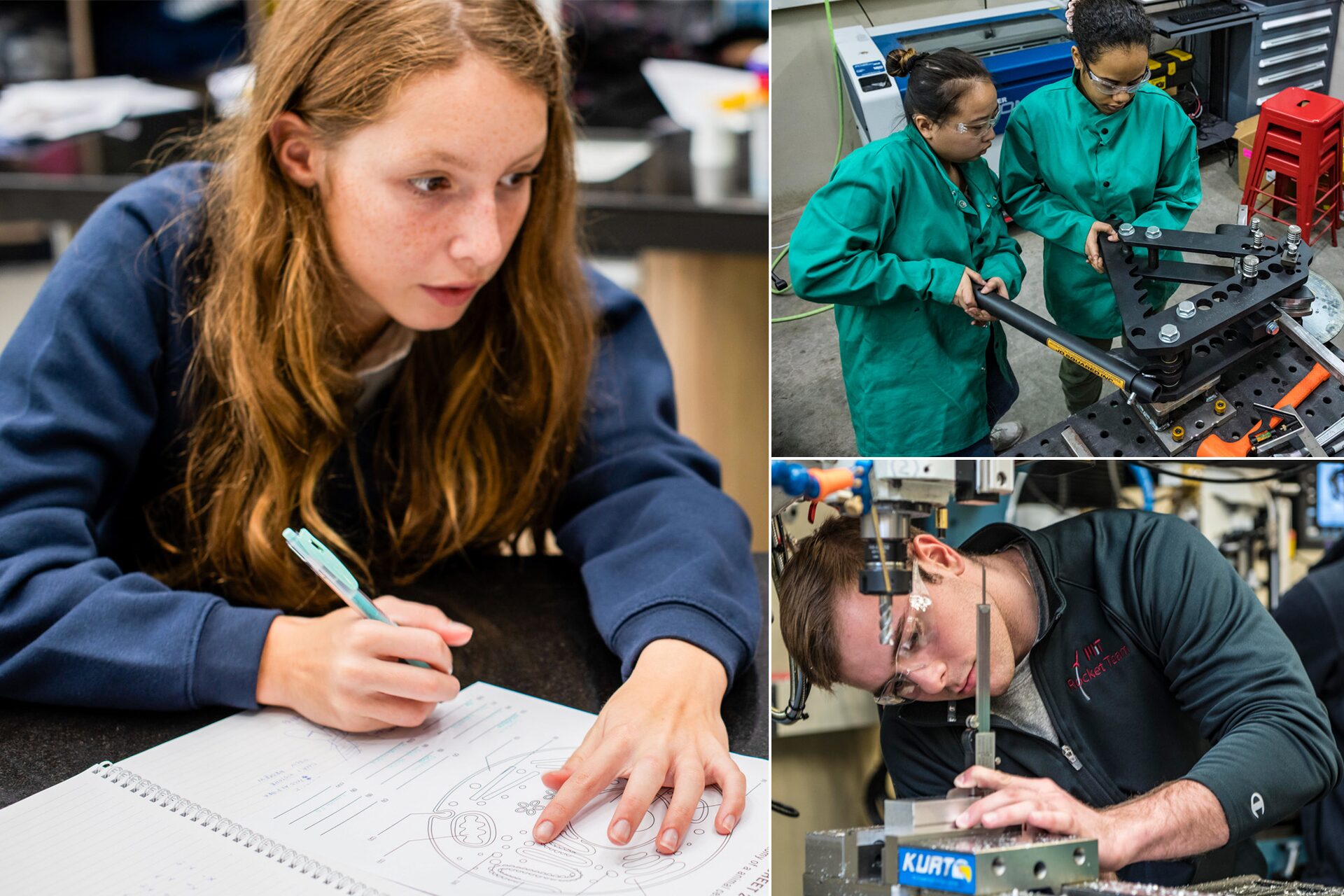
Addressing a critical national need, the initiative ranges across STEM fields and will engage students from kindergarten through community college, preparing them to live and work in a world increasingly shaped by science and technology. MIT for America's programs will develop new opportunities for student achievement in mathematics, hands-on design and fabrication, and constructive engagement with artificial intelligence. 'A natural extension of the Institute's long record of national service, MIT for America is grounded in our deep belief in potential over pedigree, of the transformative power of learning by doing and in the open sharing of knowledge,' Kornbluth wrote. The initiative represents an Institute-wide effort to address the national challenge of improving STEM education and helping it adapt to shifting societal needs. MIT for America will leverage the Institute's longstanding strengths to develop new programs and expand existing projects, while amplifying MIT's impact on national education....

Manipulable molecular biology sets developed over some 25 years by Kathy Vandiver, Edgerton's life science project leader as well as director of community outreach education and engagement in the MIT Department of Biological Engineering, have scaled all the way from a gallery-classroom at the MIT Museum to every biology classroom in Worcester Public Schools in Massachusetts. Worcester is the second-largest district in the commonwealth, and its connection to the MIT Edgerton Center traces back to one high school teacher's transformative learning experience. David Mangus first encountered the hands-on molecular biology sets at a Massachusetts Association of Science Teachers (MAST) conference, where he participated in an MIT workshop and explored the materials firsthand. Later, when he became science curriculum specialist for Worcester Public Schools, he recognized their potential to advance high-quality science education across the district, and he was in a position to implement the curriculum at scale....

From the basement of MIT's Building 35 to Monterrey, Mexico, and now beyond. That is the journey of FrED, a low-cost desktop fiber (Fr) extrusion (E) device (D), designed and assembled by students in an educational factory at MIT. That factory is transforming how manufacturing is taught ' replacing textbook learning with hands-on experience in a space where tinkering is encouraged and information flows continuously. Through a collaboration between MIT and Tecnologico de Monterrey (Tec) managed by MIT.nano, FrED has been refined across dozens of graduate theses and undergraduate research stays. It is used to study manufacturing systems in academic and professional courses, and at FrED factories, first established at MIT and now at Tec's campuses in Monterrey and Mexico City. 'What does it mean to bring the factory to the learner'' asked Brian W. Anthony, MIT.nano associate director and principal research scientist in the MIT Department of Mechanical Engineering (MechE) at the second annual FrED summit in Mexico City. 'We have FrED as a process that manufactures a fiber, and we also have the FrED factory that's an education and practice factory where we are manufacturing a real product. It's not just a learning factory where we tear apart the product when we're done. We really ship FrEDs to our online learners, to educators at MIT and Tec, and soon, to new partners around the world.'...