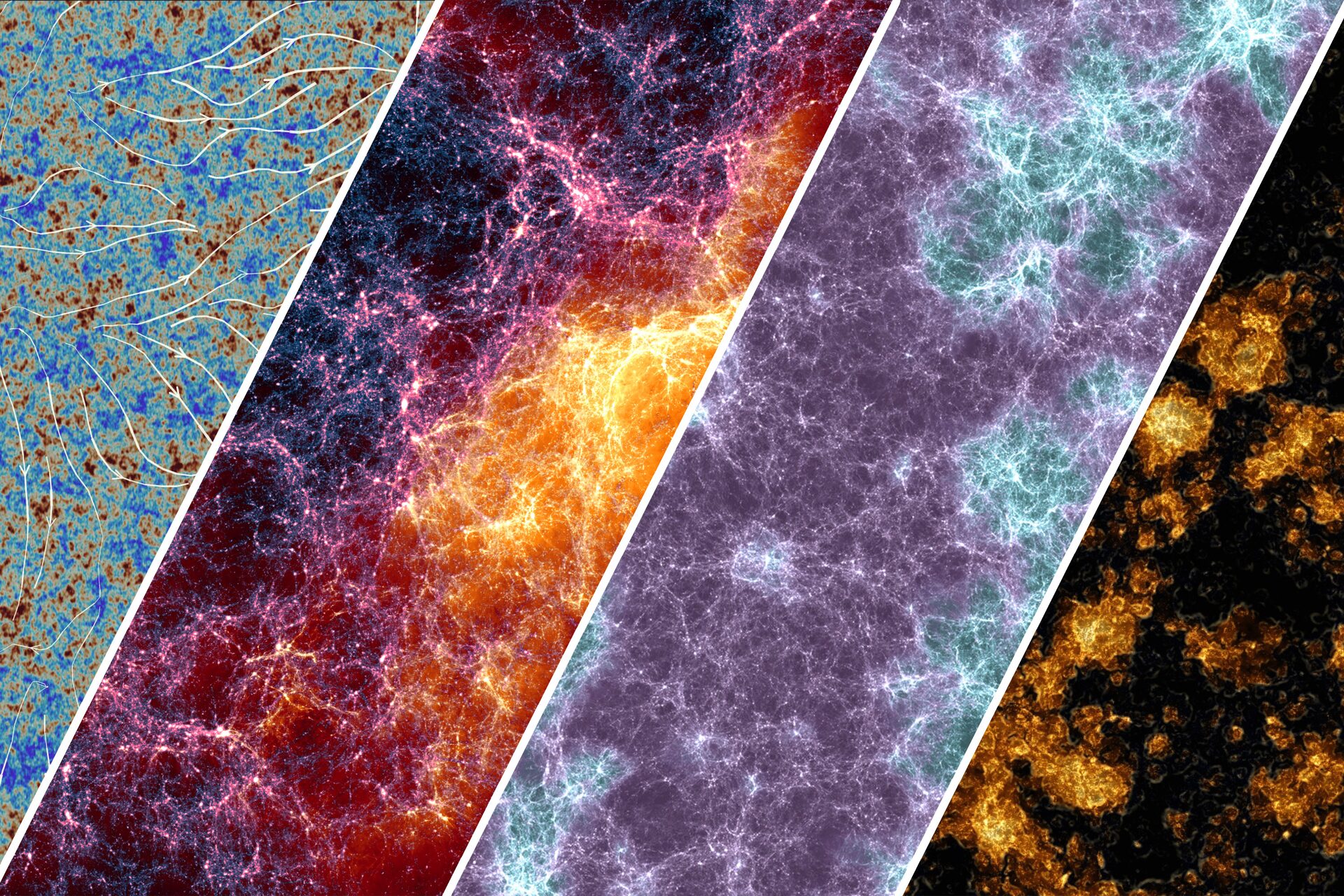
With the Big Bang, the universe burst into existence as a hot and dense soup of electrons and subatomic particles. This primordial ionized plasma, initially smaller than a single atom, rapidly expanded and cooled. In the process, particles in the soup slowed enough to bind with electrons, forming electrically neutral hydrogen. As this neutral hydrogen accumulated, the effect was like a shroud, preventing light and other forms of radiation from freely passing through. Around 380,000 years after the Big Bang, the universe was plunged into a cosmic 'dark age.' Now, a new computer simulation is giving scientists a detailed view of how the first galaxies, stars, and other structures could have unfolded from that time, to eventually pull the universe out of its dark age. In a paper appearing today in the Monthly Notices of the Royal Astronomical Society (MNRAS), physicists from MIT, Harvard University, and elsewhere present Lumina ' a large-volume, high-resolution simulation that follows the early universe from the dark ages through the next 2 billion years of cosmic evolution....

Generative artificial intelligence models are rooted in ideas of mid-20th century engineers who thought some amount of irrationality was essential for a machine that could think like a human, contends Benjamin Lindquist, an assistant professor in the MIT History Section, who holds an MIT Schwarzman College of Computing shared position with the Department of Electrical Engineering and Computer Science (EECS) and is a principal investigator in the Laboratory for Information and Decision Systems. To mimic creative thinking, these AI pioneers intentionally injected randomness into algorithms designed to deterministically solve problems, Lindquist writes in a new paper that appears in the journal Past and Present. In the paper, he traces the origins of AI hallucinations back to this early research and suggests there will be inevitable tradeoffs between creativity and predictability when trying to build machines that mimic human behavior. MIT News spoke with Lindquist about these ideas. A: There is a long history of many figures in the world of science and art theorizing that chance plays an important part in discovery and creativity ' in the ability to originate ideas. They equated creativity with unexpected leaps of logic, or even a dream-like state that allows you to think about things from a new perspective....
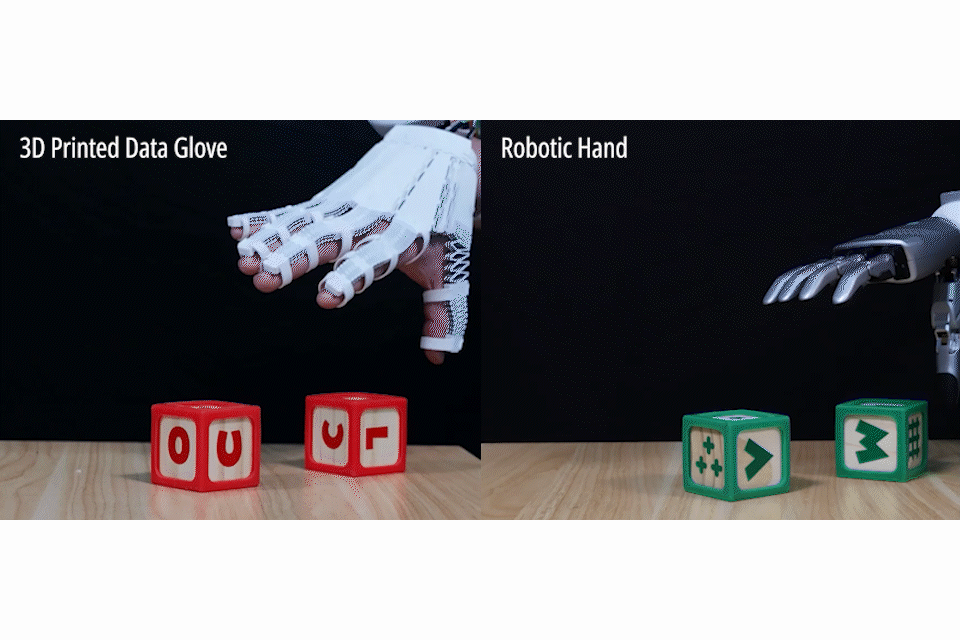
As a child, you likely saw a few Disney movies depicting inanimate objects, such as clocks, cups, and toys, as interactive companions to humans ' an act of pure magic, seemingly. But scientists at MIT's Computer Science and Artificial Intelligence Laboratory (CSAIL) are now doing something similar: transforming stationary items into self-aware tools that perceive and respond to human motion to complete a task.Engineers have 3D-printed these dynamic items with built-in sensing, using conductive materials for sensors and traces (sort of like wires) inside. The issue: both components were typically fabricated using the same material, so they'd emit similar signals. It's sort of like hearing two radio stations at the same time, a mixup that's hard to interpret. This confuses, say, a glove that relays instructions to a robotic hand about how to handle a specific object. The device couldn't filter out the noise or verify the angle of a user's motions, leading a humanoid student to make errors.Researchers at CSAIL and Tianjin University (TJU) in China may have found a way to 3D print more precise interactive items. With their 'X-Hinges' software, users can customize a design, and the tool will automatically embed two different materials: a filament for the sensors designed to send the strongest signal possible, and another for the wire-like elements that don't interfere. Interactions won't get lost in translation, meaning users can fabricate objects that respond in real-time, such as small robots, household decor, object-detection systems, and toys.With X-Hinges, users can put together an item by selecting and connecting different shapes, then choosing how certain parts move. The item won't be limited to moving in just one way like previous approaches; instead, users can select up to three 'axes:' compressing, up and down, or to the sides. Building a robotic hand, for example, you'd likely want its fingertips to move vertically and laterally. The new tool would then embed sensors where the object bends (in this case, its joints) to capture motion data from both angles. That way, the device can understand and respond to your interactions more dynamically once it's 3D-printed.'It's kind of like adding a conscious element to everyday objects,' says Jiaji Li, MIT electrical engineering and computer science (EECS) postdoc and CSAIL researcher, who is a senior author on a paper introducing the work. 'What you get is objects that better understand how they're being used and have more ways to respond. In the same way an AI agent is programmed to make certain decisions based on our instructions, these creations have built-in sensing to adaptively react to human touch.'...
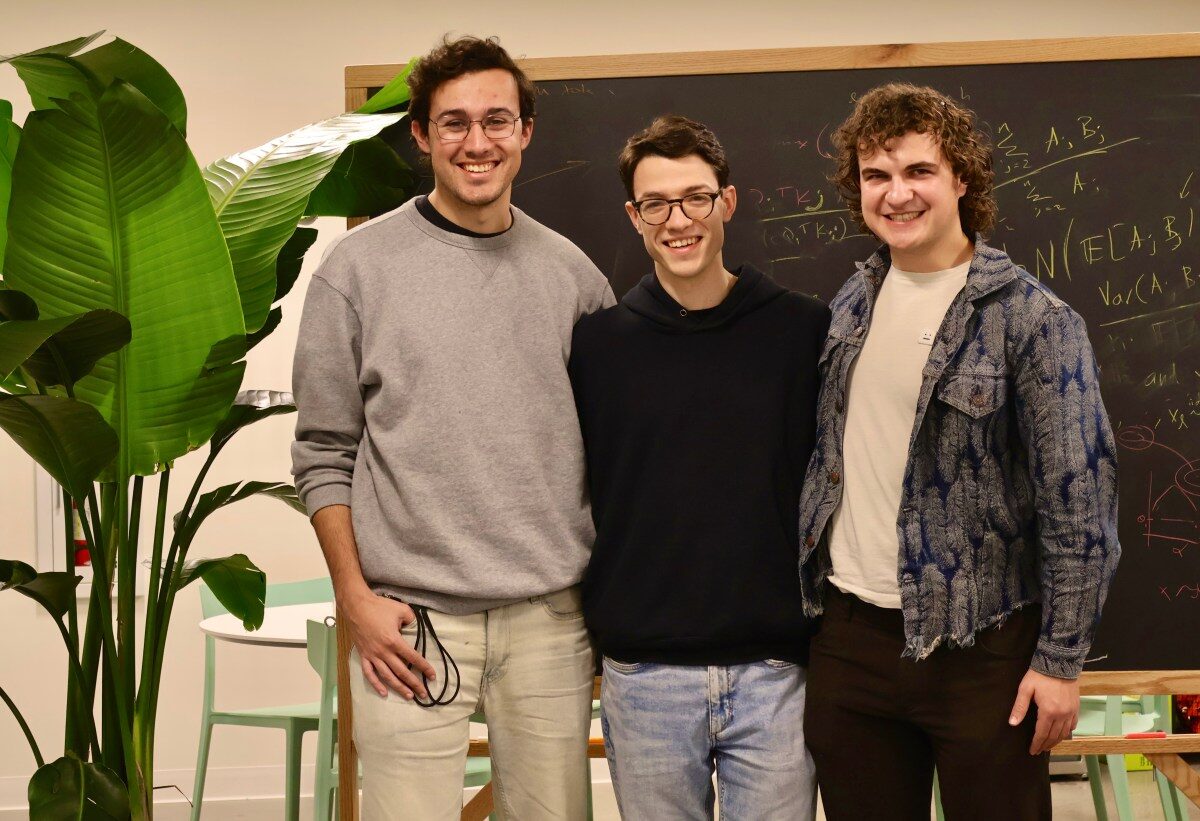
Year-old startup Flapping Airplanes has wowed Silicon Valley with an impressive founding team and a mission to find ways to train large models with less data. On Wednesday, the company announced it had raised a $1 billion Series A round, co-led by Index and Lux, reportedly at a $6 billion valuation. The round comes just nine months after the company launched with a $180 million seed round from GV, Sequoia, and Index. That seed round had valued the company at $1.5 billion, so its valuation just quadrupled. Flapping Airplanes was founded by Aidan Smith and brothers Asher and Ben Spector. Smith is a former founder and Thiel fellow who worked at the brain implant company Neuralink during college. Asher Spector was a statistics PhD at Stanford, while Ben Spector was a computer science PhD student at Stanford and founded Prod while at MIT. Prod is an almost secret-society, five-year-old student-run startup accelerator that has 'become one of the most powerful talent incubators in Silicon Valley,' wrote Sequoia partner David Cahn, a Flapping Planes investor, in a post earlier this year explaining why he invested. Together, the founders 'are building the 'young person's AGI lab,'' as Cahn described it....


