Invite your Peers
And receive 1 week of complimentary premium membership
Upcoming Events (0)
ORGANIZE A MEETING OR EVENT
And earn up to €300 per participant.
Departments (13)
34 members, 0 ambassadors
1 member, 0 ambassadors
16 members, 0 ambassadors
43 members, 0 ambassadors
0 members, 0 ambassadors
3 members, 0 ambassadors
18 members, 0 ambassadors
4 members, 0 ambassadors
0 members, 0 ambassadors
Chemistry Nobel for scientists who developed massively porous 'super sponge' materials
Posted by Mark Field from Nature in Chemistry
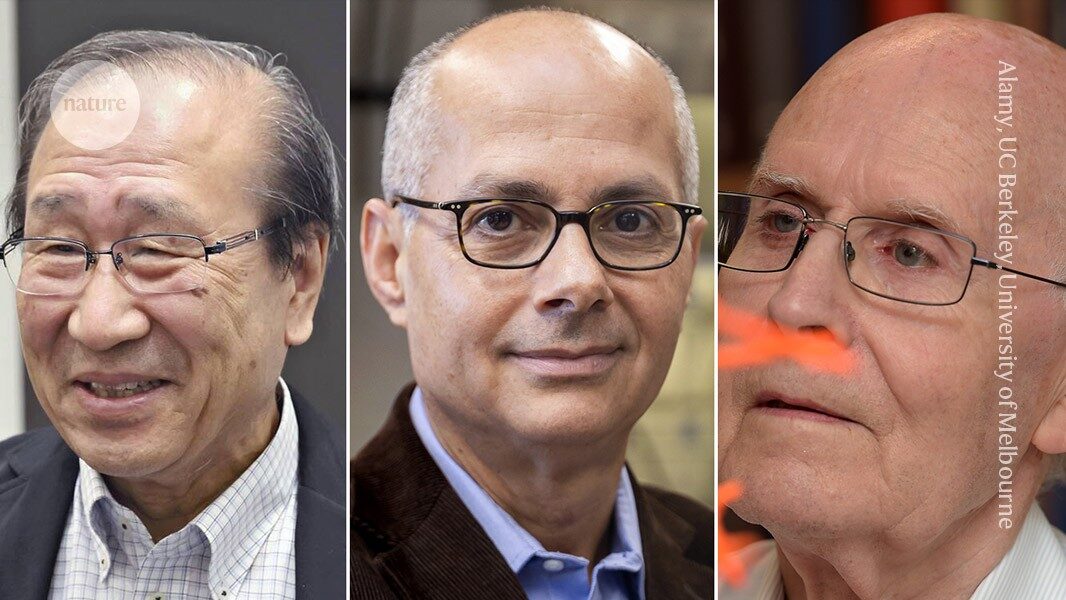
Susumu Kitagawa, Omar Yaghi and Richard Robson have won the 2025 chemistry Nobel for the development of metal-organic frameworks.Credits: Kota Kawasaki/Yomiuri Shimbun via AP/Alamy, Brittany Hosea-Small/UC Berkeley, Paul Burston/University of Melbourne Susumu Kitagawa at Kyoto University in Japan, Richard Robson at the University of Melbourne, Australia, and Omar Yaghi at the University of California, Berkeley, will share the prize of 11-million Swedish kronor (US$1.2 million), for inventing a new form of molecular architecture. Because they have such a vast internal surface area, MOFs could potentially be used to store gases, act as catalysts and deliver drugs, among many other applications. 'This year's laureates'have found ways to create materials, entirely novel materials, with large cavities on their insides,' said Nobel committee chair Heiner Linke, a nanophysicist at Lund University in Sweden, at a press conference announcing the prize. 'A small amount of such material can almost be like Hermione's handbag in Harry Potter ' it can store huge amounts of gas in a tiny volume'....
Mark shared this article 2mths
Matthew Shoulders named head of the Department of Chemistry
Posted by Mark Field from MIT in Cosmology and Chemistry
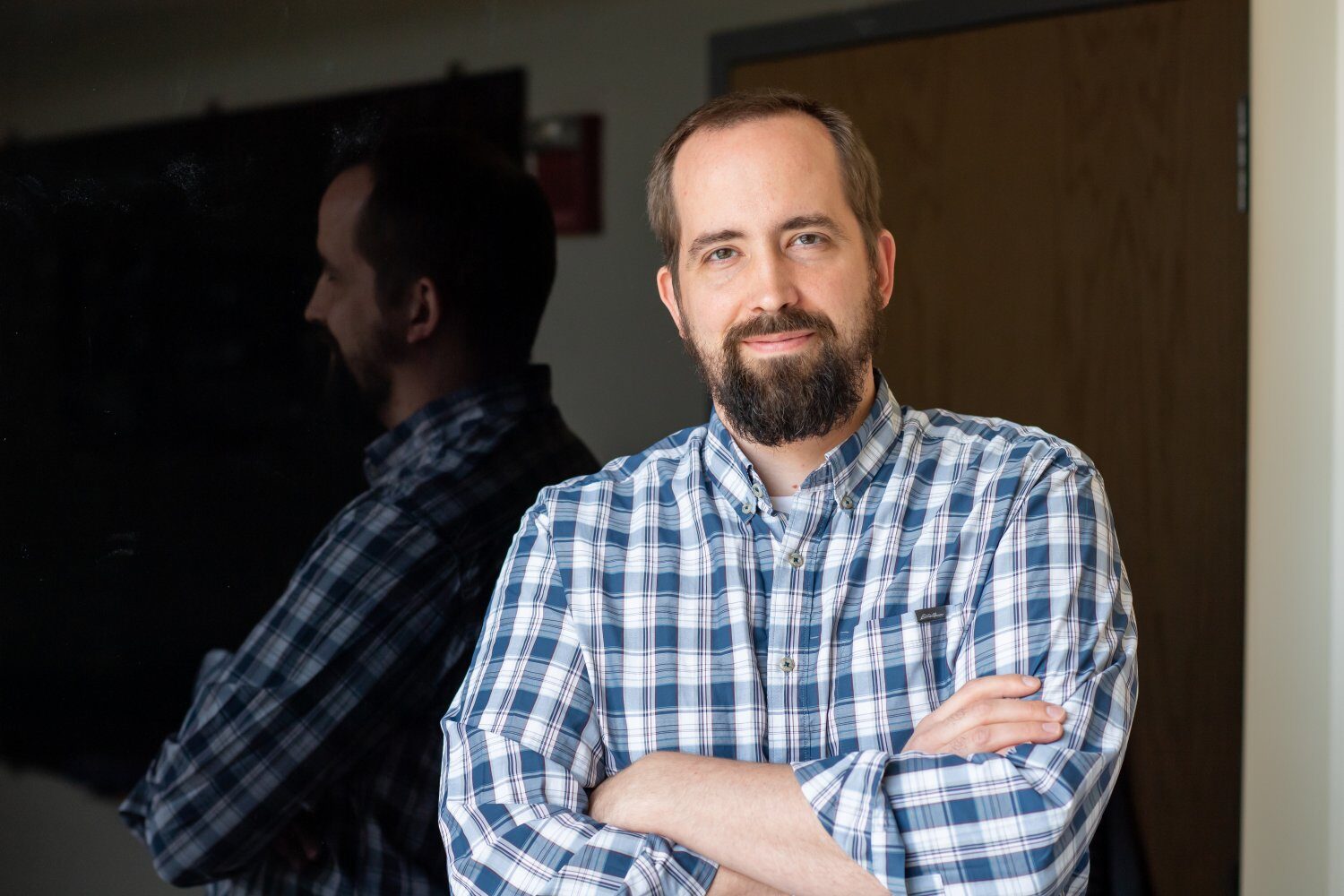
Matthew D. Shoulders, the Class of 1942 Professor of Chemistry, a MacVicar Faculty Fellow, and an associate member of the Broad Institute of MIT and Harvard, has been named head of the MIT Department of Chemistry, effective Jan. 16, 2026. 'Matt has made pioneering contributions to the chemistry research community through his research on mechanisms of proteostasis and his development of next-generation techniques to address challenges in biomedicine and agriculture,' says Nergis Mavalvala, dean of the MIT School of Science and the Curtis and Kathleen Marble Professor of Astrophysics. 'He is also a dedicated educator, beloved by undergraduates and graduates alike. I know the department will be in good hands as we double down on our commitment to world-leading research and education in the face of financial headwinds.' 'I am tremendously grateful to Troy for his leadership the past six years, building a fantastic community here in our department. We face challenges, but also many exciting opportunities, as a department in the years to come,' says Shoulders. 'One thing is certain: Chemistry innovations are critical to solving pressing global challenges. Through the research that we do and the scientists we train, our department has a huge role to play in shaping the future.'...
Mark shared this article 2mths
Fusion energy gets a boost from cold fusion chemistry
Posted by Mark Field from Nature in Chemistry
Researchers have used electrochemistry to increase the rates of nuclear fusion reactions in a desktop reactor. Fusion energy promises abundant clean energy, but fusion events are rare, hindering progress. Now, inspired by the controversial claim of cold fusion, researchers used electrochemistry to get palladium to absorb more deuterium ions, that are used in fusion. When a beam of deuterium was fired at the deuterium-filled palladium, they saw a 15% increase in fusion events. They did not get more energy than they put in, but the authors believe this is a step towards enhancing fusion energy and shows the promise of electrochemical techniques. Chocolate gets its best tastes from microbes, according to a new study. Fermentation of cocoa beans helps create chocolate tastes but not much has been known about the process. Now, the temperature, pH and microbes involved have been identified and the researchers showed how it would be possible to manipulate these to produce premium chocolate flavours....
Frank recommends this posting 4mths
The chemistry of creativity
Posted by Mark Field from MIT in Chemistry
Senior Madison Wang, a double major in creative writing and chemistry, developed her passion for writing in middle school. Her interest in chemistry fit nicely alongside her commitment to producing engaging narratives. A native of Buffalo, New York, Wang applied early action for admission to MIT and learned quickly that the Institute was where she wanted to be. 'It was a really good fit,' she says. 'There was positive energy and vibes, and I had a great feeling overall.' Chemistry and writing both help us 'see the world's irregularity,' she continues. Together, they can erase the artificial and arbitrary line separating one from the other and work in concert to tell a more complete story about the world, the ways in which we participate in building it, and how people and objects exist in and move through it. 'Understanding magnetism, material properties, and believing in the power of magic in a good story ' these are why we're drawn to explore,' she says. 'Chemistry describes why things are the way they are, and I use it for world-building in my creative writing.'...
Mark shared this article 8mths