
No matter how earnestly companies proclaim their support for 'stakeholder capitalism' ' the popular promise that they now take care of employees, communities, the planet, and other 'stakeholders,' not just themselves ' profits still come first. The more foundational tension is whether it's even possible for companies to solve the societal challenges they claim to be determined to fix. For years, the corporate sector has been using, and misusing, the term, addressing the wider accountability of corporations in relation to their business operations. Under stakeholder capitalism, organizations create long-term value by taking into account the needs of all their stakeholders: among them employees, customers, suppliers, local and global communities, lenders, and shareholders. It feels like a lifetime ago that, in 2019, 181 CEOs of the biggest companies in the United States came together to redefine the purpose of a corporation: to promote 'an economy that serves all Americans.' We can laugh at the hubris of the proclamation, but it responded to a real demand for businesses to stand for something beyond profits....
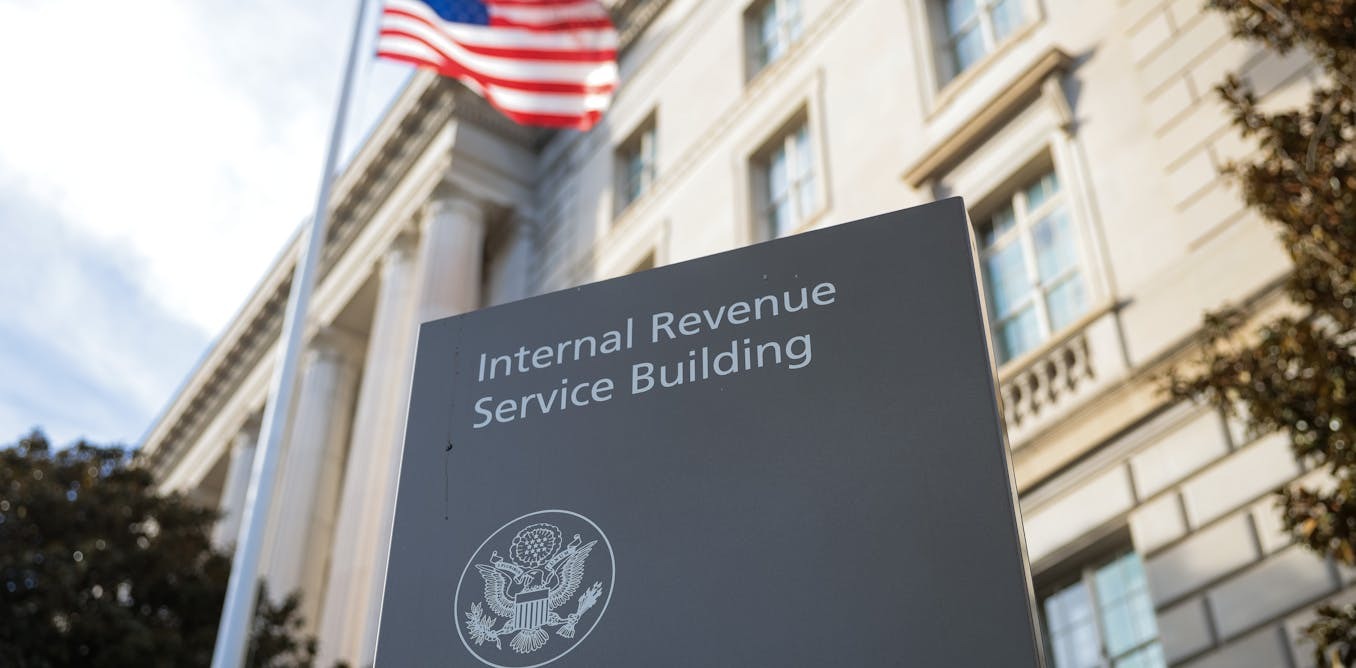
When corporations based in areas of above-average income inequality pay more taxes, it's not just the public that appreciates it ' investors do, too. That's the key finding of our recent research published in the journal Accounting and the Public Interest. Our finding challenges traditional economic theory holding that investors see corporate taxes as a transfer of wealth from shareholders to the state. That would suggest investors value only strategies that minimize taxes. The reality isn't so simple. As accounting professors at the University of Dayton, we study the intersection of corporate taxes and corporate social responsibility. We wanted to better understand how corporate taxes affect firm value and stock prices, and whether that relationship changes if a company is headquartered in an area with high income inequality. So we looked at financial data from over 1,500 firms over a 10-year period between 2011 and 2019, as well as the income inequality in the metro areas where they're headquartered. For the latter point, we used the Gini coefficient, a measure of income distribution in a given place. This is a particularly useful context for looking at corporate taxes, since one of the key functions of taxation is to counter inequality....

It's been five years since the Business Roundtable, an association of more than 200 CEOs of leading US companies, redefined the purpose of a corporation as delivering value to all stakeholders''our companies, our communities, and our country.'1'Business Roundtable redefines the purpose of a corporation to promote 'an economy that serves all Americans,'' Business Roundtable, August 19, 2019. While the perception of stakeholder capitalism has evolved since then, the roundtable's focus on stakeholders beyond shareholders reinforced the importance of a skill that not all chief executives have mastered: managing a broad range of relationships through proactive communication. CEOs' paths to the top office rarely allow sufficient development of ability to engage groups with disparate and at times competing interests. Before becoming CEO of Microsoft, Satya Nadella did not fully appreciate 'how multi-constituent the world really is. It's about shareholders. It's about your team members and employees. It's about customers and governments.'2Sachin Waikar, 'Microsoft CEO Satya Nadella: Be bold and be right,' Stanford Graduate School of Business, November 26, 2019. The real job of the CEO is to balance the needs of all those constituents....

War subjects businesses to unprecedented tests. With governments stretched to their limits, businesses must step in and assume responsibilities far beyond their conventional mandates, profoundly transforming the notion of corporate social responsibility (CSR). As national survival and corporate survival become more and more intertwined, we see questions shift from 'Should we do something'' to 'What could we do'' ' transforming CSR from a voluntary initiative to an existential necessity. Amid the Russian invasion of Ukraine, businesses offer a compelling blueprint for responsibility-driven innovation, with the potential to redefine global CSR practices in crisis contexts. Four Ukrainian companies have distinguished themselves with particular thoughtfulness and ingenuity in their approaches to launching socially responsible initiatives during the war, with wartime adversity fueling innovation and societal impact. Their examples show that embracing CSR as an existential imperative enables scalable impact, imbues companies with deeper meaning, and can enhance corporate innovation efforts ' making responsibility rather than necessity the mother of invention....


