
At last, parents, your prayers have been answered! On Tuesday, Spotify announced that it's finally doing something to fix how your kids' listening habits ruin your end-of-year Spotify Wrapped experience, and then some. The company said it's introducing a new toggle that will allow you to exclude kids' and family music from your taste profile. That means no more Kidz Bop or Disney tunes in your personalized playlists, and no more K-Pop Demon Hunters track 'Golden' as your most-played song of the year. (Or whatever the kids are into!) That's because home devices, like TVs and smart speakers, tend to be linked to a parent's account so the family can stream music without restrictions. These devices are often found in common areas of the home, like living rooms, dens, and playrooms, where kids have access. Plus, many kids may have a speaker in their bedroom to stream things like bedtime tunes and lullabies. Kids also tend to demand control of the music while in the car. And parents acquiesce, as they'll essentially do anything to get a moment's peace ' even if that requires listening to Jack Black's 'Steve's Lava Chicken' from the Minecraft movie over and over....
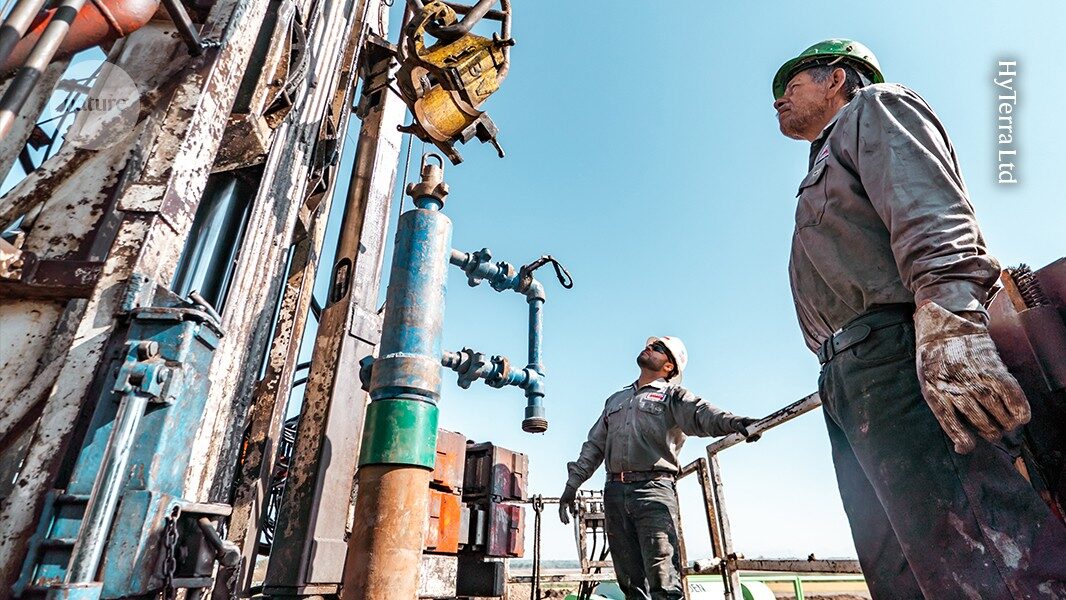
In almost 30 countries, energy prospectors are hunting for a potential game changer in the quest to fight global warming. Their quarry is hydrogen gas trapped deep underground in hidden deposits. They hope to find big reservoirs of this geological hydrogen ' substantial enough that the gas could become a green replacement for fossil fuels. When hydrogen is burned to produce electricity, the only by-product is water vapour ' no carbon dioxide is emitted. And the potential for geologic hydrogen has energy specialists buzzing. Since 2023, venture capitalists have invested nearly US$500 million in the search for deposits. A 2024 analysis suggests that Earth's subsurface probably contains tens of trillions of tonnes of the gas1. If even a small fraction can be recovered at a profit, geologic hydrogen could meet projected clean energy needs for 200 years, potentially at, or even below, the cost of fossil fuels. 'That's why it has gathered momentum as quickly as it has,' says Owain Jackson, head of hydrogen-exploration company H2Au, headquartered in Epsom, UK, which started drilling in Kansas in August....
Chris Lehane, OpenAI's global policy chief, told reporters on Tuesday that the company has been working with rivals Anthropic and Google DeepMind on AI safety for weeks, as first reported by Bloomberg. Lehane is reportedly in Washington to work with U.S. lawmakers addressing catastrophic risks associated with AI. The revelation comes in the wake of Anthropic CEO Dario Amodei's essay, published Saturday, which called for the industry to work together to slow the pace of frontier AI and avoid catastrophic risks. AI leaders across the industry, including OpenAI's Sam Altman, Google's Demis Hassabis, and SpaceXAI's Elon Musk, supported Amodei's letter and call to action, with Altman saying that OpenAI would join Anthropic in embedding third-party evaluators into the company to monitor for safety. On Tuesday, Lehane admitted that the three companies have been in talks for several weeks regarding AI safety. Some, including Altman, have noted that such talks could put the companies at risk of violating antitrust law if the coordination is found to suppress competition. Amodei's essay proposed a narrow government waiver allowing such safety coordination, but Lehane reportedly said the firms don't need one....
A new AI model called Koa is one of the biggest announcements from Salesforce this week at its giant Dreamforce tech conference. Koa is the company's first reasoning model, built on Nvidia's open-weight Nemotron model. The two companies worked together to post-train Koa to excel at sales, marketing, and customer-support-related tasks. Koa is a shining example of how the enterprise world's needs for AI are diverging from what the frontier labs are offering. Proprietary AI labs would rather have enterprises uploading files, code, prompts, and feedback directly into their models and agents, and spending millions to do so. Koa will be provided as an alternative to the other models Salesforce offers in its Agentforce platform, where its customers build agents to handle rote tasks like answering customer service questions or scheduling appointments. 'We've built many small task-specific language models, which are part of Agentforce's portfolio,' Jayesh Govindarajan, EVP of Salesforce AI, told TechCrunch. 'But reasoning has always been something that we've relied on the frontier model providers for. Until now.'...