Picture a 50-person R&D organization that came late to AI. Now imagine 2 AI engineers at a competitor, each running a fleet of AI coding agents. On raw throughput, the two can already outpace the fifty. But the math understates their advantage. At two people, there is barely an organization available to slow them down: no management layer or product-manager handoff, no queue of teams waiting on one another. If they also have deep domain expertise and the right architecture underneath them, they are operating in full entrepreneur mode while the 50 stop at every junction. Hence, the Age of the One-Person Company. That scenario comes from 'The Agentic Awakening,' Liran Eshel and Adam Fisher's 2026 study for Bessemer Venture Partners of more than twenty engineering organizations. For anyone starting a company, it is the most important passage in the study. Because the asymmetry that has always favored startups, speed over mass, just widened by an order of magnitude. An incumbent still treats its codebase as a moat. To two engineers with AI agents, it's just an excellent spec. They can rebuild an equivalent product from it, then outbuild the company that wrote it....
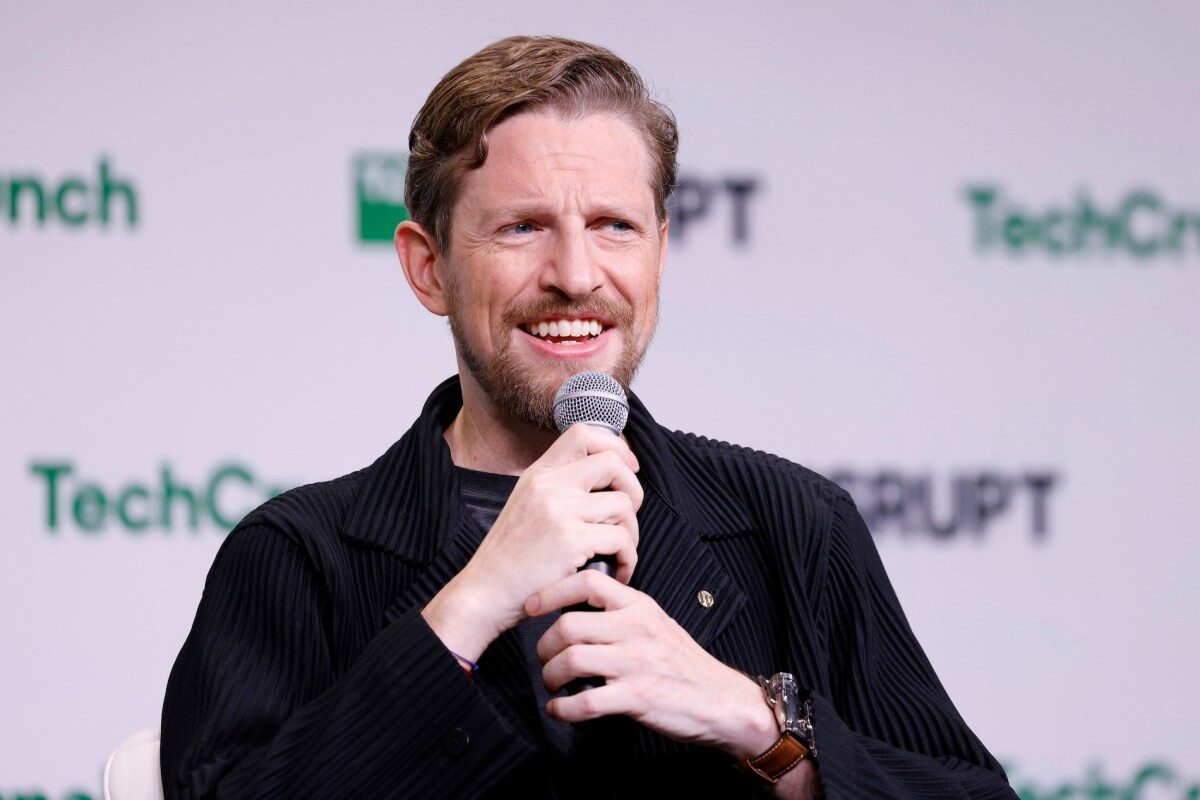
Matt Mullenweg has posted a message to Automattic's Slack, claiming he is back in control as CEO of the WordPress.com parent company, according to a screenshot of the message seen by TechCrunch, which was confirmed by multiple employee sources. The post arrives only days after Automattic's board voted to oust Mullenweg as CEO for unknown reasons. Automattic has been asked to confirm if Mullenweg's statement is true, but has not yet responded to repeated requests for comment. Mullenweg responded to our inquiry, saying a blog post is forthcoming. When it dropped, it was about him buying a houseboat. On Wednesday, the WordPress founder and a key advocate for the open source community told his team via Slack that Automattic's board members had 'conspired' behind his back by voting to put him on a paid leave of absence. The company's chief financial officer, Mark Davies, was made interim CEO in the process, Mullenweg said. '(Don't call it a comeback') Howdy everybody! Happy to announce the board is back in agreement, and I'm in control of Automattic. A lot happened in the past 48 hours that we need to sort out, and I hope much of it was a misunderstanding, because I have huge respect and regard for those involved.'...

Collaborative Fund, the 15-year-old, New York-based generalist venture firm that has roughly $1 billion under management and that made early bets on Lyft, Reddit, Sweetgreen, and Olipop, among others, is taking a stake in the soccer club D.C. United and its stadium, Audi Field. To recap, Joshua Kushner's Thrive launched a new vehicle, Thrive Eternal, explicitly built to hold 'iconic franchises and cultural institutions' for decades, funded by many of the same investors already in Thrive's venture and growth funds. The firm kicked things off by announcing a stake in the San Francisco Giants. Months later, the same vehicle ' with former Disney CEO Bob Iger, a Thrive partner, joining as co-owner ' bought the Lakers outright for a record $12.5 billion. That's new. Historically, money has poured into pro sports two other ways: individual tech fortunes and private equity. For example, Vinod Khosla and his family agreed this summer to buy the Seattle Seahawks for a record $9.6 billion soon after the Khosla family also took a stake in the San Francisco 49ers alongside OpenAI chairman Bret Taylor. That was a personal-wealth play, the kind we've seen over and over....

AI has turned disruption into a permanent condition, with technologies changing too fast for employees to keep up. Traditional change management was built for disruptions that end, but AI capabilities keep arriving in accelerating waves. Companies can manage this steady-state disruption through three organizational practices that shift the pressure from individual employees to the organization itself: permanent AI infrastructure, split cadences, and embedded learning. A vice president of product opens her laptop on a Monday morning to find that the AI model her team had worked with for the past six weeks to build a customer workflow has been leapfrogged by a cheaper, faster alternative. Again. Her Slack feed is blowing up with links to the announcement. The CEO has already forwarded an article about what a competitor is doing with the new tool, with the subject line 'FYI.' She hasn't finished rolling out the last integration, and now she's wondering whether to scrap it. She is not resistant to AI. She is worn out by it....