
In December 2024, Elisabeth Bik noticed irregularities in a few papers by a highly-cited bioengineer, Ali Khademhosseini. She started looking at more publications on which he was a co-author, and the issues soon piled up: some figures were stitched together strangely, and images of cells and tissues were duplicated, rotated, mirrored and sometimes reused and labelled differently. Bik, a microbiologist and leading research-integrity specialist based in San Francisco, California, ended up flagging about 80 papers on PubPeer, a platform that allows researchers to review papers after publication. A handful of other volunteer science sleuths found more, bringing the total to 90. The articles were published in 33 journals over 20 years and have been cited a combined total of 14,000 times. Although there are hundreds of co-authors on the papers, the sleuthing effort centred on Khademhosseini, who is a corresponding author on about 60% of them. Why retractions data could be a powerful tool for cleaning up scienceHe and his co-authors sprang into action. Responding to the concerns, some of which were reported in the blog For Better Science, became like a full-time job, says Khademhosseini, who until August was director and chief executive of the Terasaki Institute for Biomedical Innovation in Los Angeles, California. 'I alerted journals, I alerted collaborators. We tried to do our best to make the literature correct.' In many cases, he and his co-authors provided original source data to journal editors, and the papers were corrected....

Seeking an opportunity to do something impactful in the early stages of the Covid-19 pandemic, Julian Zulueta applied for an internship with the U.S. Centers for Disease Control, through MIT's PKG Public Service Center. During the summer of 2020, he analyzed requisition data to better understand how different regions across the United States were affected by Covid-19, and what resources would be most effective on the ground. 'We would talk with hospitals and see what they were going through on the ground level,' says Zulueta, an MIT senior majoring in bioengineering. 'What were their cities looking like' How were health care workers responding' And how could we deploy epidemiologists or contact tracers to those different regions'' The experience gave him a multifaceted perspective on public health and sparked a passion for public service leadership. While he hopes to attend medical school and contribute to immunology and cancer research as a physician-scientist, Zulueta is also committed to advancing the human side of medicine....
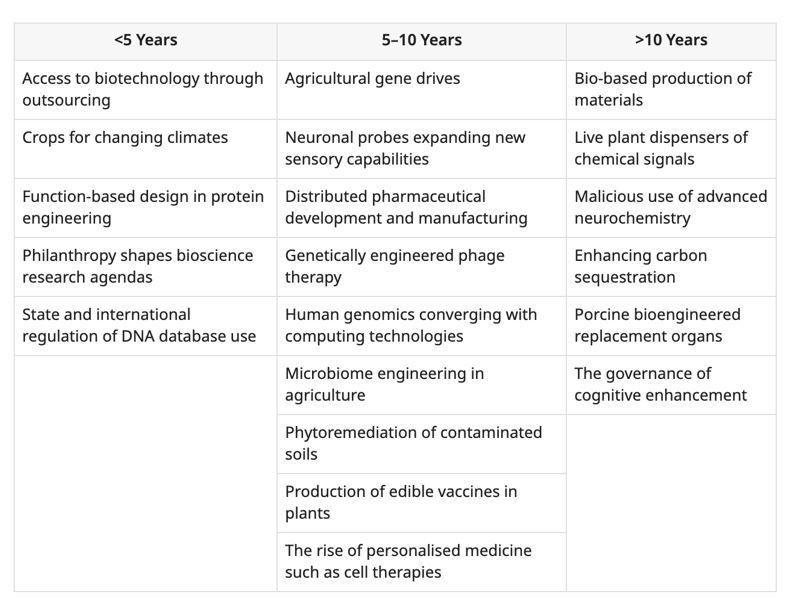
Bioengineering is a discipline that applies engineering design and principles to biological systems. Some examples of this fusion are artificial organs or limbs, the genetic synthesis of new organisms, gene editing, the computerized simulation of surgery, medical imaging technology and tissue/organ regeneration.
Like any other technology, bioengineering has damaging potential, whether it be through misuse, weaponization or accidents. This risk can create significant threats with large potential consequences to public health, privacy or to environmental safety.
Approaches such as genomic synthesis have over recent years dropped precipitously in price. This has triggered a boom in bioengineering research and broadened its applications. Foreseeing the impacts of bioengineering technologies is urgently needed. This was the driving force behind a recent study led by the Centre for the Study of Existential Risk at the University of Cambridge where they set to analyze emerging risks in this field....